AINews Daily Digest: GPT-5.6 Price Cuts and Recursive Self-Optimization
- Source
- latent.space
- Author
- Latent Space
- Date
Context
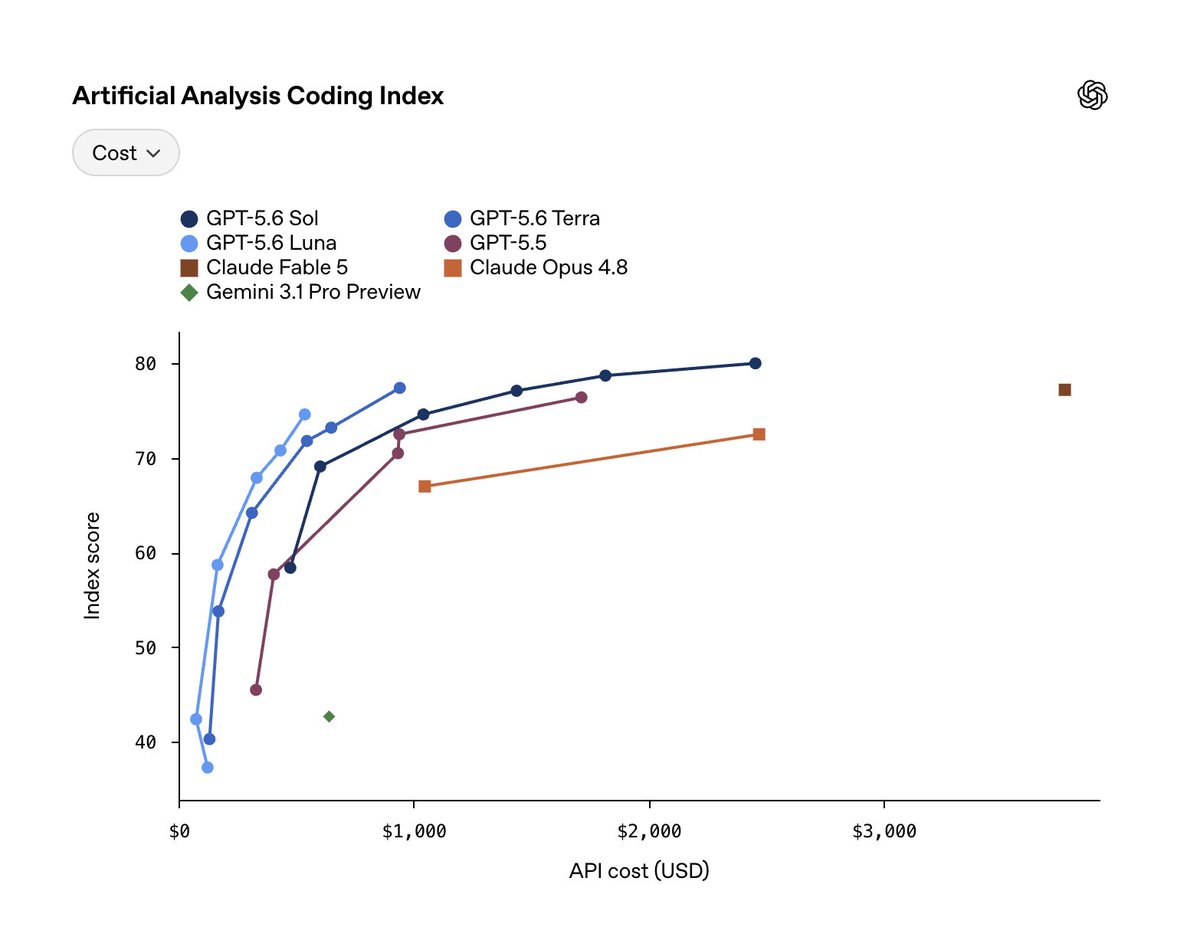
OpenAI reports that GPT-5.6 Sol helped reduce the cost of running its models by improving the software executing their calculations. The model identified work that could be avoided, computed ahead of time or performed in parallel, then rewrote GPU kernels, the programs that carry out those calculations. OpenAI attributes a 20% reduction in end-to-end serving costs to this work and broader kernel improvements. The underlying engineering account gives the digest's self-optimization theme a concrete meaning: AI helping engineers extract more useful computation from existing hardware. Engineering source.
- OpenAI's keeps all model-visible history append-only — nothing earlier is ever edited. The prompt prefix stays identical between calls, so the cache hit rate stays high and the same history is never reprocessed.
- Two cheap tricks keep the from bloating: tools, skills and plugins are surfaced only when they are needed rather than listed up front, and tool outputs are capped at 10,000 tokens by default.
- On ARC-AGI-3, the same GPT-5.6 scored 7.8% under a standard harness and 38.3% when reasoning traces were retained and context compacted. Long-horizon evals now measure the whole agent system, not the weights.
- ARC's rule for eval fairness: harnesses built specifically for the benchmark are banned, but general-purpose API features any customer can turn on are allowed — provided you report the settings and the cost.
- At Cursor, the share of merged pull requests written by cloud agents went from 1 in 10 in December to 56%, which the team attributes to giving agents their own cloud computers and letting them improve those environments over time.
- speculative decoding — A speed trick where a small model drafts several tokens ahead and the big model verifies them in one pass, often doubling generation speed.
- agent harness — The scaffolding around a model that turns it into a working agent — the loop, the tools it can call, and the rules for when to stop.
- mixture-of-experts — A model built from many specialist sub-networks where only a few activate per token, giving big-model capability at small-model running cost.
- context window — The maximum amount of text a model can consider at once — its working memory for the current conversation or task.
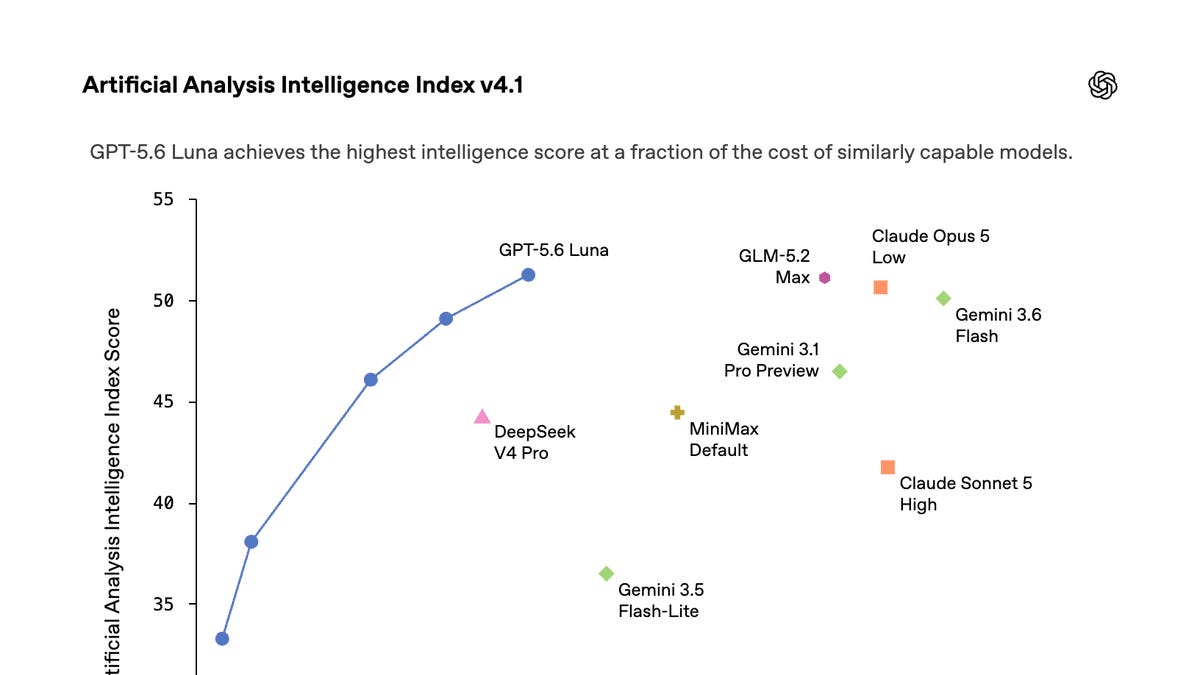
“GPT-5.4 full at xhigh scored 51, exactly where Luna max sits today”
Nicdunz
“GPT-5.4 costs $2.50/$15; Luna now costs $0.20/$1.20.”
“in December, 1 in 10 merged PRs came from cloud agents; now that share is 56%”
“if your only goal is cost-effective non-finetuned intelligence, you will find it -very- hard to beat OpenAI right now.”
 videoHigh Taste Testers: OpenAI Shipped Everything. What Actually Works?
 videoHow to kill your SaaS: what we learned replacing a $43K/yr tool with AI agents
 videoWorld Models & General Intuition: Khosla's largest bet since LLMs & OpenAI
 videoExtreme Harness Engineering: 1M LOC, 1B toks/day, 0% human code or review — Ryan Lopopolo, OpenAI

Checking sign-in…
Loading comments…