Gemma 4 lands under Apache 2.0 with 256K context and native function calling
- Source
- x.com
- Date

Today, we’re launching Gemma 4, our most intelligent open models to date. Built with the same breakthrough technology as Gemini 3, Gemma 4 brings advanced reasoning to your personal hardware and devices. Here’s what Gemma 4 unlocks for developers: — Intelligence-per-parameter: Our 31B (Dense) and 26B (MoE) models deliver state-of-the-art performance for their size, outcompeting models 20x their size on @arena — Commercial flexibility: Released under a permissive Apache 2.0 license for complete developer flexibility and digital sovereignty — Agentic workflows: Native support for function-calling and structured JSON output allows you to build reliable, autonomous agents — Multimodal edge AI: The E2B and E4B models bring native vision, audio, and low latency to mobile and IoT devices — Long-context reasoning: Up to 256K context windows allow you to process entire repositories or large documents in a single prompt Whether you're building global applications in 140+ languages or local-first AI code assistants, Gemma 4 is built to be your foundation. Explore in @GoogleAIStudio or download the weights on @HuggingFace, @Kaggle, and @Ollama.

And just in case you’re wondering, "..What’s an open model?", we’ve got you covered: Basically, open models are AI systems where the model weights are publicly available for anyone to download, study, fine-tune and use on your own hardware (phones, computers, etc.). Open models can live on your hardware where your data is completely private and never has to leave your machine. Once you download an open model onto your device, it can run anywhere regardless of internet connection or access to data centers. To name a few examples, Gemma models can run in your pocket, underwater, in outer space, from subway tunnels, and on high-altitude flights without needing a cell tower or WiFi signal. As base models are released (the 'blueprints'), people can then further modify them for specialized use cases via fine-tuning. We’ve seen this in the Gemmaverse, where developers have downloaded Gemma over 400 million times and built more than 100,000 variants. Have you used an open model before? Let us know if you have any other questions about this neat technology!
Read all about Gemma 4 in our blog: https://t.co/LoynxkXxA9
Context
Google DeepMind's Gemma 4 release gives developers downloadable model weights under Apache 2.0, allowing them to run and adapt the models on suitable hardware. Its built-in and structured JSON output support applications that ask the model to select tools and return machine-readable results. Launch details.
The maximum input capacity depends on the version: the smaller E2B and E4B models support 128K windows, while the larger 26B and 31B models support up to 256K. That distinction matters when choosing a model for long documents or repositories; the largest advertised context window does not apply across the family. Model-size differences.
- tool use — A model's ability to call external functions — run code, search the web, edit files — instead of only generating text.
- context window — The maximum amount of text a model can consider at once — its working memory for the current conversation or task.
- mixture-of-experts — A model built from many specialist sub-networks where only a few activate per token, giving big-model capability at small-model running cost.
- postGoogle's week: EmbeddingGemma 2, Nano Banana 2.1, Gemini business agent
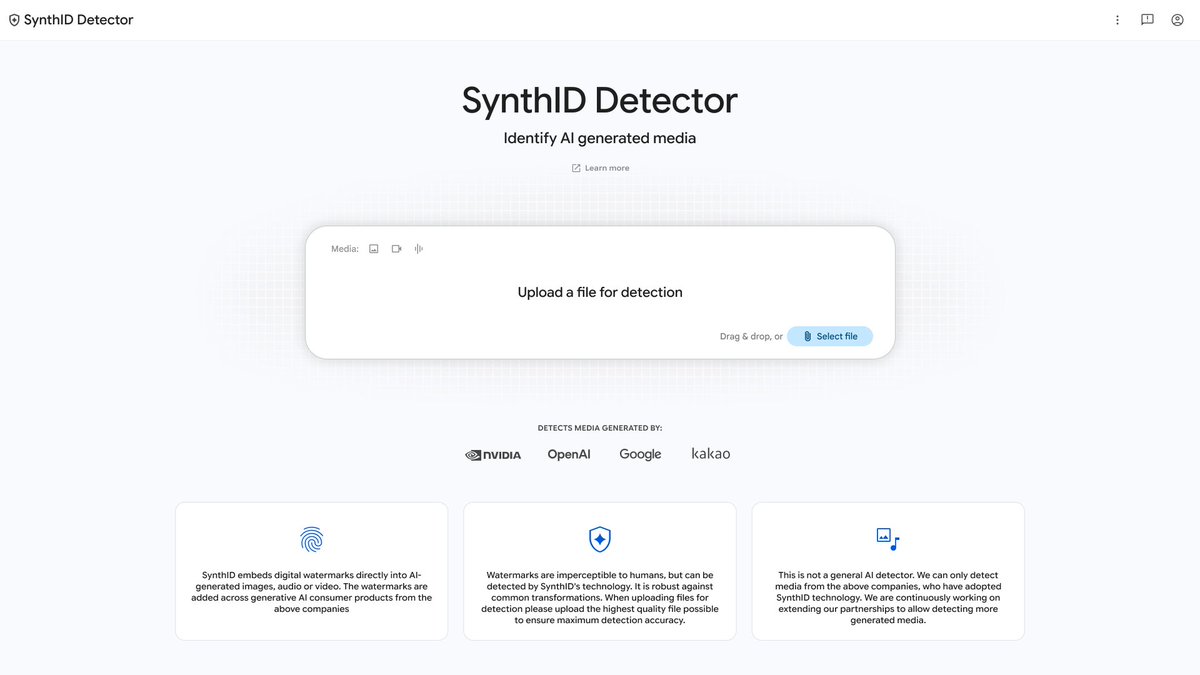 postGoogle opens SynthID watermark checks to everyone, with partner coverage
 postGemma 4 orchestrates a plant DNA model to find crop mutations in minutes
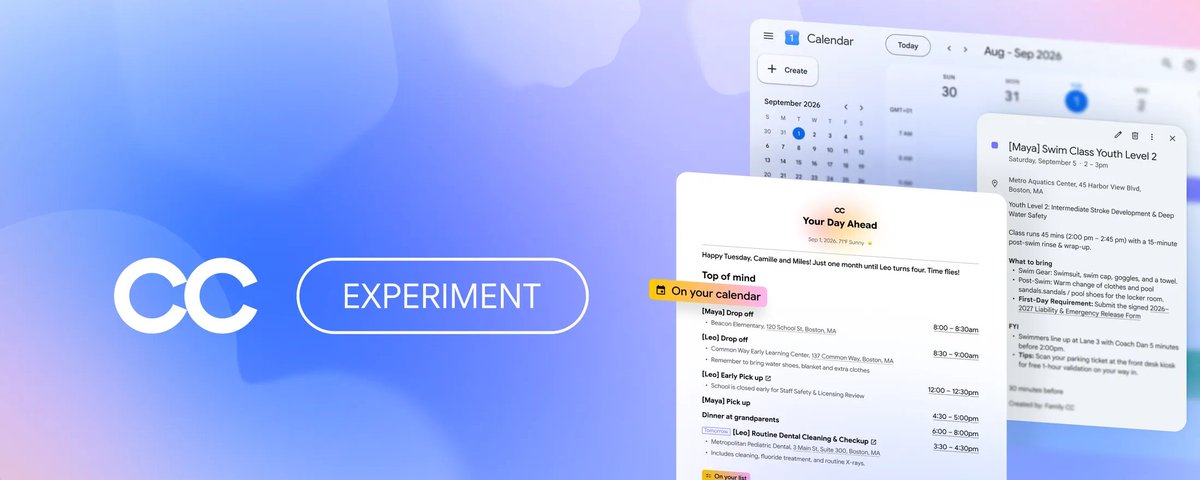 articleGoogle's Project CC gives a family agent its own identity and sandbox

Checking sign-in…
Loading comments…