What does the next training paradigm look like?
- Source
- youtube.com
- Author
- Dwarkesh Patel
- Date
Context
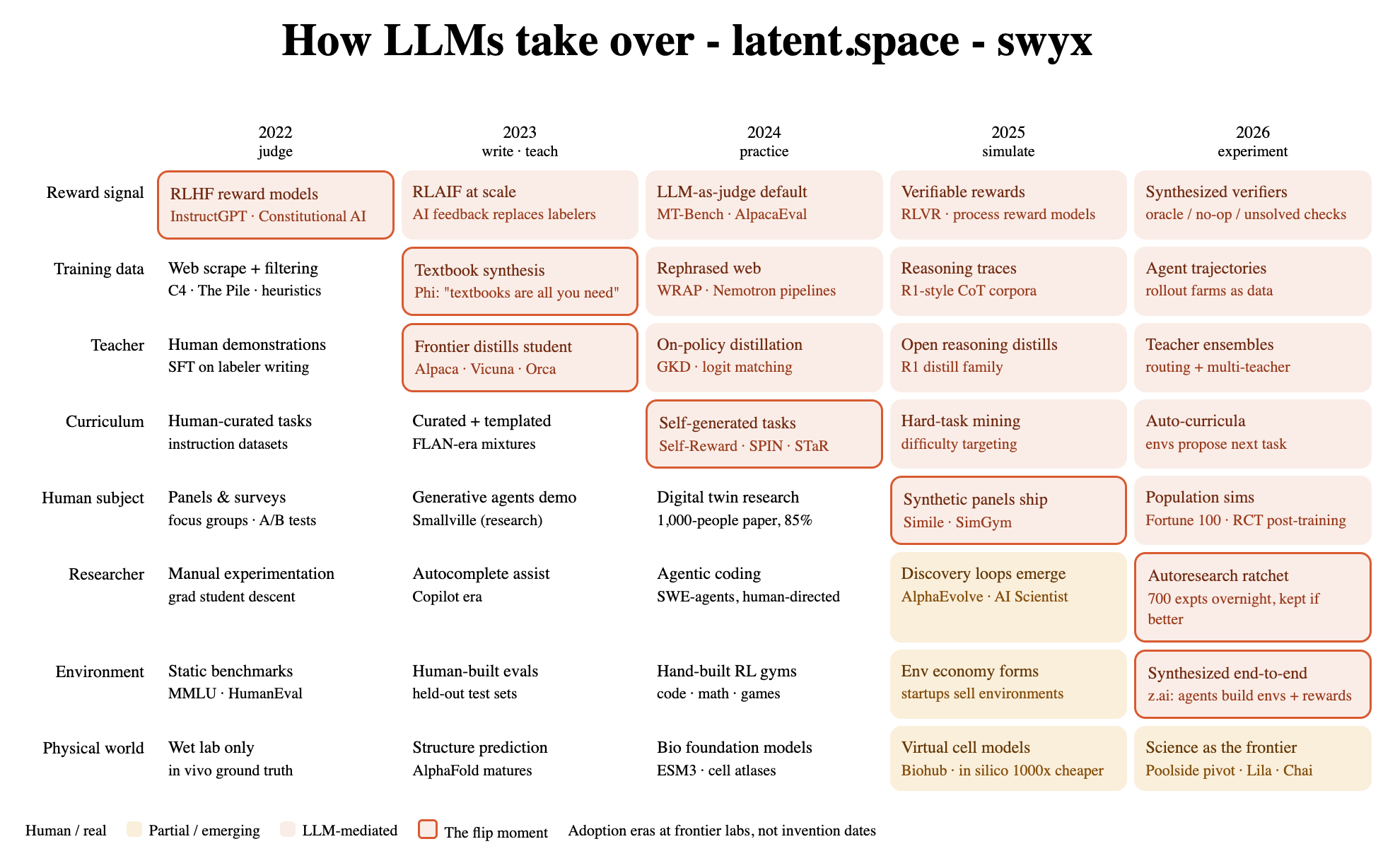
Dwarkesh Patel argues in a video essay that the labs' main bet, training AI on millions of verifiable tasks across thousands of reinforcement-learning environments (training by rewarding successful attempts), runs into a limit that being verifiable does not remove. The example is computer use: tasks like checking whether an ordered item arrived are easy to verify, yet progress has trailed coding. One underrated reason, Patel says, is that a domain must also be grindable: many parallel attempts must be able to start from the same point against a replayable, deterministic simulator. A coding task can be copied into a thousand identical containers, but a thousand agents cannot repeatedly try the same checkout flow on a real shop.
Patel expects this to ease once AI can build faithful clones of common apps. The same logic, Patel argues, explains why skills with slow, one-off real-world feedback, such as building a business, are harder to train, and why continual learning, updating a model's weights from deployment, still matters. This is Patel's argument and , not a test result.
- inference — Running a trained model to get answers — the phase where AI is actually used, as opposed to trained.




Checking sign-in…
Loading comments…