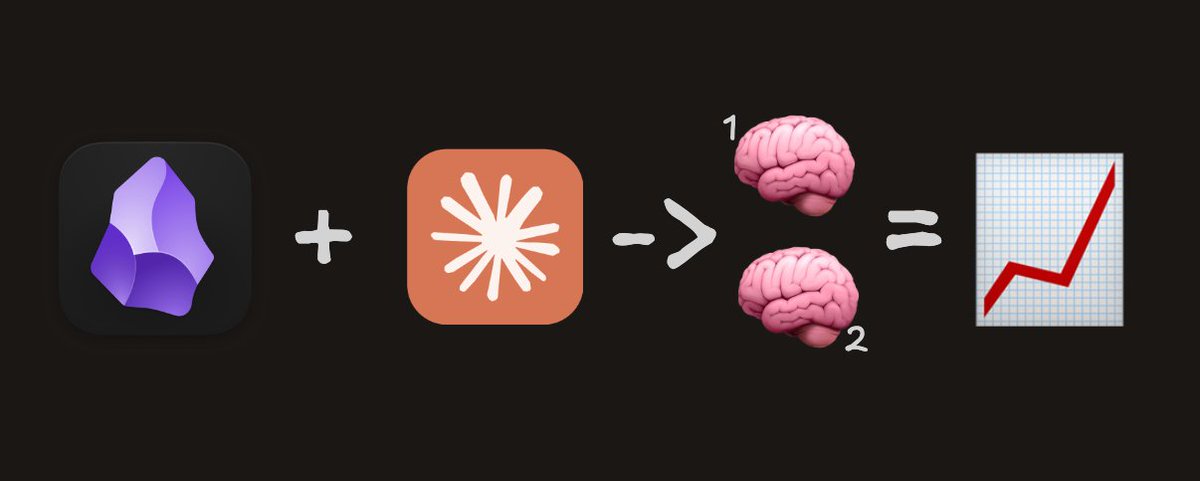
A concrete setup wiring Claude into Obsidian so your notes get ingested, connected, and made queryable instead of rotting in folders. Steal the architecture if you have bounced off every "second brain" that was all capture and no retrieval.
Key takeaways · AI-distilled
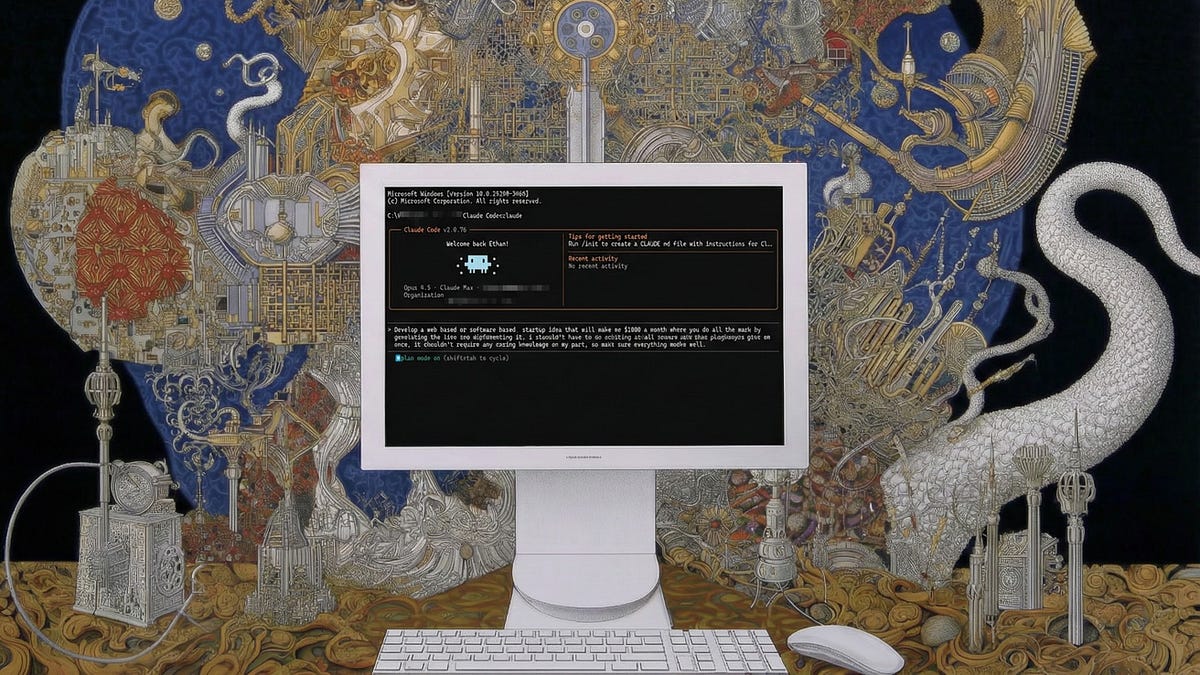
The vault is just a folder of markdown files, so you point Claude Code at the folder and work from the terminal. Obsidian is only the window you look through when you want to see what is inside.
Second-brain systems die from maintenance, not capture. Tags, cross-references and restructuring pile onto a full workload, you skip them, the system degrades, and six months later you rebuild from scratch. Making maintenance a command is what breaks the cycle.
You can bootstrap from nothing: talk to Claude for twenty minutes about your work, goals and current projects, then save that transcript as your memory file. The vault does not have to be complete to be useful, only real.
Vannevar Bush described the Memex in 1945 — a personal store where the links between documents matter as much as the documents. The part he could not solve was who maintains the links, and that is exactly the job being handed to the AI agentAn AI system that doesn't just answer once but works toward a goal in a loop — taking actions, reading the results, and deciding what to do next.Full definition →.
Terms in this piece · Glossary
AI agent — An AI system that doesn't just answer once but works toward a goal in a loop — taking actions, reading the results, and deciding what to do next.
Key quotes
“That's not a chatbot, that's a second brain that never sleeps, never forgets, and gets smarter every single day you use it.”
Leo
“You don't even need to open Obsidian, point Claude Code at the folder, work from the terminal, and your second brain quietly builds itself in the background.”
Leo
“The vault doesn't need to be complete to be useful. It just needs to be real.”
Leo
“He called it the Memex, the part he couldn't solve was who does the maintenance.”