Local inference crosses over: the M5 Ultra and the 1,000x claim
- Source
- x.com
- Date

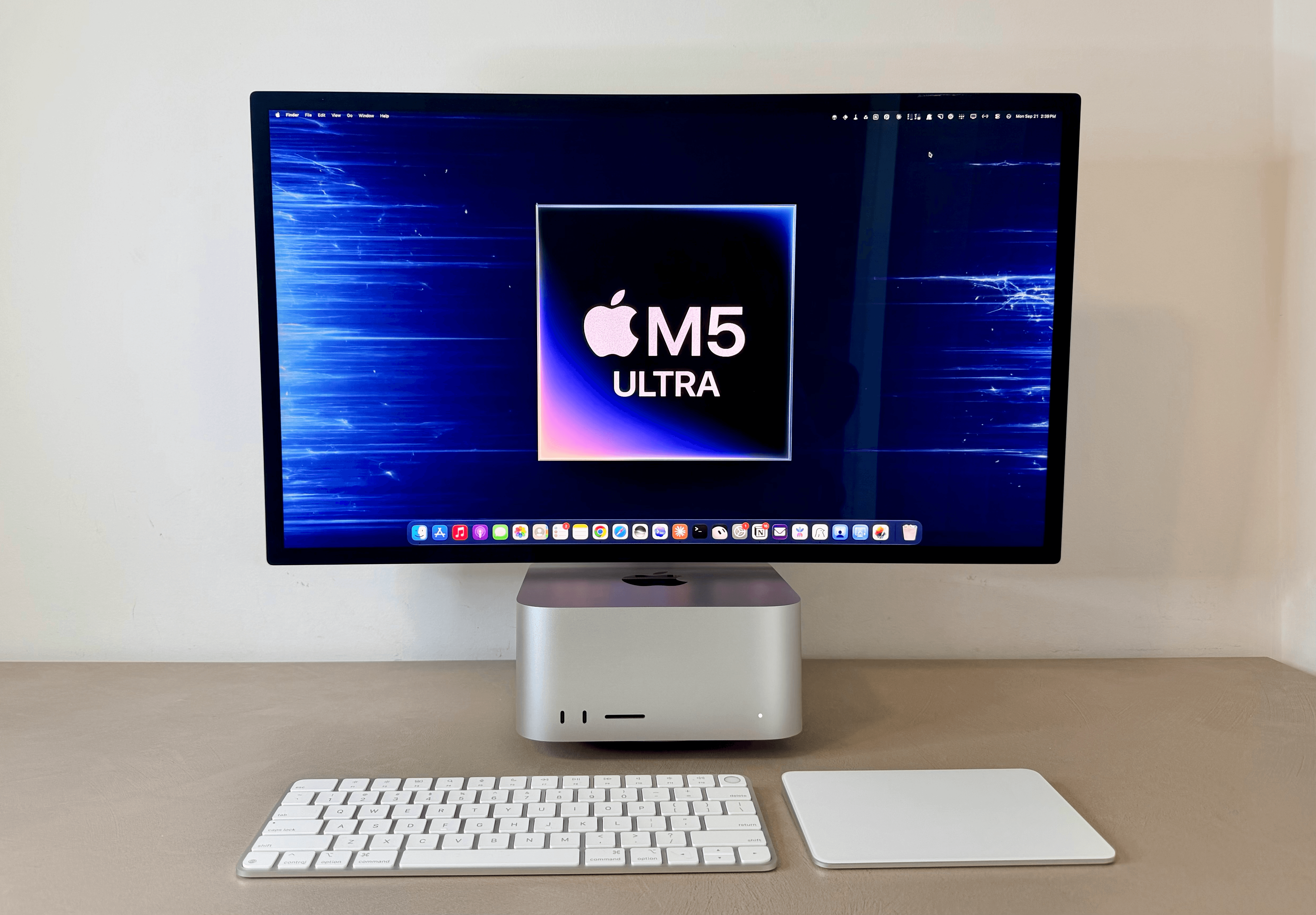
2 years ago, we achieved the first big milestone with @exolabs. We clustered 2 MacBooks to run Llama 405B. It felt like magic. The consensus was running this model was only possible in a data center. We ran it on consumer hardware, on 2 M3 Max MacBook Pros. Most people thought it was a gimmick. It only ran at 2 tok/sec! But, we believed that improvements to the software, hardware, and models would all compound. So that maybe in a few years, we thought, this would improve 10x in software, 10x in hardware, 10x models = 1000x. That was the vision. We imagined a world where you would have frontier intelligence running quietly on your desk. Today is the day that vision became reality. The M5 Ultra is a 10x step-change improvement vs the M3 Max we originally clustered. That, compounded with software improvements like RDMA over Thunderbolt, MTP and better kernels, and high intelligence density models like Qwen 3.8 27B, means we now have 1,000x better Local AI than when we started. I am so grateful to the small group of people at Apple (including @doogie69 @awnihannun @angeloskath @DiganiJagrit @doogie69) who believed in this vision and had the foresight as well as the…

Context
Alex Cheema's claim of a thousandfold improvement in local AI combines changes in hardware, software, and model capability. Cheema contrasts an earlier experiment running a 405-billion-parameter model across two laptops at two per second with newer hardware and a much smaller, 27-billion-parameter model. The post argues that progress across these layers compounds.
The comparison explains Cheema's optimism about useful AI running on a desk. It does not establish a thousandfold speedup on a fixed model or task: both the machinery and the model being run have changed.
- postIs the Rush to Build New LLM Inference Engines Fragmenting the Ecosystem?
- postBig model. 2.4T params, 95B active. 4.89TB. Surprised they didn't release a 4-bi
 post@Jason @Lons @eisokant @ape Correction: Should actually be closer to 50 tok/sec
 postApple markets a four-Mac cluster for trillion-parameter local inference

Checking sign-in…
Loading comments…