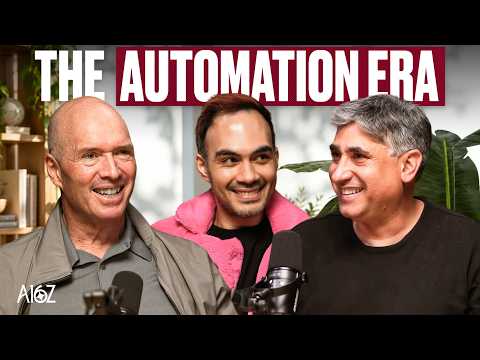
Why I couldn't build Jev at OpenAI — Diogo Almeida, TypeSafe Co-founder & CEO
- Source
- youtube.com
- Author
- Latent Space
- Date
Context
TypeSafe AI's Jev is designed to return decisions that ordinary software can use directly. A developer supplies state (the data the program holds) and structured questions, and Jev returns typed answers with probabilities instead of free-form text. TypeSafe's launch article describes classification, routing, and scoring as intended uses, comparing them to "smart if-statements" inside normal code. Jev's design
That design fits the interview's advice to split an AI workflow into many small, measurable decisions: the surrounding program keeps explicit control of the sequence, and Jev supplies a judgment at each step. A well-formed answer is not automatically the right judgment, and the sources give no accuracy or reliability figures. Interview description
- Almeida describes TypeSafe as a data lab rather than a model lab and says he would not pre-train a model from scratch even with a billion dollars.
- His "bitterest lesson": the right task and the right data can matter more than simply scaling compute.
- For builders, he recommends decomposing AI workflows into many small, measurable decisions and using structured state in place of giant prompts and system messages.
- TypeSafe optimizes for intelligence per dollar and treats reliability and robustness as more important than simple .
- calibration — How well a model's confidence matches reality — a calibrated model saying "90% sure" is right about 90% of the time.
- RLHF — Reinforcement learning from human feedback — training a model to prefer answers humans rate as better, which turns a raw text predictor into a usable assistant.
- determinism — Whether the same input reliably produces the same output — something LLM systems mostly lack, which changes how you test and debug them.



Checking sign-in…
Loading comments…