- Category
- AI Tools
- Rank
- No. 2751Tools index
Previous survey · No. 2636 ·
- Pricing
- Open Source
- Type
- TOOL
- Use case
- Data, Retrieval & Knowledge
- Builder
- VectifyAI
- GitHub
- 69 stars
- Latest release
- v1.0
- Date
About
KV-Cache native context database for long-context LLM agents and RAG.
What it does
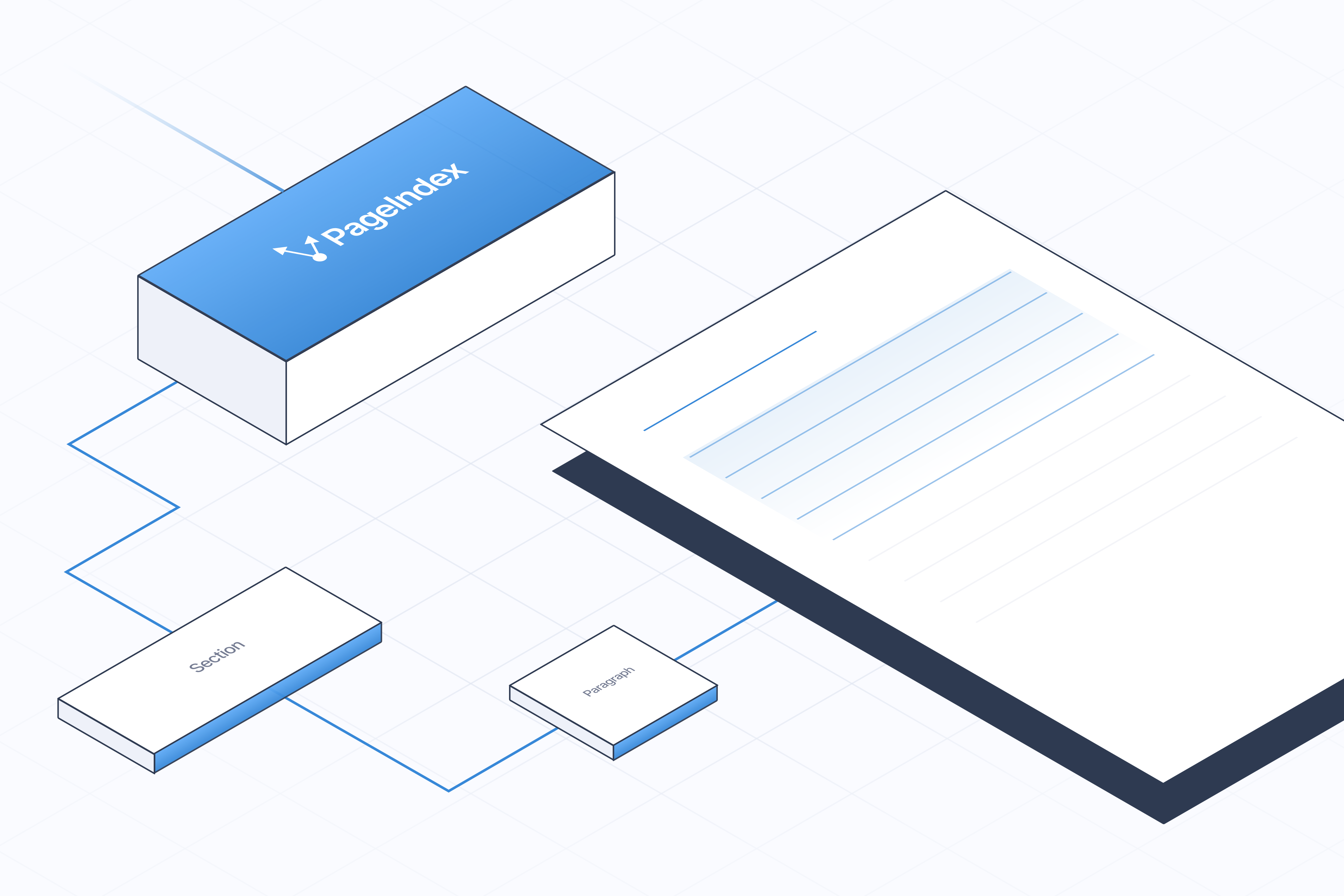
ConDB stores documents, conversations, filesystem layouts, or custom JSON as hierarchies in SQLite. When asked a question, an LLM walks that hierarchy, judging which branches matter instead of comparing embedded text chunks. Small trees use beam search. Larger trees use token-bounded blocks, parallel processing, and prompt-cache reuse.
Why it's ranked here
ConDB presents a concrete alternative to vector retrieval, with inspectable tree navigation, two retrieval strategies, and reproducible benchmark scripts. The reported filesystem benchmark shows block retrieval improving recall and latency over its vertical baseline. The case remains narrower than those results suggest because the comparison covers path-only repository trees, not general answer quality across varied documents.
What's good
It preserves document structure instead of forcing fixed-size chunks. Automatic strategy selection gives small and large trees different search paths. SQLite keeps storage local, while protocols allow custom storage and model clients. Anthropic and OpenAI work through LiteLLM. Query results expose selected content, traversal turns, model-call counts, cache hits, and a trace, which helps explain retrieval behavior.
Tradeoffs
Retrieval depends on LLM calls, provider credentials, and model behavior, so it carries latency and token cost absent from local lexical search. Inputs must already have useful hierarchy; indexing a Markdown file requires an external tree builder. The published filesystem result reports strong recall but low exact-set matching because it often returns an extra candidate. The LiteLLM dependency is pinned to a narrow release range.
How to use it well
Use ConDB when your source material already has meaningful sections, topics, directories, or another hierarchy, and retrieval must consider conversational or task context. Benchmark beam and block strategies on your own trees, then inspect traces and candidate sets before tuning limits. Keep a separate ingestion step for turning raw files into good trees. It does not replace that structure-building work.
Technical notes+
The public library surface is exported from contextdb/__init__.py, while contextdb/api/condb.py implements ConDB, SQLite-backed storage orchestration, format adapters, automatic beam selection at 50 nodes or fewer, block selection above that threshold, and QueryResult tracing. contextdb/llm.py routes Anthropic and OpenAI models through LiteLLM and implements Anthropic cache-control blocks, with a normal-call fallback for other providers. contextdb/rag.py adds a minimal answer generator that concatenates retrieved text, truncating each item to 2,000 characters. pyproject.toml packages contextdb* as pageindex-condb for Python 3.9 or newer, but README.md documents installation through requirements.txt. The version metadata also disagrees: pyproject.toml declares 1.0, while contextdb/__init__.py declares 0.4.0. Reproducible retrieval harnesses appear in bench/run_document_bench.py and bench/run_swebench_filetree.py.
Observed
- License
- Apache License 2.0
- Primary language
- Python
- Package
- pageindex-condb, built with setuptools
- Python support
- Python 3.9 through 3.12 classifiers; requires Python 3.9 or newer
- Install surface
- README documents pip installation from requirements.txt; pyproject defines an installable library package
- Interface
- Python library, plus standalone benchmark command-line scripts
- Storage
- SQLite by default, with a storage protocol for custom backends
- Platform
- Operating System Independent classifier
Read from README.md, pyproject.toml, requirements.txt, generate_filesystem_flow_drawio.py, contextdb/llm.py, contextdb/rag.py, contextdb/logger.py, contextdb/__init__.py, bench/run_document_bench.py, bench/run_swebench_filetree.py, bench/db/report.py, contextdb/api/condb.py, bench/db/gen_formats.py, bench/db/bench_writes.py.
What it can do
Store and retrieve key-value pairs for LLM context
Key-value data pairs → Cached context data
Manage long-context memory for LLM agents
Conversation history and context data → Persistent agent memory state
Index and search documents for RAG applications
Document collections and search queries → Relevant document chunks
Cache and optimize LLM context windows
Large context data exceeding token limits → Optimized context chunks
Retrieve contextually relevant information for LLM queries
User queries and stored context database → Filtered relevant context data
Tags
Tech Stack
Media
Comments (0)
No comments yet
Editorially curated, with community endorsements as a secondary signal. Corrections welcome.