Parallel Agents as the Next Axis for Scaling AI
- Source
- x.com
- Date

Parallel agents are emerging as an important new direction for scaling up AI. AI capabilities have scaled with more training data, training-time compute, and test-time compute. Having multiple agents run in parallel is growing as a technique to further scale and improve performance. We know from work at Baidu by my former team, and later OpenAI, that AI models’ performance scales predictably with the amount of data and training computation. Performance rises further with test-time compute such as in agentic workflows and in reasoning models that think, reflect, and iterate on an answer. But these methods take longer to produce output. Agents working in parallel offer another path to improve results, without making users wait. Reasoning models generate tokens sequentially and can take a long time to run. Similarly, most agentic workflows are initially implemented in a sequential way. But as LLM prices per token continue to fall — thus making these techniques practical — and product teams want to deliver results to users faster, more and more agentic workflows are being parallelized. Some examples: - Many research agents now fetch multiple web pages and examine their texts in…
Context
More AI work need not all happen in one long sequence. Andrew Ng describes parallel agents that investigate different pages or develop alternative answers at the same time, with another model combining the results.
The proposed advantage is to spend more computation on a task without extending waiting time by the same amount. It depends on finding work that can proceed independently and then combining the results usefully. Ng identifies task decomposition as a central challenge, so his argument is a design direction for suitable workflows, not a promise that adding agents always improves speed or quality.
- test-time compute — Spending more computation when the model answers — thinking longer, trying multiple attempts — to buy accuracy without training a bigger model.
- token — The chunk of text a model reads and writes in — roughly three-quarters of a word — and the unit AI usage is billed in.
- multi-agent — Using several AI agents on one problem — splitting work in parallel, checking each other, or filling different roles like planner and reviewer.
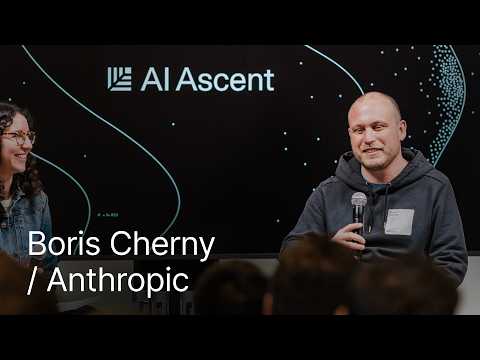 clipParallelizing agents as next frontierSequoia Capital
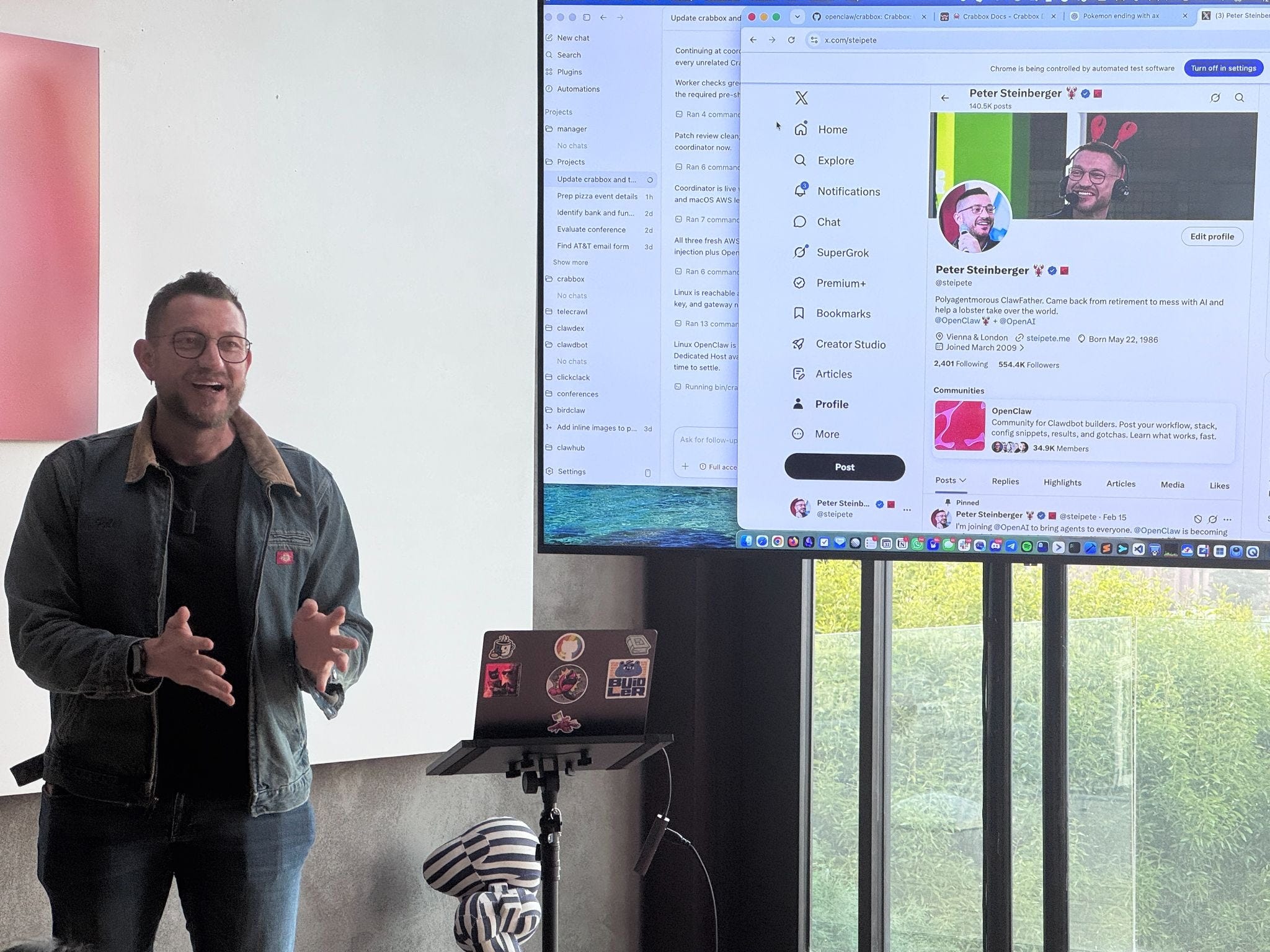 articleImpressions from visiting OpenAI, Anthropic, & CursorGergely Orosz
 articleBeyond code generation: rethinking engineering productivity in the age of AI agentsIlya Yakovlev,Andrew Cheung,Binoy Dash,Simran Jumani,Dmitriy Meyerzon,Mark Breitenbach,Ishan Mishra,Kazuaki Okumura
Checking sign-in…
Loading comments…