How to Become So Creative It Feels Illegal
- Source
- x.com
- Author
- DAN KOE
- Date
Context
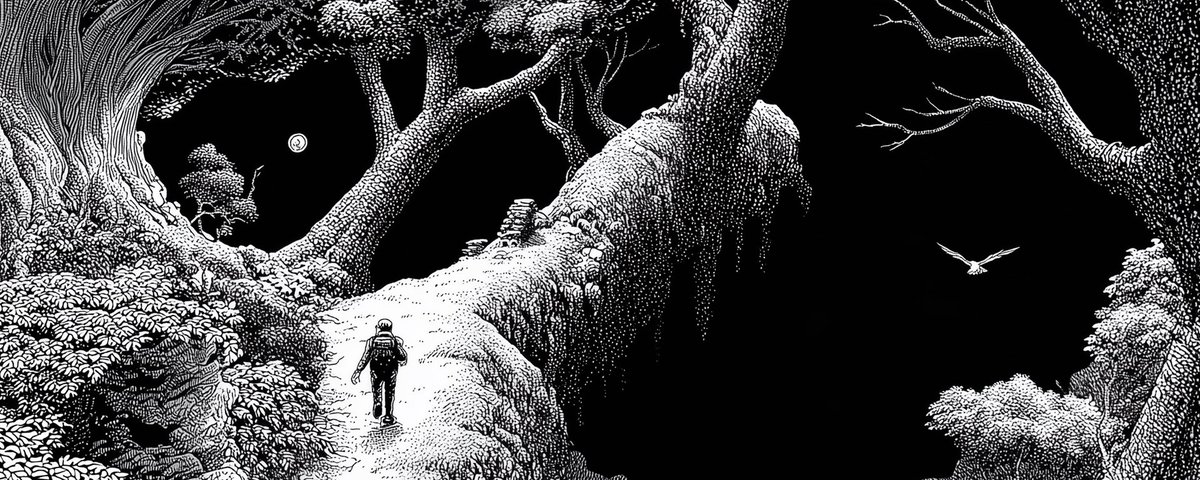
Dan Koe's essay on creative block proposes separating time for generating ideas from time spent judging and publishing them. The suggested routine reduces habitual media consumption, leaves room for quiet walks and slow reading, and ends with making something privately.
The final exercise asks the creator to wait before sharing the result. That gives an unfinished idea room to develop before reactions from an audience become part of the task. The useful proposal is a change in working conditions: reserve time to explore without immediately turning the result into a public deliverable. Koe frames the routine around a personal stretch of struggling to write.
- Creativity here is defined as noticing the unnoticed, not creating something from nothing. It is a wide, relaxed state where non-obvious connections surface — which is why it reads as a mood you can lose rather than a talent you never had.
- Conditioning closes it. A child asking for a teleportation device is charming; an adult asking gets treated as someone who does not understand how the world works. Enough of that feedback and by twenty most people hold the same beliefs as everyone around them.
- A nervous system running on perpetual deadlines is in survival mode, and survival mode cannot see new connections. The counterintuitive requirement is useless wandering and genuine boredom — the slack in which an idea has room to arrive.
“It’s more of a cognitive burnout than an emotional one. I can keep working, sure, but I don’t feel very human.”
“Because in today’s world, your creativity is the most scarce resource.”
“A stressed mind only worries about survival, and you can’t see new connections when your nervous system is ruled by deadlines.”
“It’s the act of noticing the unnoticed, which is not the same as what most think creativity is: creating something from nothing.”
Checking sign-in…
Loading comments…