A Three-Course PyTorch Path From Tensors to Deployed Architectures
- Source
- x.com
- Date

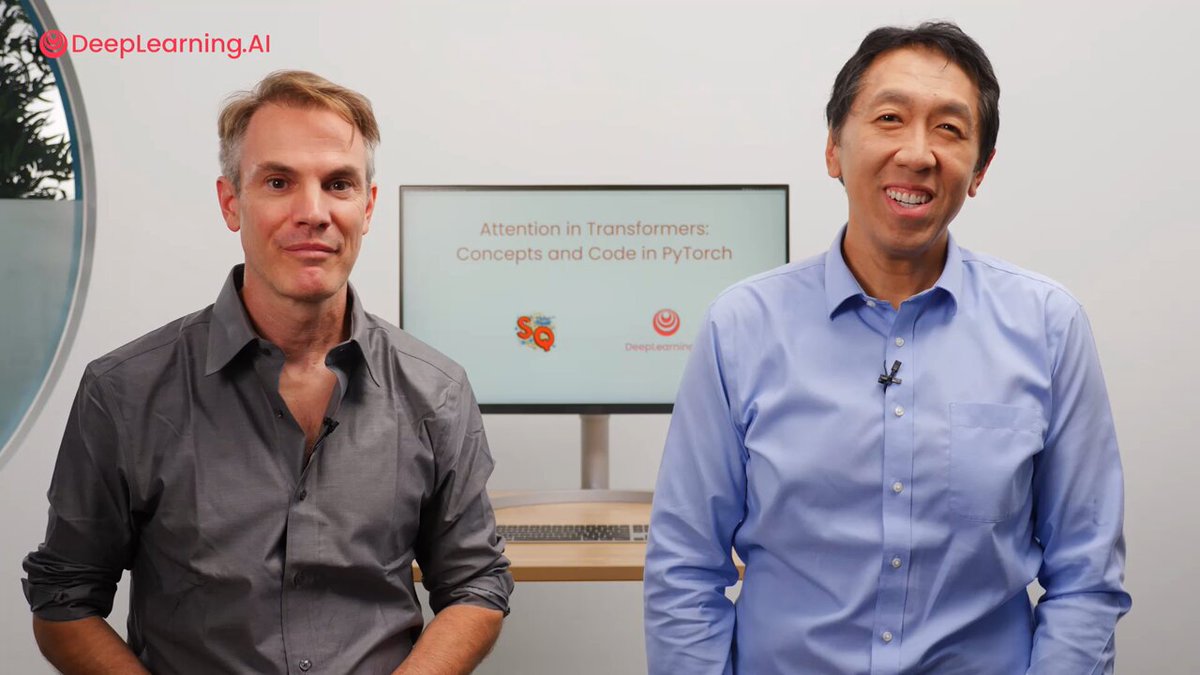
An exciting new professional certificate: PyTorch for Deep Learning taught by @lmoroney is now available at https://t.co/zpIxRSuky4. This is the definitive program for learning PyTorch, which is one of the main frameworks researchers use to build breakthrough AI systems. If you want to understand how modern deep learning models work—or build your own custom architectures—PyTorch gives you direct control over the key aspects of model development. This three-course professional certificate takes you from fundamentals through advanced architectures and deployment: Course 1: PyTorch: Fundamentals - Learn how PyTorch represents data with tensors and how datasets fit into the training process. You'll build and train neural networks step by step, monitor training progress, and evaluate performance. By the end, you'll understand PyTorch's workflow and be ready to design, train, and test your own models. Course 2: PyTorch: Techniques and Ecosystem Tools - Master hyperparameter optimization, model profiling, and workflow efficiency. You'll use learning rate schedulers, tackle overfitting, and apply automated tuning with Optuna. Work with TorchVision for visual AI and Hugging Face for…

Context
The PyTorch for Deep Learning professional certificate teaches the workflow for building and adapting models directly. It begins with representing data and training neural networks, then moves into adjusting training choices and existing models for new tasks.
Its deployment material connects model development to practical constraints. The publisher describes exporting portable models, tracking experiments, and using pruning and to reduce model size and latency. This makes the program relevant to learners who want control over how models are trained and prepared for use. Familiarity with Python and foundational deep-learning concepts is the recommended starting point.
- fine-tuning — Taking a trained model and training it a bit more on your own examples so it gets better at one specific job.
- quantization — Shrinking a model by storing its numbers less precisely — like rounding — so it runs faster and fits on smaller hardware, at a small quality cost.

Checking sign-in…
Loading comments…