Agentic Coding Makes Product Decisions the Bottleneck
- Source
- x.com
- Publisher
- Andrew Ng
- Date

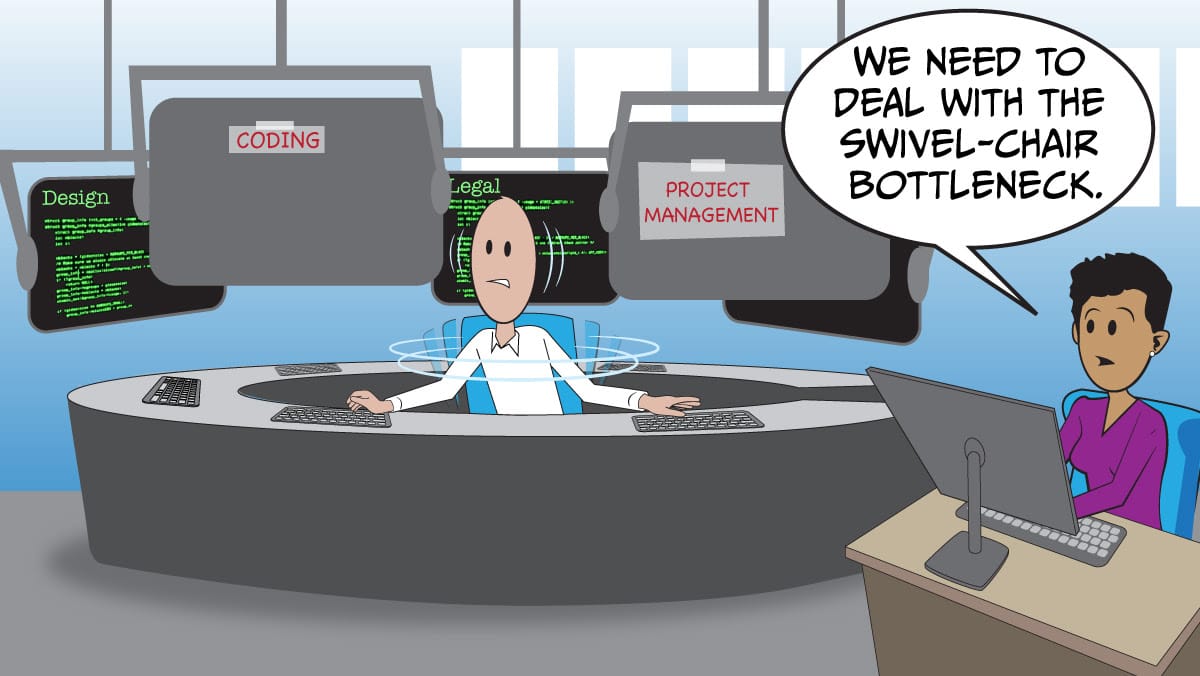
The invention of modern writing instruments like the typewriter made writing easier, but they also led to the rise of writer’s block, where deciding what to write became the bottleneck. Similarly, the invention of agentic coding assistants has led to a new builder’s block, where the holdup is deciding what to build. I call this the Product Management Bottleneck. Product management is the art and science of deciding what to build. Because highly agentic coding accelerates the writing of software to a given product specification, deciding what to build is the new bottleneck, especially in early-stage projects. As the teams I work with take advantage of agentic coders, I increasingly value product managers (PMs) who have very high user empathy and can make product decisions quickly, so the speed of product decision-making matches the speed of coding. PMs with high user empathy can make decisions by gut and get them right a lot of the time. As new information comes in, they can keep refining their mental models of what users like or do not like — and thereby refine their gut — and keep making fast decisions of increasing quality. Many tactics are available to get user feedback and…
Context
Andrew Ng argues that agentic coding tools have moved the slow step in early-stage software projects from writing code to deciding what to build. In an X post that also ran as his letter in The Batch, DeepLearning.AI's newsletter, he compares it to writer's block: the typewriter made writing easier, so choosing what to write became the holdup. Because coding agents turn a product specification into software much faster, he calls the new holdup the Product Management Bottleneck, and says that as the teams he works with adopt coding agents, he increasingly values product managers who understand users well enough to decide as quickly as the code gets written.
His example shows what deciding quickly means in practice. His team was unsure which of four features users would prefer, so it surveyed about 1,000 users, and the results contradicted his own instinct. Rather than simply building the survey's winner, he recommends studying the results to revise his picture of what users want, then deciding from that picture. He argues that surveys can be flawed and that running one before every decision is slow, while an updated understanding of users, built from surveys, conversations, market reports and observed behavior, informs many later decisions at once. He limits the approach to products with a small number of critical choices, such as which features to prioritize. Where a system makes huge numbers of decisions, such as which ads or products to show across many pages, he says automated experiments do the work and human intuition does not scale. This is his account of how he works, not a measured comparison of the two approaches.
- Constraint — A requirement a setup must meet regardless of how well it performs otherwise, such as where documents may be sent or a date by which the work must be done.
- Model — A computational system that uses learned patterns to produce an output from information supplied to it.