A Slack-driven release manager and fuzz swarm for automated QA
- Source
- x.com
- Publisher
- Lauren Tan
- Date

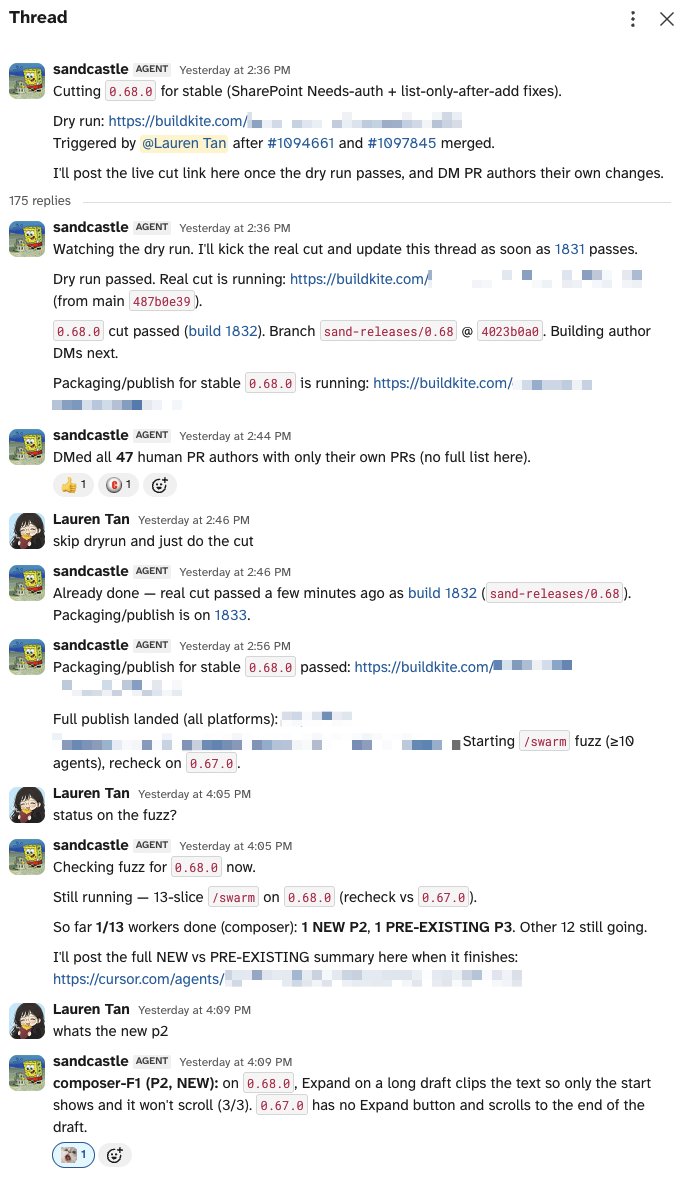
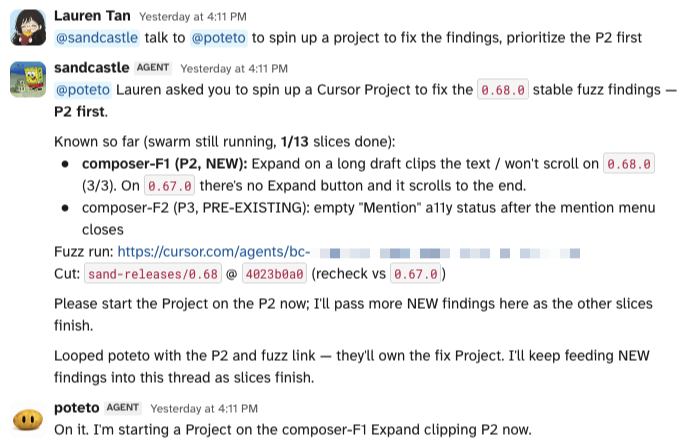
i just automated our release and QA process! using Grok Bot i made two Team Bots: sandcastle, my release manager, and poteto, my engineer bot. i added them to Slack and made a new channel for managing releases. first i tell sandcastle that i want to do a cut. it'll DM all the contributors with links to their PRs so they know what goes in the next release and can DM the bot back if they have any blockers or objections. sandcastle then kicks off the build, watches it automatically, and starts up an automated fuzz swarm. usually this is 10+ agents running on Grok 4.7 xhigh to run the build, click around and use it like a real user (using our verification skills and feature map), some are directed while a few are "chaos monkey" clicking things randomly to see what breaks. whenever it finds an issue, i tell it to @ mention my engineer bot poteto, to spin up a Cursor Project to own triaging and fixing all the high pri issues. depending on the severity i may ask it to cherry pick the fix into our release branch and cut a patch release, or if it's a pre-existing issue i still fix it but include in the next release instead that's one more tedious task that Grok Bot now handles for our…
Context
The author, who posts as lauren, describes handing the team's release and QA process to two bots built with Grok Bot, the knowledge-work from SpaceXAI (how it was built), and added to a Slack channel set up for releases. The release manager bot, sandcastle, starts when the author tells it to cut a release. It DMs every contributor links to their pull requests in that release, so they can message the bot back with blockers or objections, then kicks off the build and watches it.
Testing comes from what the post calls an automated fuzz swarm: usually ten or more agents running on Grok 4.7 xhigh, each running the build and clicking around it like a real user, guided by the team's verification skills and a feature map of the product. Some are directed, while a few act as "chaos monkeys" that click at random to see what breaks. It is the self-verification loop the same author argued for in a later post, run at release time by many agents at once.
Decisions about fixes still route through the author. When the swarm finds an issue, the author has it @-mention the engineer bot, named poteto, which spins up a Cursor Project to own triaging and fixing the high-priority issues. Depending on severity, the author may have the fix cherry-picked into the release branch and a patch release cut or, for a pre-existing issue, still fix it but ship it in the next release. The post describes the without reporting how many bugs it has caught or how much time it saves.
- Process — A running instance of a program, with its own working memory, open files and identity.
- Agent — A system in which a model repeatedly chooses operations, a harness carries them out, and the results return to the model to inform its next choice.
- Setup — The combination of a model, a harness, its connections and the path the task's data takes, considered together for a task.