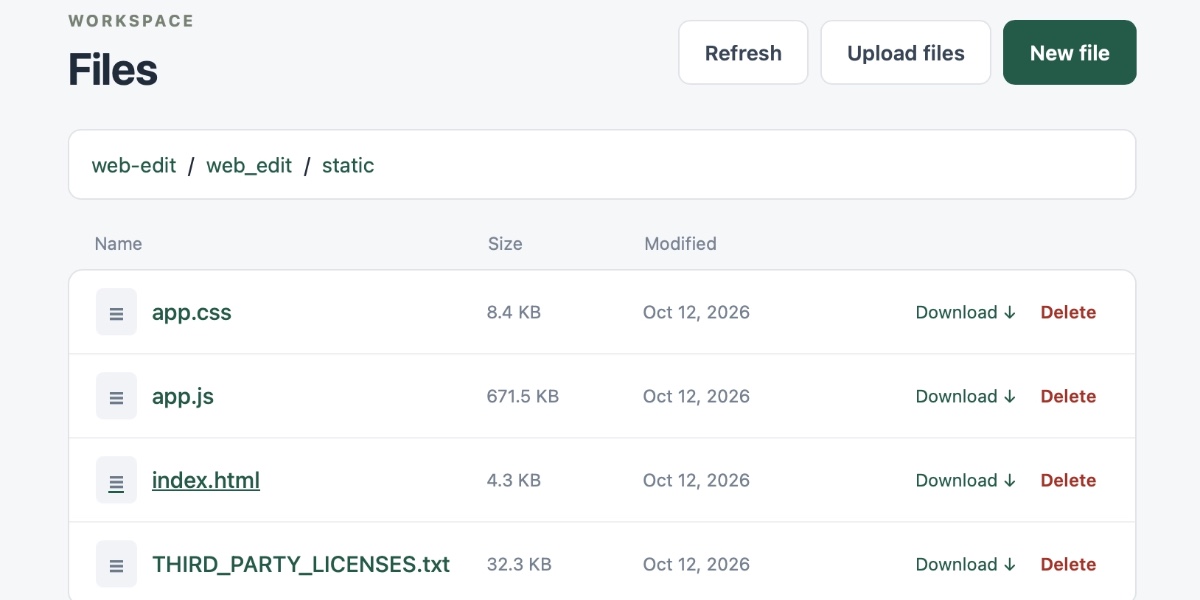
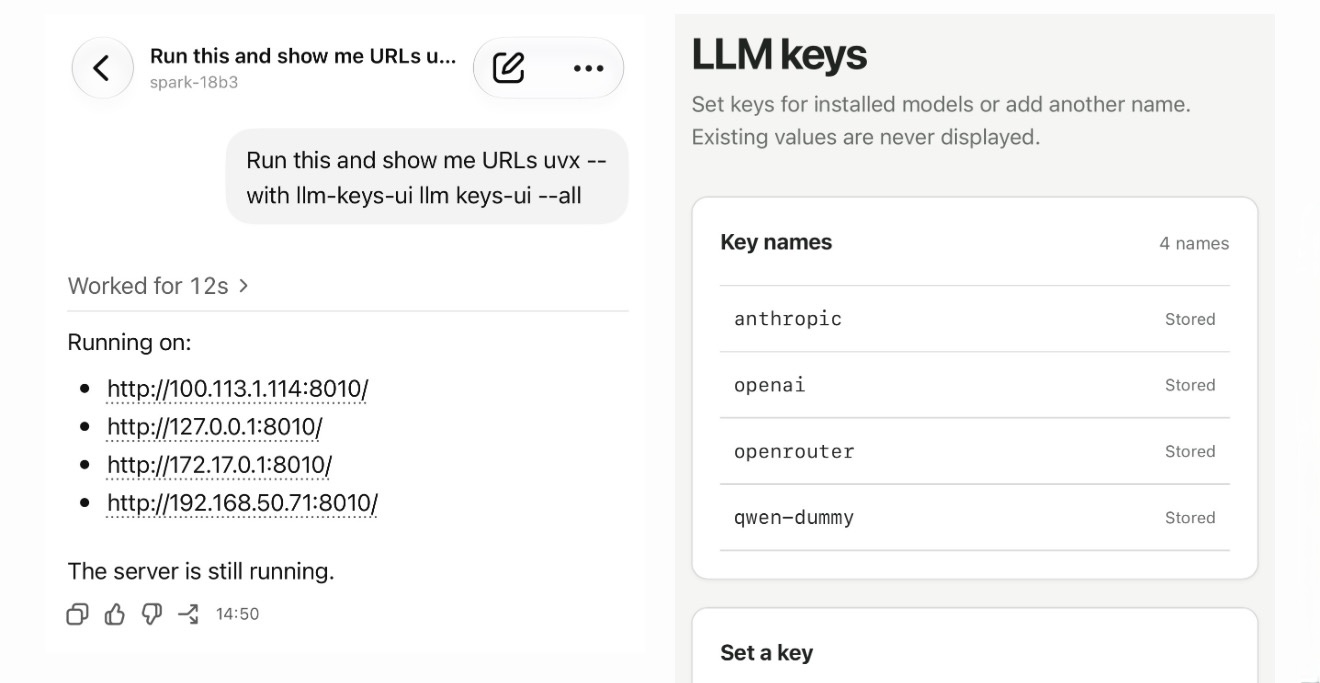
Simon Willison built web-edit to edit files from a phone without passing their contents through an AI conversation. The immediate need was a credentials file. The small Python ApplicationSoftware arranged so that a person can use it; in this course, the software around a model that accepts your request, prepares the context and shows the reply.Full definition → provides a browser interface for viewing and editing a FolderA named container that holds files and other folders; also called a directory.Full definition →, intended to be reached through Willison's own Tailscale network. An agent can start the application, and the person then makes the edit directly. That separates the agent's setup work from the sensitive text the person wants to enter. Release account.
Key takeaways · AI-distilled
Willison built the tool so he could edit a credentials file from his phone without sending those secrets through the Large language modelA model trained on large amounts of data to process and generate language.Full definition →: the agent starts the editor, but the SecretA value such as a password, key or token that lets its holder act as someone; it must be kept out of code and shared files.Full definition → goes straight from the human to the file.
web-edit is a small Python web app that lists the files in a folder and lets you edit them. It is meant to run over Tailscale, so it can be reached from the author's phone on his private network rather than the public internet.
Willison says he had Codex with GPT-6 Astra Extra High build the app. Editing uses CodeMirror 6, which he chose over Monaco because Monaco still lacks a good mobile experience.
Terms in this piece · Glossary
Application — Software arranged so that a person can use it; in this course, the software around a model that accepts your request, prepares the context and shows the reply.
Folder — A named container that holds files and other folders; also called a directory.
Large language model — A model trained on large amounts of data to process and generate language.
Secret — A value such as a password, key or token that lets its holder act as someone; it must be kept out of code and shared files.