Sakana's MASS distills multi-agent teams into a single model
- Source
- x.com
- Date

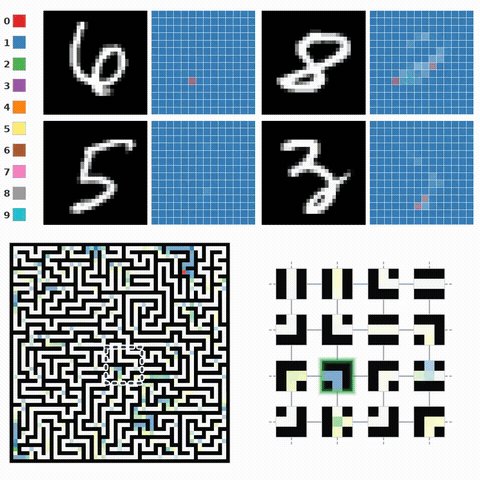
Introducing Multi-Agent Self-Supervision (MASS): Recursive self-improvement through collective intelligence Blog: https://t.co/LkQe5k7jOW As AI systems tackle increasingly open-ended research problems, human experts may struggle to assess results and guide further progress. The model itself may be the best available optimizer and evaluator. The challenge is obtaining useful self-supervision within that homogeneous loop, where a model risks reinforcing its own blind spots rather than correcting them. We ask whether a model can learn from the collective intelligence of its own team. We introduce Multi-Agent Self-Supervision (MASS). One shared model solves tasks through a team of virtual subagents, searches for better multi-agent workflows, then uses its own judgments to select the best ones. Training on the best team’s executions provides self-supervision by distilling the team’s collective experience into the shared model. We ran two cycles using a 27B open-weights model on synthetic open-ended research tasks. After the second cycle, score per output token reached 1.2-1.6x the base model's level across four research benchmarks. Three key results: First, MASS enables role…

Context
Sakana AI's Self-Supervision, or MASS, turns a model's teamwork into training material. Copies of the same model divide a research task, judge the resulting work and revise how the team operates. The shared model then trains on selected execution records and repeats the process. This lets it learn both how to coordinate work and how to complete individual assignments. The researchers describe the procedure in their MASS explanation.
After two training cycles with a 27-billion-parameter model, the researchers report score per generated output at 1.2 to 1.6 times the starting model's level on four research benchmarks, as stated in the paper's abstract. Transfer was uneven: the same score measure came out slightly below the starting model's on two software-engineering benchmarks, according to the Sakana write-up. These are the authors' reported results, and they support improvement on research-oriented tasks with clear limits on how broadly it carries over.
- multi-agent — Using several AI agents on one problem — splitting work in parallel, checking each other, or filling different roles like planner and reviewer.
- benchmark — A standard public test set for comparing AI models — the shared scoreboards behind every "model X beats model Y" claim.
- token — The chunk of text a model reads and writes in — roughly three-quarters of a word — and the unit AI usage is billed in.
Checking sign-in…
Loading comments…