Co-Designing AI Models Using Speculative Decoding for Faster LLM Inference
Source
developer.nvidia.com
Author
Tanya Lenz
Date
Context
speculative decodingA speed trick where a small model drafts several tokens ahead and the big model verifies them in one pass, often doubling generation speed.Full definition → speeds up text generation by letting a smaller model propose several tokenThe chunk of text a model reads and writes in — roughly three-quarters of a word — and the unit AI usage is billed in.Full definition → for a larger model to check together. But a draft that gets more predictions accepted can still be slower if producing it costs too much. NVIDIA explains that draft length and drafting method must balance accepted output against drafting and verification time on the actual workload. Its analysis therefore favors measuring the whole generation cycle over maximizing acceptance alone.
The original speculative-decoding paper by Leviathan and colleagues showed that this approach can preserve the target model's output distribution. NVIDIA's newer analysis addresses how to make that mechanism pay off on particular hardware. Original paper.
Terms in this piece · Glossary
speculative decoding — A speed trick where a small model drafts several tokens ahead and the big model verifies them in one pass, often doubling generation speed.
token — The chunk of text a model reads and writes in — roughly three-quarters of a word — and the unit AI usage is billed in.
attention — The mechanism that lets a model weigh which earlier words matter for the word it's currently processing — the core operation of a transformer.
KV cache — The memory a model keeps about text it has already read, so generating each new token doesn't require reprocessing the whole conversation.
 articleScale Agentic Coding Workflows with Meta’s Muse Spark Open on NVIDIA GB300 NVL72
 articleOptimizing Agent Reliability and Tool Calling Efficiency for Chip Design Using NVIDIA NeMo Gym
 articleNVIDIA Run:ai Is Now Open Source as Part of NVIDIA DSX AI Factory Platform
 articleBuild Applications on NVIDIA BlueField Faster with NVIDIA DOCA Agent Skills
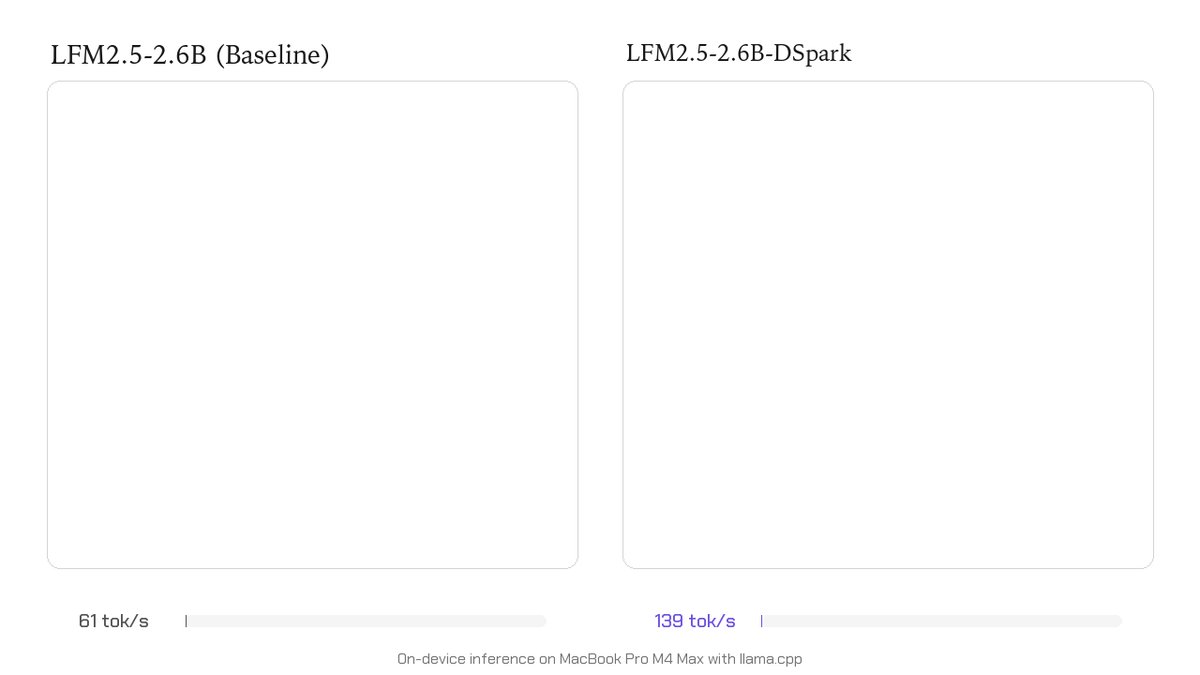 postDSpark draft models cut LFM2.5 agent latency roughly in halfLiquid AI
 articleMargins, Not Windows: Training-Free Per-Step Lossy Speculative DecodingOszk\'ar Urb\'an, Young D. Kwon, Stylianos I. Venieris, Cecilia Mascolo
 videoIs Speculative Decoding Worth It? Profiling vLLM on NVIDIA Blackwell — AkamaiAI Engineer