Elon Is Doing It Again: SpaceX Will Be The World’s Biggest AI Cloud
- Source
- newsletter.semianalysis.com
- Author
- Reyk Knuhtsen
- Date

Context
SemiAnalysis, a research firm that sells datacenter and energy tracking models, argues that SpaceX can plausibly deliver the roughly 13 gigawatts of datacenter capacity it now targets for 2027, up from an earlier 10GW goal. The firm says 3.6GW is already under construction across several sites and that it has identified more than 9GW of capacity in total. Its evidence is construction it has followed through site imagery and local filings, which it published in this free preview. The detailed power analysis, pricing and funding work sit behind a paywall, so the public post supports the claim that the build is moving fast more than the claim that it will finish on time.
Speed is the core of the case. SemiAnalysis says most builders aim for 8 to 12 months per datacenter, while SpaceX's MiniHard building in Memphis took about five months and a newly bought plot in Mississippi is expected to take about four. Retrofits of existing buildings are faster still: one at Colossus 1 took 122 days for 150 megawatts and one at Colossus 2 took 91 days for 210MW, and a third building started on October 5, 2026 targets December for its first capacity. SpaceX is also reusing sites from other Musk ventures. SemiAnalysis says Starbase, the company's Texas rocket campus, went from cleared ground at the end of August to vertical construction by the end of September and could exceed 1GW, and it has medium-high confidence that TeraFab, a planned chip fab in Texas, will include a datacenter, which it thinks outside customers may be able to rent. The firm attributes the pace partly to labor efficiency and partly to its belief that Tesla is manufacturing modular electrical and mechanical equipment for SpaceX, which would let it skip supplier lead times.
Power is the open problem, and the post shows the gap rather than resolving it. SemiAnalysis tracks more than 8GW of likely behind-the-meter capacity, meaning generation built on site instead of drawn from the grid, which is less than the more than 9GW of datacenter capacity it sees coming online. At Colossus 2, the turbines at the Southaven plant can legally run 2.7GW of nameplate capacity today but only 1.24GW by July 2027 under a requirement signed in July 2026. A requested grid connection of about 1.2GW covers part of the load, but after generator efficiency losses and the facility's load beyond the computers themselves, the firm estimates a shortfall that could reach about 300MW. It thinks a battery field nearing 6 gigawatt-hours, very low facility overhead and tiered uptime for internal training versus customer clusters may cover that gap, and says it will analyze the question further.
This post updates SemiAnalysis's earlier case that SpaceX's 10GW plan was real. The new evidence is mostly progress on the ground. The capacity totals come from the firm's own proprietary models, and the post itself shows that the power plan behind them is still unsettled.
 articleSpaceX 10GW in 2027 – Why It’s Real, Will Drive $300B ARR for SpaceX, and Why Microsoft Will Be the Largest OfftakerJeremie Eliahou Ontiveros
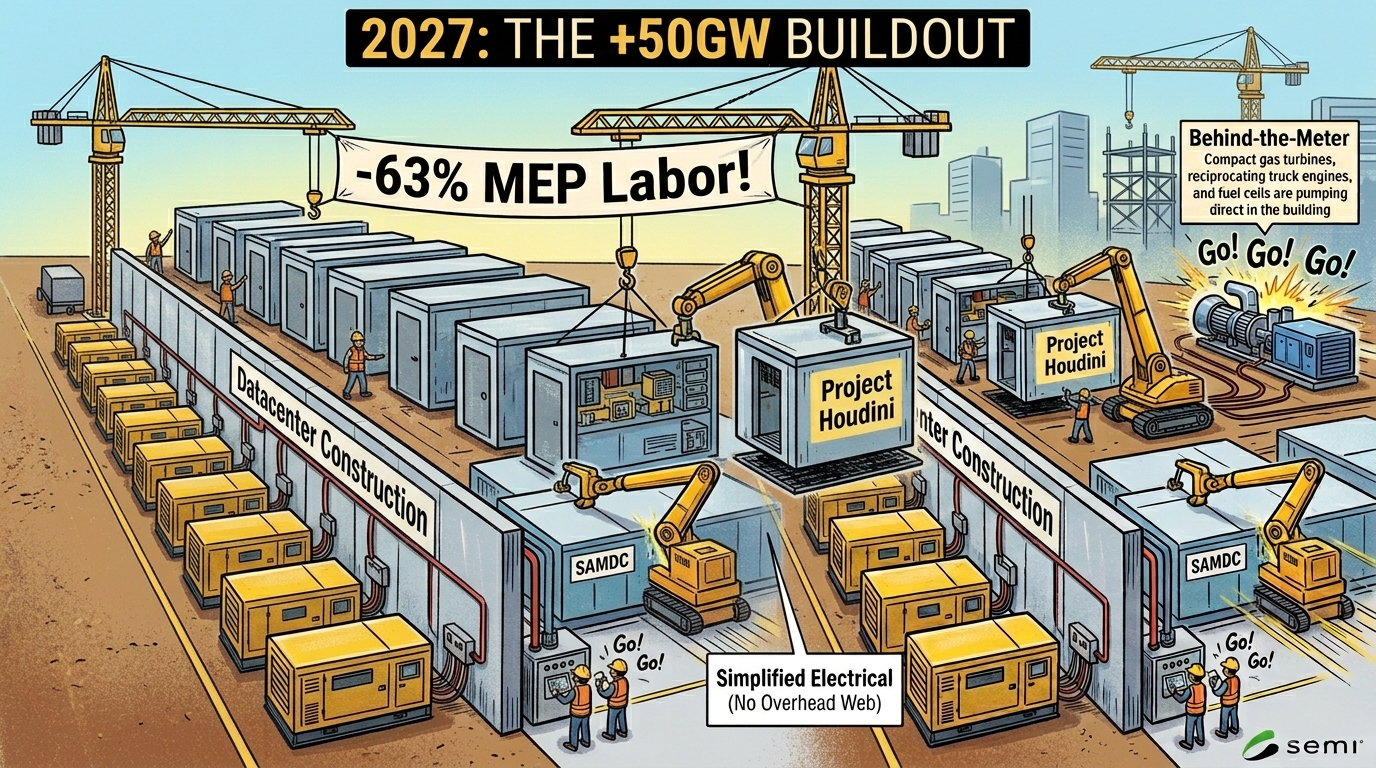 articleDatacenters 2027: The Year of Acceleration, +50GW in a Single YearJeremie Eliahou Ontiveros
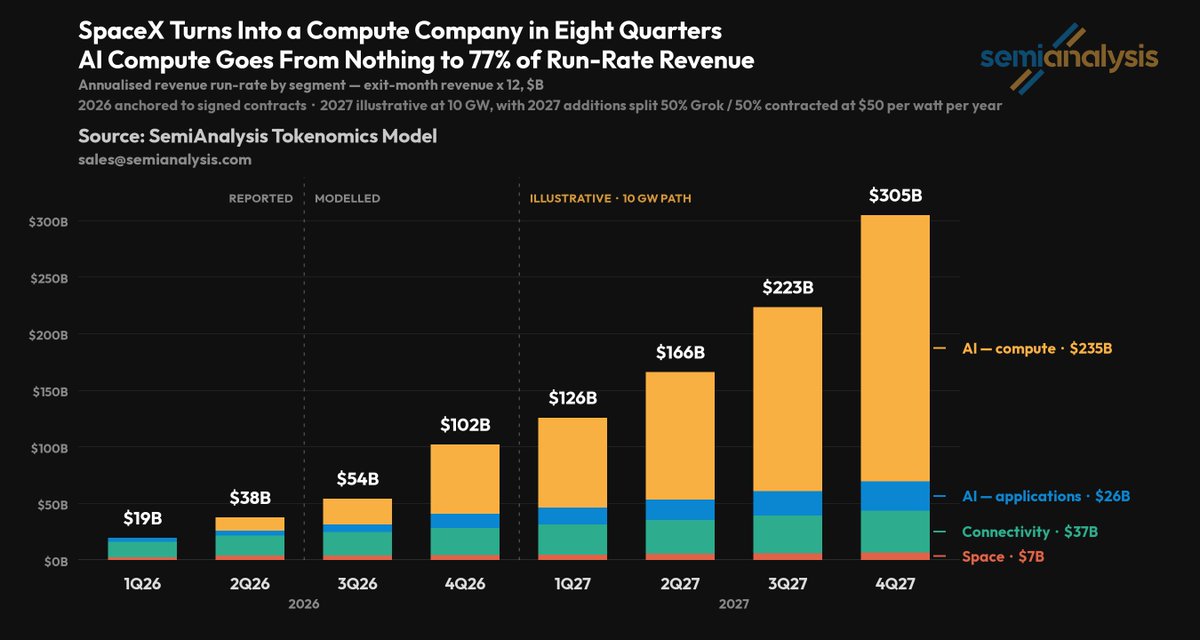 postElon shocked the world again on SpaceX's first earnings call: 6-8GW of incrementSemiAnalysis_
Checking sign-in…
Loading comments…