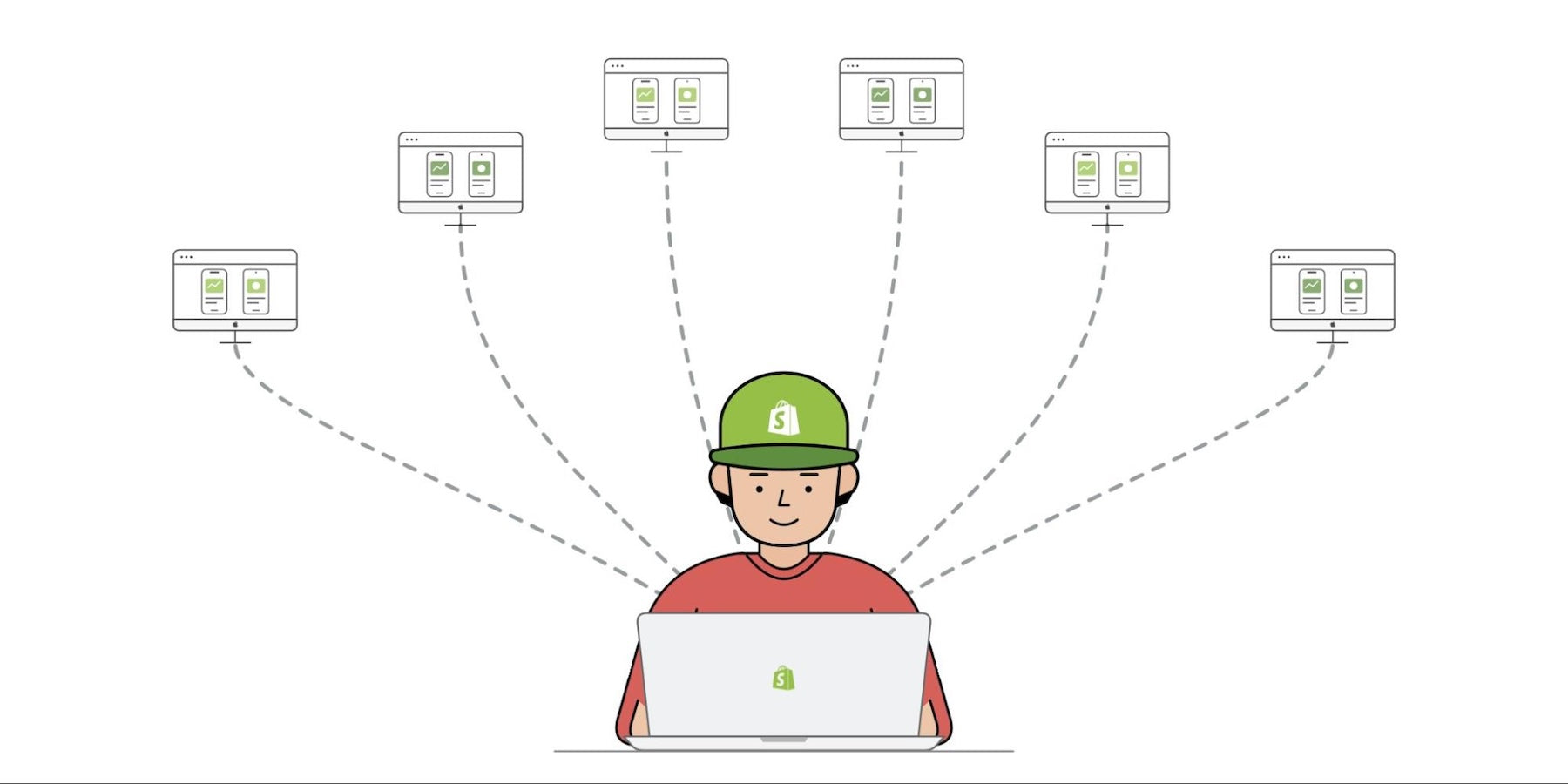
Shows how to move parallel mobile agent workflows off developer laptops onto remote macOS environments, removing the resource ceiling of 3 to 4 concurrent builds and simulators.
Key takeaways · AI-distilled
Shopify found three or four parallel AI agentAn AI system that doesn't just answer once but works toward a goal in a loop — taking actions, reading the results, and deciding what to do next.Full definition → workflows maxed out a developer laptop, and its Slack agent River ran on Linux, so it could edit Swift but not build or test the iOS app. Remote Dev gives each River session its own remote Mac environment.
Android's emulator needs hardware virtualization, and nested virtualization is not available on the macOS VMs, so Shopify attaches an emulator running on a separate Linux VM; agents build on the Mac and test on iOS or Android within one SSH session.
Checking out Shopify's monorepo and compiling the apps took over 30 minutes, so it keeps a pool of warm Macs with main checked out and apps built, destroys each after use and staggers idle refreshes. Time from request to a running device fell to a few minutes.
Infrastructure alone was not enough: River kept saying iOS builds cannot run on Linux. Shopify wrote a agent skillA reusable instruction file that teaches an agent how to do one job well — the procedure, the tools, and what counts as done.Full definition → and a CLI that hides the SSH flags, and had River watch tmux panes in real time instead of sleeping or setting timeouts on long tasks.
River's share of merged mobile pull requests rose from 6% to 61%, which Shopify links partly to internal storytelling campaigns. A cheap classifier tags every mobile River conversation by outcome, and failures feed an LLMA large language model — the neural network behind tools like Claude and ChatGPT, trained on huge amounts of text to predict what comes next.Full definition → that proposes improvements.
Terms in this piece · Glossary
AI agent — An AI system that doesn't just answer once but works toward a goal in a loop — taking actions, reading the results, and deciding what to do next.
agent skill — A reusable instruction file that teaches an agent how to do one job well — the procedure, the tools, and what counts as done.
LLM — A large language model — the neural network behind tools like Claude and ChatGPT, trained on huge amounts of text to predict what comes next.