Anthropic introduces dreaming, a research-preview memory feature in the managed agents API, and explains how to design memory so long-running agents improve over time.
Key takeaways · AI-distilled
Anthropic's platform PM says managed-AI agentAn AI system that doesn't just answer once but works toward a goal in a loop — taking actions, reading the results, and deciding what to do next.Full definition → memory is exposed to Claude as a file hierarchy it edits with bash and grep, and claims Claude Opus 4.7 was state of the art at this kind of file-system memory.
To support many concurrent agents, the PM describes per-store permission scopes (for example a read-only org runbook store plus a read-write working store) and optimistic concurrency, where an agent checks a content hash before overwriting memory.
The PM describes dreaming as a batch, asynchronous job over recent session transcripts, run on a schedule or after tasks finish; it keeps memory quality as a separate objective from task completion and adds no latency to the agent's hot path.
The PM reports customer results: Rakuten cut first-pass mistakes in internal knowledge agents by 90% with memory, and Harvey saw a sixfold rise in task completion on one legal benchmarkA standard public test set for comparing AI models — the shared scoreboards behind every "model X beats model Y" claim.Full definition → scenario with dreaming in early testing.
In the SRE demo, a dreaming job noticed agents kept firing 60 seconds after an upstream CPU spike, which suggested inefficient retry logic. It also merged five duplicate entries into one, removed a stale entry, and added verification notes.
Terms in this piece · Glossary
MCP — The Model Context Protocol — an open standard that lets any AI assistant plug into any tool or data source without custom integration code.
AI agent — An AI system that doesn't just answer once but works toward a goal in a loop — taking actions, reading the results, and deciding what to do next.
benchmark — A standard public test set for comparing AI models — the shared scoreboards behind every "model X beats model Y" claim.


 articleFilesystem-Based Memory for LLM Agents: Organization, Evolution, and SustainabilitySizhe Zhou, Sheldon Yu, Hui Wei, Junda Wu, Siru Ouyang, Yizhu Jiao, Shijia Pan, Julian McAuley, Yu Zhang, Tong Yu, Jiawei Han
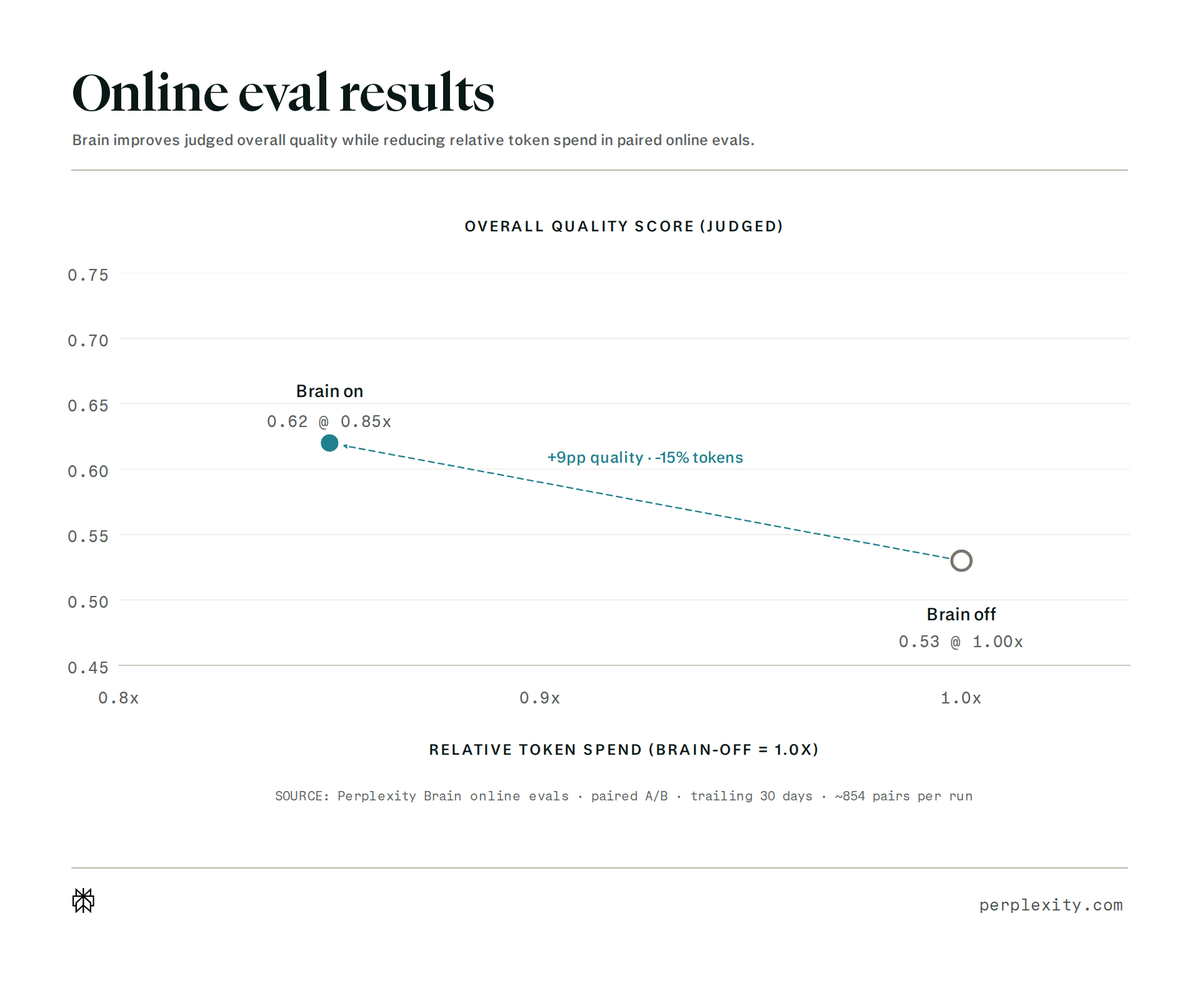 postBrain stores agent memory as a linked Markdown wikiPerplexity
 articleDetailed Guide to Agent Memoryvasa_