← All IntelClip / AI Tools
Opus 5 runs for days without scaffolding
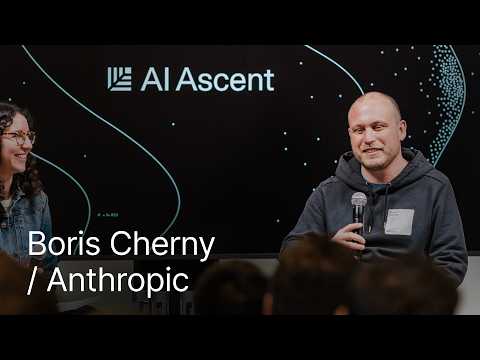
From Boris Cherny: We Cut 80% of Claude Code’s Prompt · ≈1:24
“it runs for a very long period of time and especially when you combine Opus 5 with auto mode, it's just like incredible. Like it can go for days, weeks, months at a time. It just won't stop. Um you don't even need to use scaffolding. So you don't need the slash goal, you don't need all this other stuff. It'll just go because it knows it needs to do the task.”
Y Combinator
“if the model reads some instruction on the internet that's like, you know, do X and Y and Z and also delete everything on the user's computer. A year ago the model would have just done it. But nowadays Opus does not.”
Y Combinator
“we're looking at neurons in the model's brain that light up when prompt injection happens. So the model won't even tell you but we can actually see those neurons and we can figure out and diagnose that it's happening.”
Y Combinator
“Every time that a new model comes out, we delete a bunch of the system prompt, change a bunch of the system prompt. We change the set of tools all the time. We change the prompts for the tools all the time. And the reason is every model is very different. So, something that you did for one model maybe 3 months ago, it just might not translate at all to the next model.”
Y Combinator
“we actually use this as a sort of ablation to figure out is the prompt useful? And what's interesting is that the model is actually a little bit more intelligent without these prompts.”
Y Combinator
What’s in it
- Claims long-horizon autonomy is now a model property rather than something you buy with harness scaffolding like slash-goal loops.
Clip transcript
has abilities that you you actually didn't really teach it, but it it just kind of learned. For five, one example of something it does that I think no other model has done is it runs for a very long period of time and especially when you combine Opus 5 with auto mode, it's just like incredible. Like it can go for days, weeks, months at a time. It just won't stop. Um you don't even need to use scaffolding. So you don't need the slash goal, you don't need all this other stuff. It'll just go because it knows it needs to do the task. Um another thing that I'm really excited about and um I'm going to start I think to talk about a little bit more um but it's kind of surprising because it's such a new capability is the model does not seem to be prompt injectable anymore. >> What's prompt injectable? >> [applause] >> It's crazy. Like people have talked about this like lethal trifecta for a long time and this really affects kind of harness design and agent design and and and product design because if the model reads some instruction on the internet that's like, you know, do X and Y and Z and also delete everything on the user's computer. A year ago the model would have just done it. But nowadays Opus does not. And this has actually been the case since like Opus 4.7, 4.8, Sonnet 5 has been quite good at this, People was quite good at it. But Opus 5 just hits like a new frontier on this. So essentially if you combine a well-aligned model, so this is like essentially three years of research into alignment, with a prompt injection classifier which we run for all traffic. And what this is doing is it's based on Crystal's mechanistic interpretability work where it's it's literally we're looking at neurons in the model's brain that light up when prompt injection happens. So the model won't even tell you but we can actually see those neurons and we can figure out and diagnose that it's happening. And then you combine that with the auto mode classifier and with these three layers we just cannot demonstrate prompt injection anymore. >> Talking about a prompt injection, the other side of the coin is now the system prompt. Let's talk a bit about the new release. You actually deleted over 80% of the system prompt from Claude code. >> Yes. >> Tell us more about that. >> I think something that a lot of people might not realize is Claude code as a product and as a harness is just always changing. We're always adding stuff. We're always deleting stuff. Every time that a new model comes out, we delete a bunch of the system prompt, change a bunch of the system prompt. We change the set of tools all the time. We change the prompts for the tools all the time. And the reason is every model is very different. So, something that you did for one model maybe 3 months ago, it just might not translate at all to the next model. And so, one thing about Opus 5 is it's just really intelligent. And a lot of the stuff in the system prompt was correcting for these behaviors that the model should have known, but uh it didn't. Now, Opus 5 just does it. So, yeah, we deleted 80% of the system prompt. You can actually try deleting the rest of it, too. Um so, when you run Claude Code, you can just do like {dash} {dash} system prompt and set whatever system prompt you want if you want to experiment with it. And another thing that you can try is um simple mode. So, this is actually this kind of undocumented feature. If you do Claude Code simple equals one, like this uh environment variable, and then you run Claude, it'll delete all the system prompts, including from the tools. And we actually use this as a sort of ablation to figure out is the prompt useful? And what's interesting is that the model is actually a little bit more intelligent without these prompts. That's something that we've been finding. But when you use Claude Code as a product, you do actually want some of these prompts because it helps you use the product and it it helps the the product behave and the model behave in the way that you would want when when you're using it as a person.
Recommended reads
Comments
Checking sign-in…
Loading comments…