Atlas Realtime
- Source
- worldlabs.ai
- Author
- World Labs editorial sitemap
- Date
Context
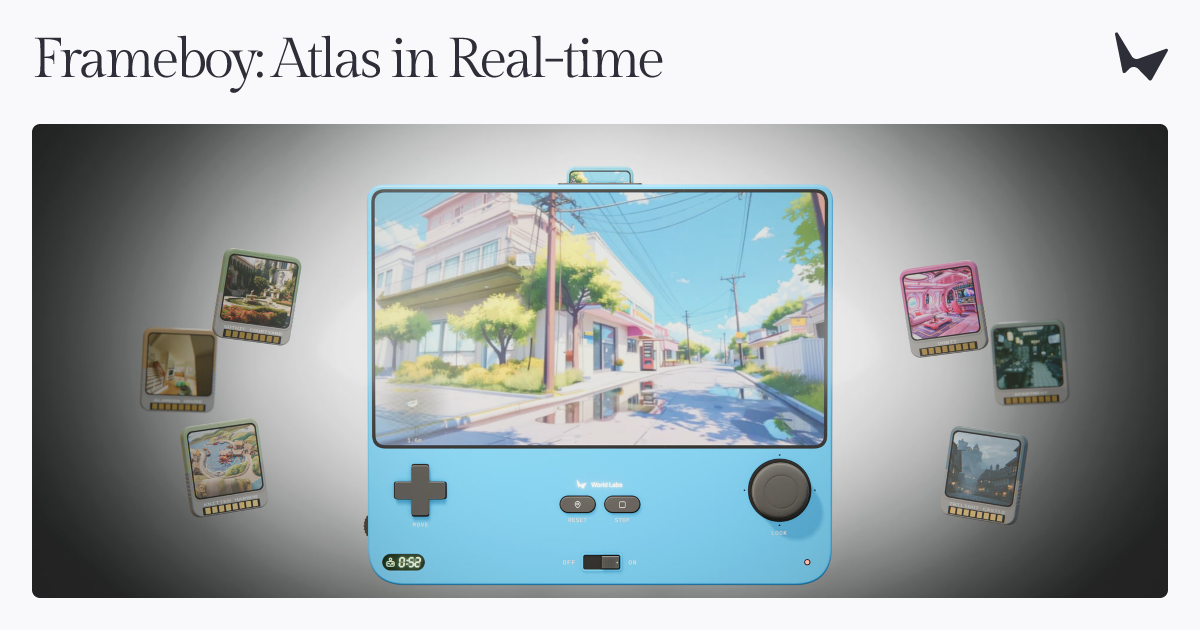
World Labs has made its Atlas world model fast enough to explore live. Atlas, which the company introduced two months earlier, generates the frames of a 3D scene one at a time from a camera position the user specifies, starting from as little as a single image or a text caption. The new research preview, a browser demo called Frameboy, streams frames from cloud GPUs at up to 15 frames per second while the user moves the camera, using a variant of Atlas optimized for fast, efficient (World Labs).
The company's argument is that speed changes how people use the model, not just how long they wait. When a video takes tens of seconds or minutes to arrive, users have to plan camera paths carefully and wait to see each attempt. At an interactive rate, the model streams new views as the user navigates, so a bad camera move costs almost nothing and can simply be corrected. World Labs says interacting this way felt like a completely different experience from triggering generation by hand.
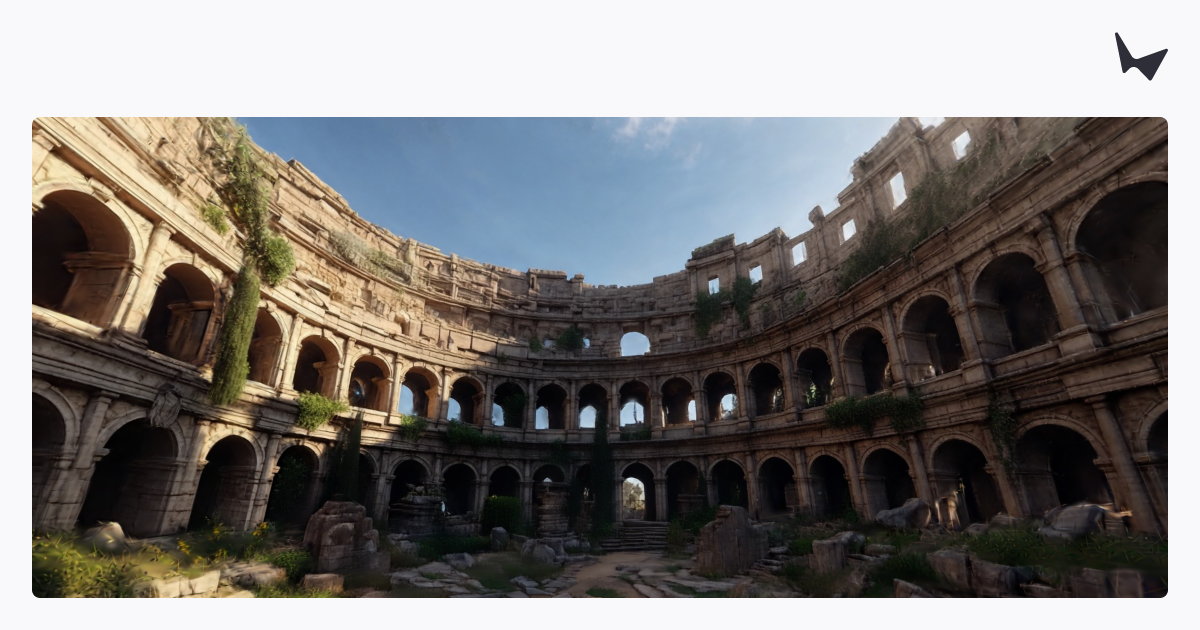
Frameboy explores a curated set of scenes, including real landmarks reconstructed from collections of photos. A second tool, Viewfinder, lets users build a scene frame by frame from their own inputs, with Atlas generating color and depth for each frame, and then switch on the Frameboy stream to move through it. Viewfinder is in closed beta with a waitlist.
The limits are stated in the post. Frameboy must run on a powerful cloud GPU server and is not cheap compared with local rendering methods. World Labs expects costs to fall as hardware and software improve, but that is a projection, and the post gives no measure of how the fast variant's image quality compares with the full Atlas model.
- World Labs says Atlas is a much larger model than its earlier RTFM, trained on orders of magnitude more data. RTFM mainly interpolated between existing viewpoints, while Atlas can build a scene from as little as one image or a text caption.
- In Viewfinder, which is in closed beta, every frame Atlas generates carries both color and depth, so users build a scene frame by frame from their own inputs and then switch on the live Frameboy overlay to explore it.
- World Labs' case for speed: when each generation takes tens of seconds or minutes, users plan camera paths cautiously; at interactive rates a bad idea costs almost nothing, so trial and error becomes exploration.
- The limitation is cost: Frameboy has to run on powerful cloud GPU servers, and World Labs acknowledges it is not cheap compared with local rendering.
- inference — Running a trained model to get answers — the phase where AI is actually used, as opposed to trained.


Checking sign-in…
Loading comments…