The Unreasonable Effectiveness of Separating the Task from the Model — Maxime Rivest & Isaac Miller
- Source
- youtube.com
- Author
- AI Engineer
- Date

Context
DSPy, an open-source Python framework for AI programs, separates what a task must accomplish from the model and prompts used to accomplish it. In this presentation, the speakers describe a stable contract: define the inputs and outputs, enforce essential constraints in code, and use examples to evaluate quality. That gives developers a consistent basis for comparing a new model or prompting method without redesigning the surrounding application.
An applied DSPy case study shows how can drive those changes. Its engineering account describes calibrating automated judges against human assessments, then using their feedback to propose and test changes to a chat 's instructions. The examples and scoring criteria determine what the optimization rewards.
- eval — A repeatable test for AI quality — a set of tasks plus scoring — used the way software teams use test suites, because model output is too variable to judge by eyeballing.
- AI agent — An AI system that doesn't just answer once but works toward a goal in a loop — taking actions, reading the results, and deciding what to do next.
“in programming, if we want to repeat a task often, we make it a function. We believe the same should be true for AI programs.”
Maxime Rivest
“But if you want to do like AlphaGo or AlphaZero, and you tell them you're just going to learn from example, you're going to have a long night.”
Maxime Rivest
“Shopify, 550 times cheaper. They're able to do that because they went from an expensive model to a cheap model, but they could keep the same eval's, keep iterating on their business logic inside, and try new things.”
Isaac Miller
“Intelligence is very different from being all-knowing. If you were to ask Albert Einstein to help you with your emails, he'd probably ask what's an email.”
Isaac Miller
“You should define your problem, and you should hold your prompts, models, and code accountable to the problem that you need them to solve.”
Isaac Miller
 videoWhy Compute Still Trades in Group Chats — Affaan Mustafa & Alejandro Soumah Fernandez, Jump Trading
 videoHow OpenAI Built ChatGPT for Bankers and Analysts — Joseph Kim, OpenAI
 videoBuying GPUs Should Work Like Buying Stocks — Carmen Li, Compute Exchange
 videoDon't Trust Your AI Agents. Test Them Like a Scientist — Stephanie Jarmak, Omni Analytics
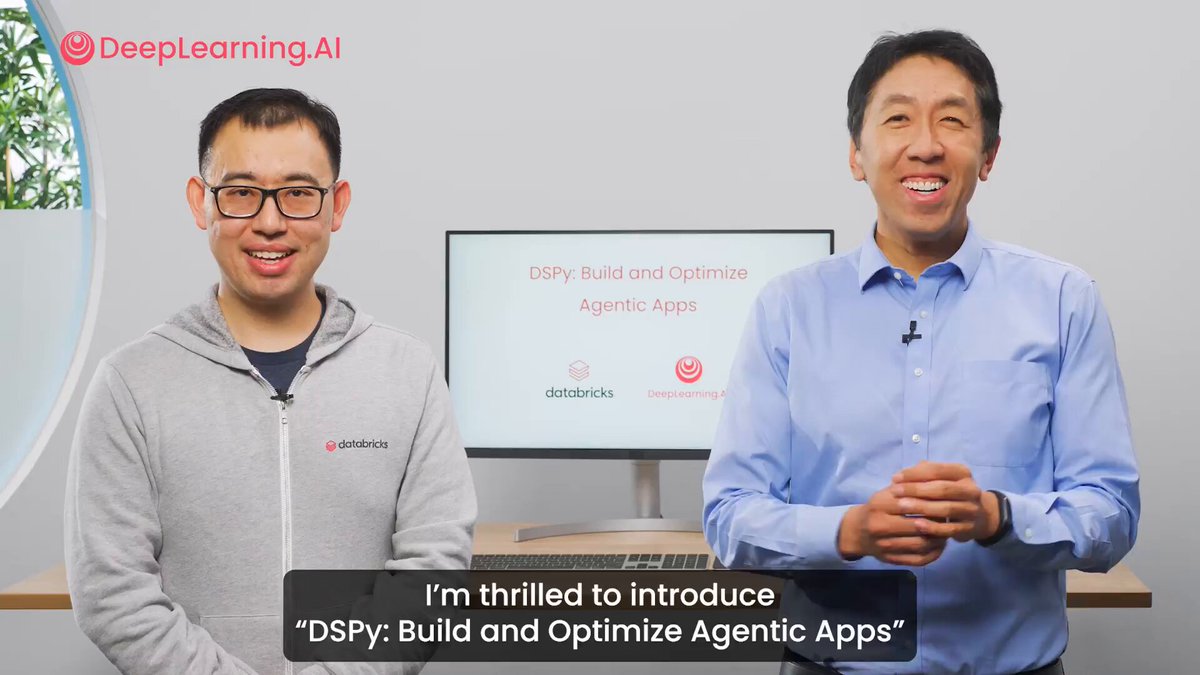 postDSPy course: stop hand-tuning prompts, optimize them against evalsAndrew Ng
 articleHow we used DSPy to turn AI evaluations into better responses in Dash chatIlya Yakovlev,Andrew Cheung,Binoy Dash,Simran Jumani,Dmitriy Meyerzon
 videoThe Model Swap Workshop: GPT-5.5 vs Kimi vs DeepSeek vs MistralAI Engineer
Checking sign-in…
Loading comments…