How LangChain built an open-source design agent for Slack
- Source
- langchain.com
- Author
- LangChain
- Date
Context
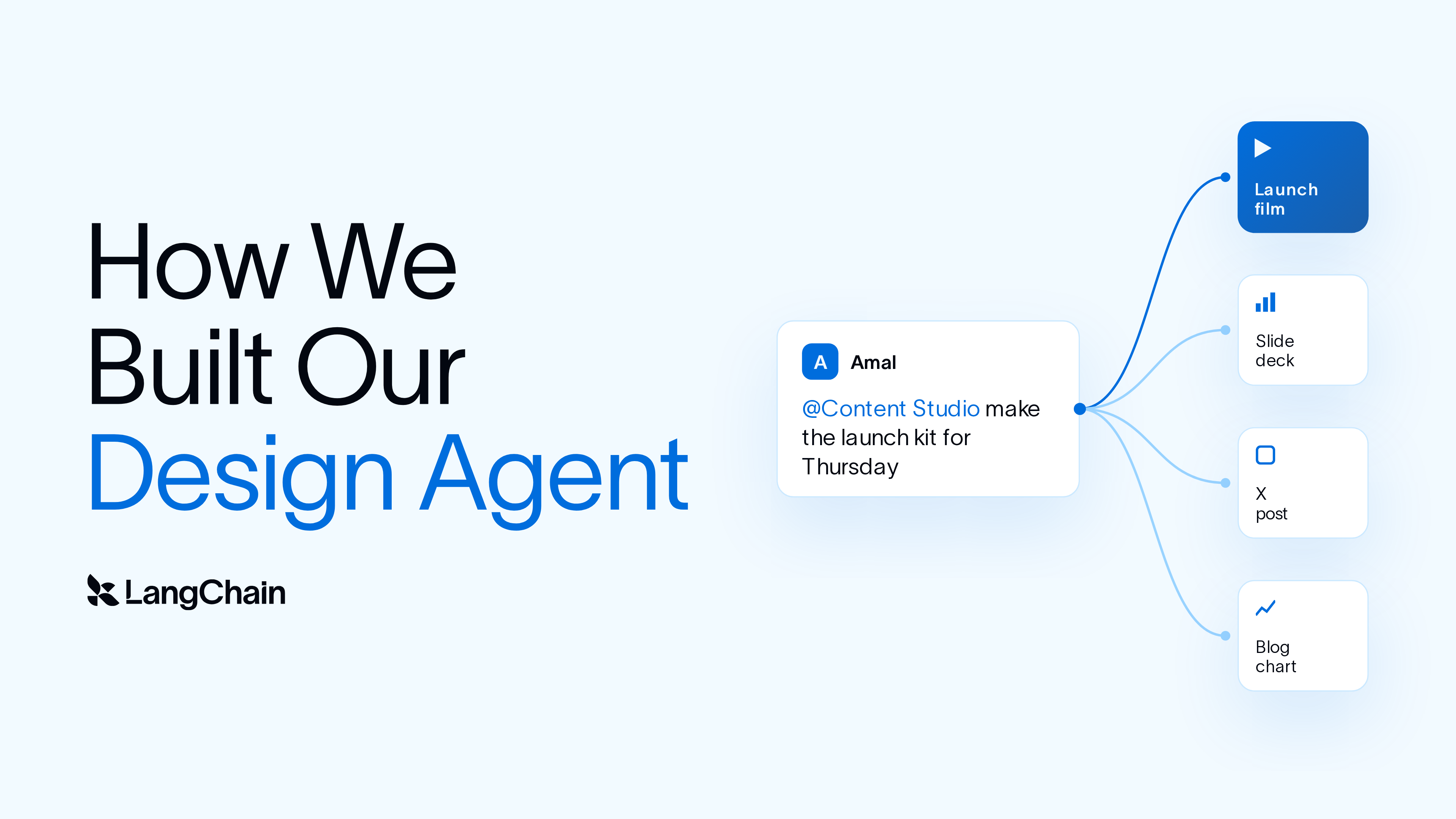
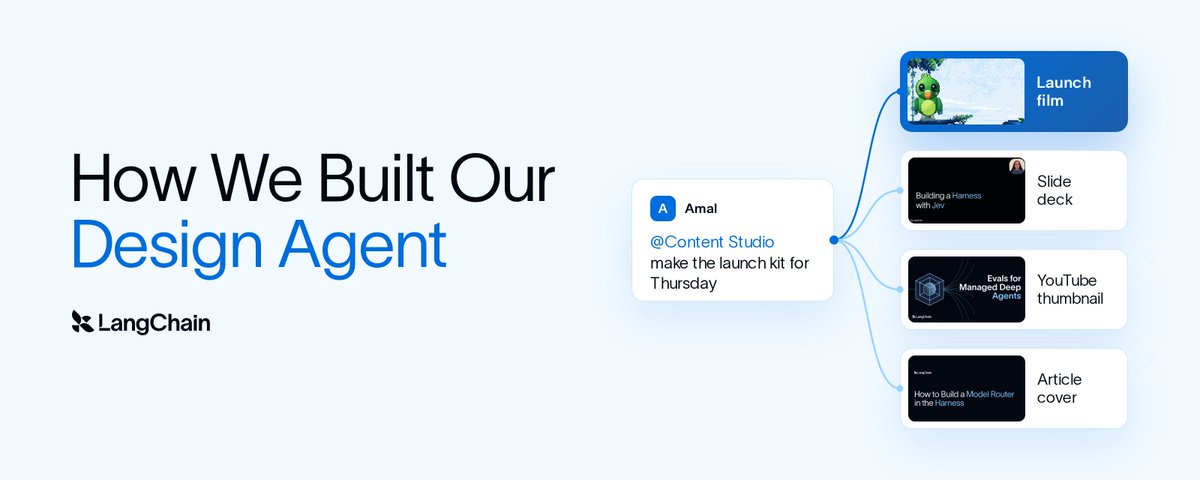
LangChain has open-sourced Content Studio, the design agent it uses internally to turn Slack requests into finished graphics, slide decks and videos, and the repository ships the agent with its skills and design guidance, but not LangChain's brand. LangChain's blog post on how it built the agent (earlier coverage) credits much of its improvement to designers' principles, guardrails and reasoning written into the agent over four months. According to the README, a design wiki holds craft guidance on type, colour, layout and charts, while a separate brand pack holds a company's own facts, and the open-source copy starts with a neutral sample brand. A team adds its own brand pack, and the repository includes a that drafts one from a brand guide, website or files.
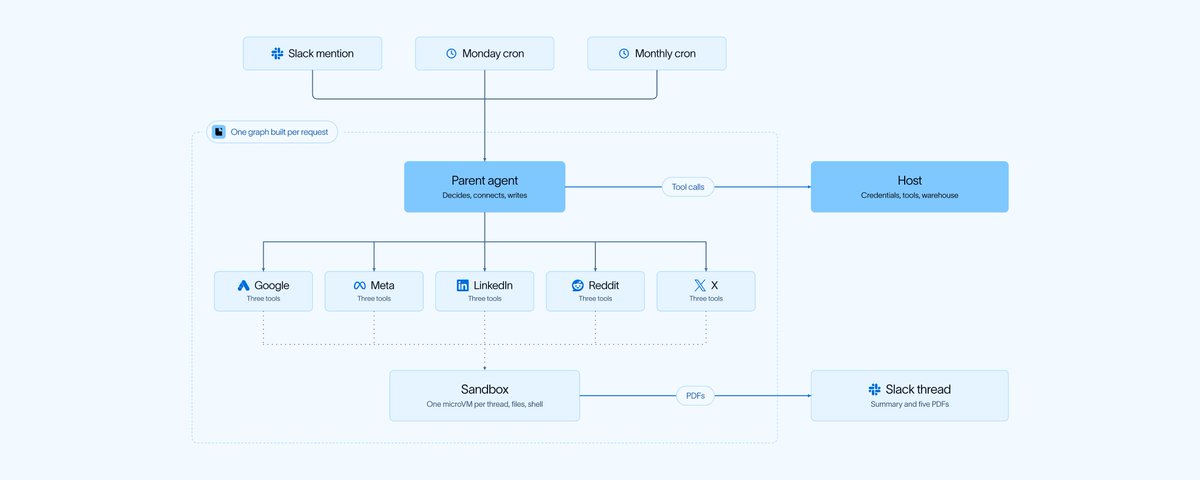
The repository also sets up the environment the agent works in. Each Slack thread gets its own LangSmith sandbox, a Linux machine with Chrome, FFmpeg, the HyperFrames video framework and the team's fonts, built from one pinned setup script. Every asset is code in a project there, a slide as an HTML page and a film as an animation timeline, so a requested change is an edit and a re-render rather than a fresh start. Colours, fonts, contrast, sizes and chart math are checked in code on every render. Rules people state in the thread are saved to team or personal memory files. On big jobs, the main agent starts subagents in the background and keeps talking to the thread while they work. According to the README, the sandbox never holds a credential and has no network access by default.
Running it takes a LangSmith account and a model key. Claude Opus 5.5 is the default, and OpenAI, Google and other models also work. One deploy command puts the agent on Managed Deep Agents, LangChain's hosting service, which is in public beta and paid. The first deploy builds the sandbox image, which takes 10 to 15 minutes, and sets up a Slack app that a workspace admin may need to approve. The code itself is free under the Apache 2.0 license. At LangChain the median request costs about 50 cents in model spend, and long films and decks cost more. Teams can instead self-host it with Docker, call it over an HTTP API or use it from a terminal, though long background jobs report back only through Slack on the hosted service. The shared Paper design canvas is optional, and on hosted deployments it requires a bridge to a machine running Paper's desktop app. LangChain's own advice is to start with the graphic a team requests every week and teach the agent the next job from there.
- LangChain reports the median Content Studio request now costs about 50 cents in model spend, down from about $8 in mid-September, and its own code shrank about 80% after moving to Managed Deep Agents.
- An early 115-component design system kept output on brand but made the agent repeat the same layouts. When Opus 5.5 arrived, the team removed most hard-coded rules and got more variety.
- The agent sometimes skipped reviews when the storyboard-to-animatic-to-production order lived only in instructions, so the pipeline now enforces it in code. A storyboard frame renders in about 50 ms versus 8 to 40 seconds per second of film.
- Subagents run asynchronously so people can steer mid-run. On an overnight 52-slide reskin, the main agent ran for about an hour while its subagents worked for more than six hours combined.
- Team and personal memory live in files loaded on every model call; LangChain caps them at a 200-line index after an early version grew to 500K tokens. A slow loop distills up to five lessons per job.
- agent skill — A reusable instruction file that teaches an agent how to do one job well — the procedure, the tools, and what counts as done.
- Folder — A named container that holds files and other folders; also called a directory.
- OpenAI-compatible API — An API that accepts the common OpenAI request shape so existing clients can call another provider with fewer code changes.
- Repository instructions — Versioned guidance that tells agents how a repository is structured and verified.
Checking sign-in…
Loading comments…