Vercel Drives adds CLI commands and standalone SDKs
- Source
- vercel.com
- Author
- Tom Lienard
- Date
Context
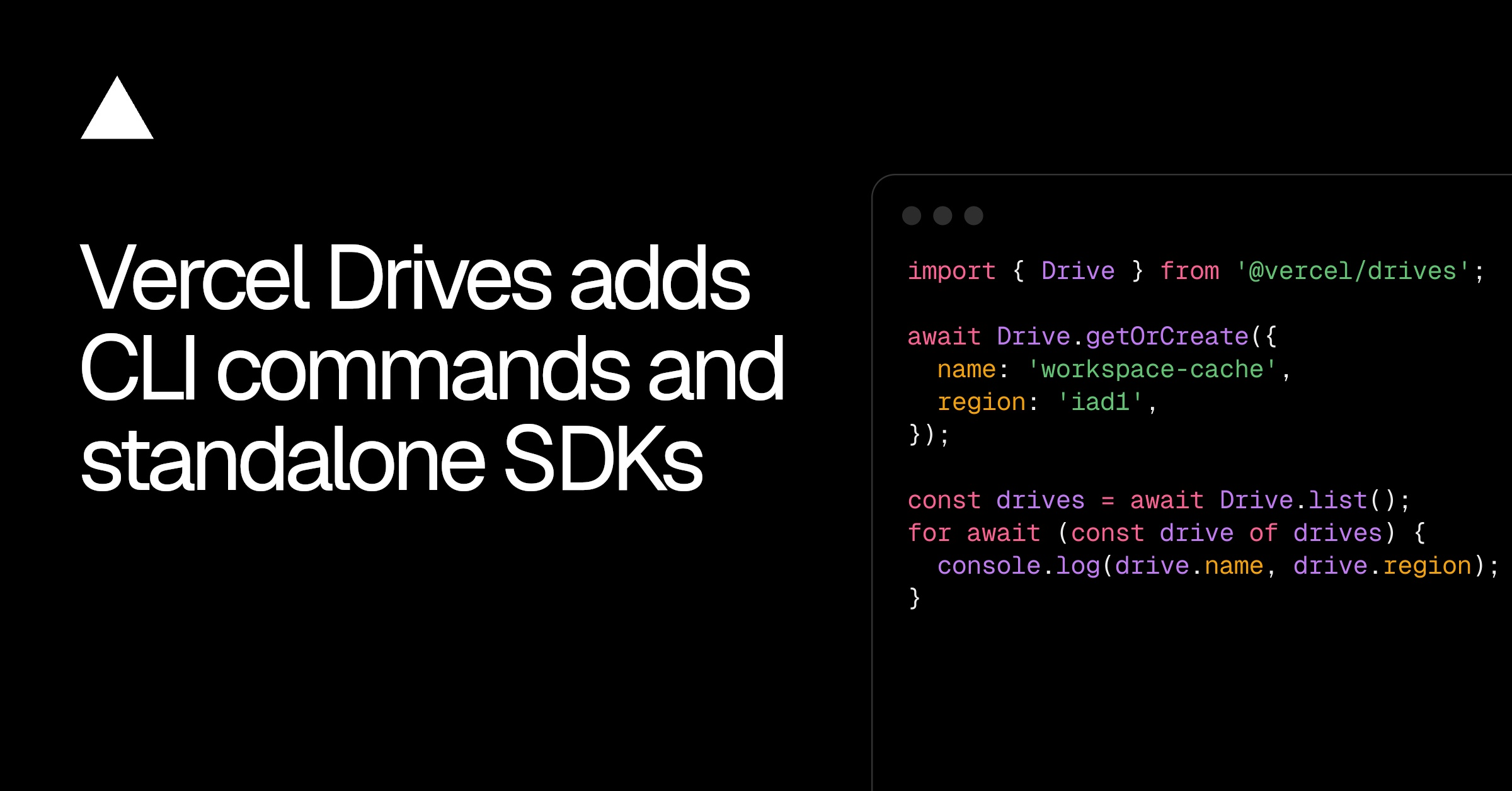
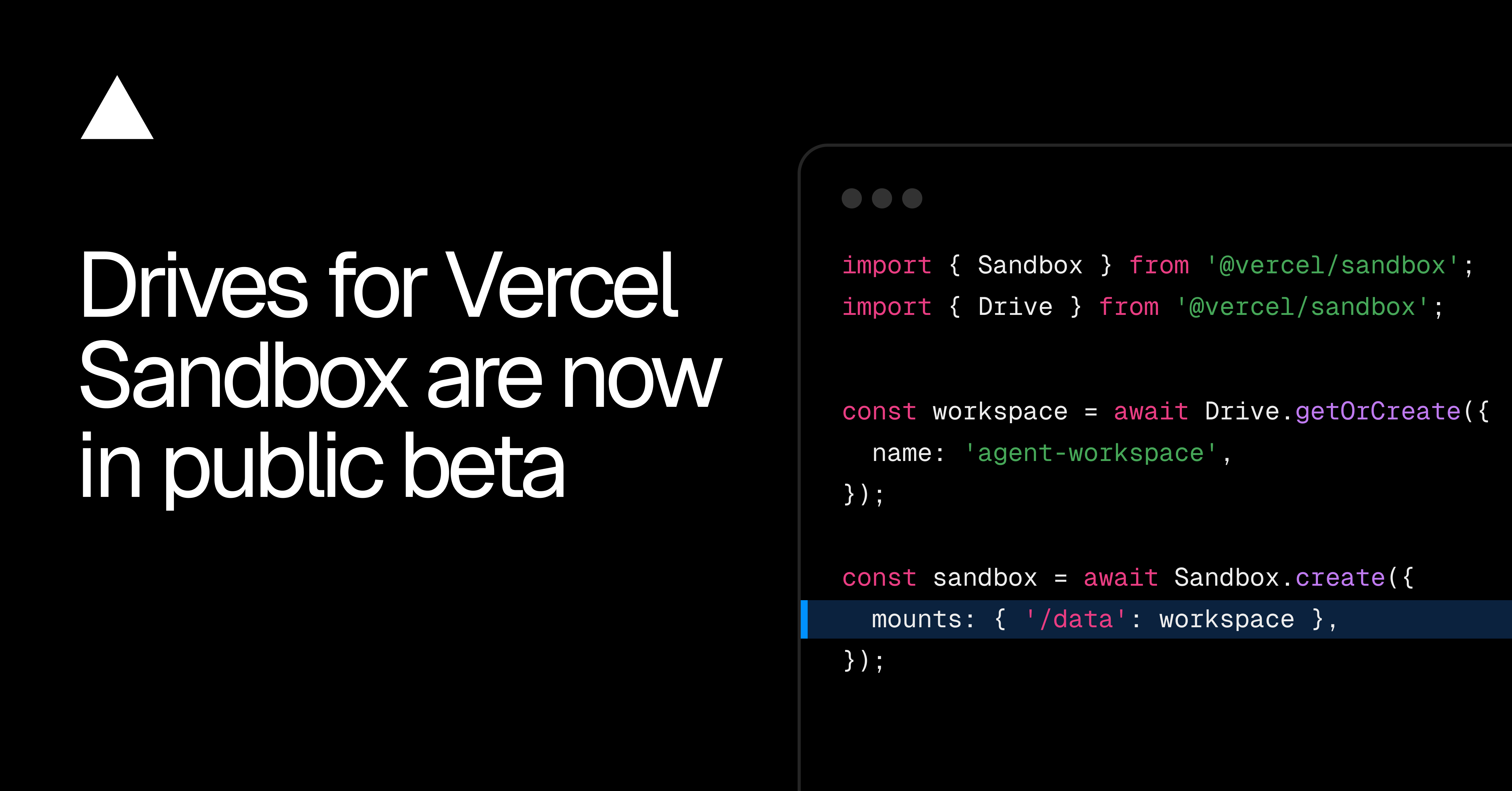
Vercel Drives can now be managed without going through Vercel Sandbox. A Drive is persistent storage that mounts as a inside a Vercel Sandbox, one of the isolated environments where agents run code on Vercel, and its files stay put after the sandbox stops so a later run can pick up where the last one left off. When Drives became generally available in October, Vercel's examples created them through the Sandbox (sandbox drives get-or-create) and the Sandbox SDK. According to Vercel's changelog, Drives now have their own vercel drives commands in the main Vercel CLI, standalone SDKs for TypeScript (@vercel/drives) and Python (vercel-drives), a at /v1/drives, and permissions specific to Drives.
The practical change is who can manage a Drive. Vercel says creating, listing, forking and deleting Drives no longer requires Sandbox APIs or Sandbox permissions. A fork is an independent writable copy that starts with the original Drive's files and keeps its own changes without merging back, which the launch post describes as a way for to try different approaches on the same starting data. Code that only prepares, forks or cleans up those workspaces can now do that work through the Drives interfaces instead of the Sandbox ones. The changelog does not say what the new Drive permissions allow or how they are granted.
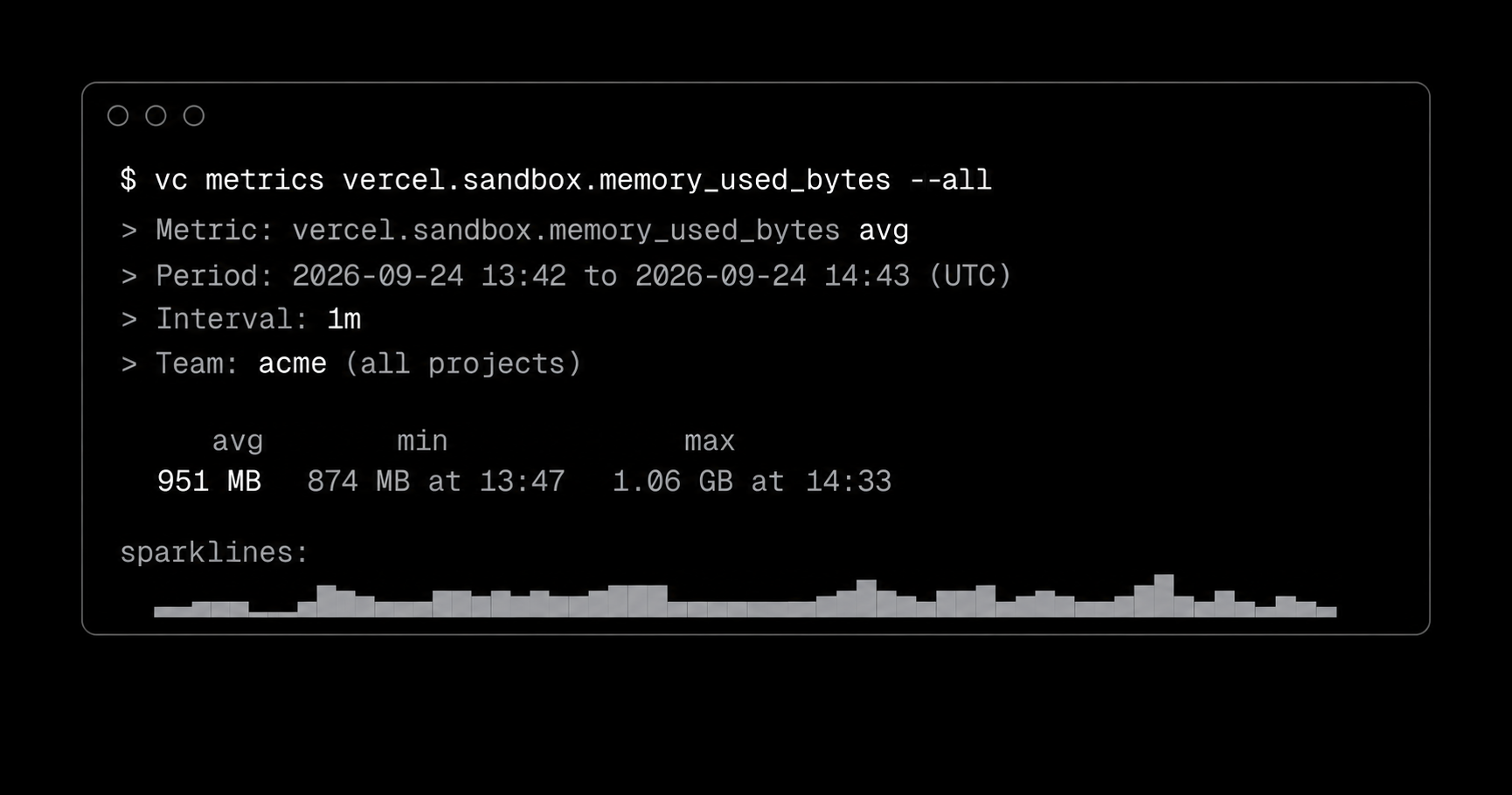
Nothing about using a Drive inside a sandbox changes. Drives still mount into sandboxes as before, existing Sandbox CLI commands and SDK code keep working, and Drives now get their own pages in the Vercel dashboard and in Observability, Vercel's monitoring section. They are available on the Hobby, Pro and Enterprise plans.
- Folder — A named container that holds files and other folders; also called a directory.
- CLI tool — A command-line capability an agent can discover and compose through shell commands.
- HTTP and JSON API — A common way for software to request data or actions from another service.
- Parallel agents — Multiple isolated agents working simultaneously on independent work streams.
Checking sign-in…
Loading comments…