Why coding-agent harnesses can cost more than the model prompt
Source
youtube.com
Author
Caleb Writes Code
Date
Context
The text you type into a coding AI agentAn AI system that doesn't just answer once but works toward a goal in a loop — taking actions, reading the results, and deciding what to do next.Full definition → can be only a small part of what the model processes. The surrounding software, often called a agent harnessThe scaffolding around a model that turns it into a working agent — the loop, the tools it can call, and the rules for when to stop.Full definition →, adds instructions about available tools and how to use them. A task can also require several model calls: inspect a file, receive the result, make a change, and check it. Each call contributes to usage. This cost walkthrough explains why a short request can cost much more than its visible prompt suggests, and why reusing cached prompt content can reduce that overhead.
Key takeaways · AI-distilled
A short user prompt can trigger much larger model requests because the harness adds instructions, tool definitions, and conversation context windowThe maximum amount of text a model can consider at once — its working memory for the current conversation or task.Full definition →.
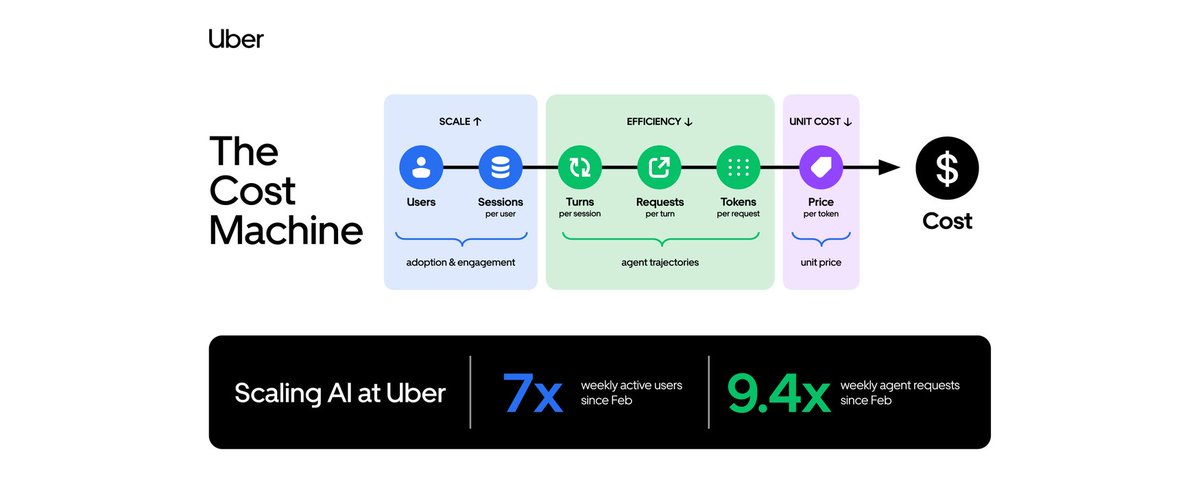
Tool execution is a loop: multiple requests may be needed for a task, so per-task cost depends on both request size and the number of turns.
Caleb discusses caching as a cost lever, but his provider economics include assumptions; the video also contains a sponsored segment.
Terms in this piece · Glossary
AI agent — An AI system that doesn't just answer once but works toward a goal in a loop — taking actions, reading the results, and deciding what to do next.
agent harness — The scaffolding around a model that turns it into a working agent — the loop, the tools it can call, and the rules for when to stop.
context window — The maximum amount of text a model can consider at once — its working memory for the current conversation or task.