Managed Agents now load skills from your attached repositories. If you already k
- Source
- x.com
- Date

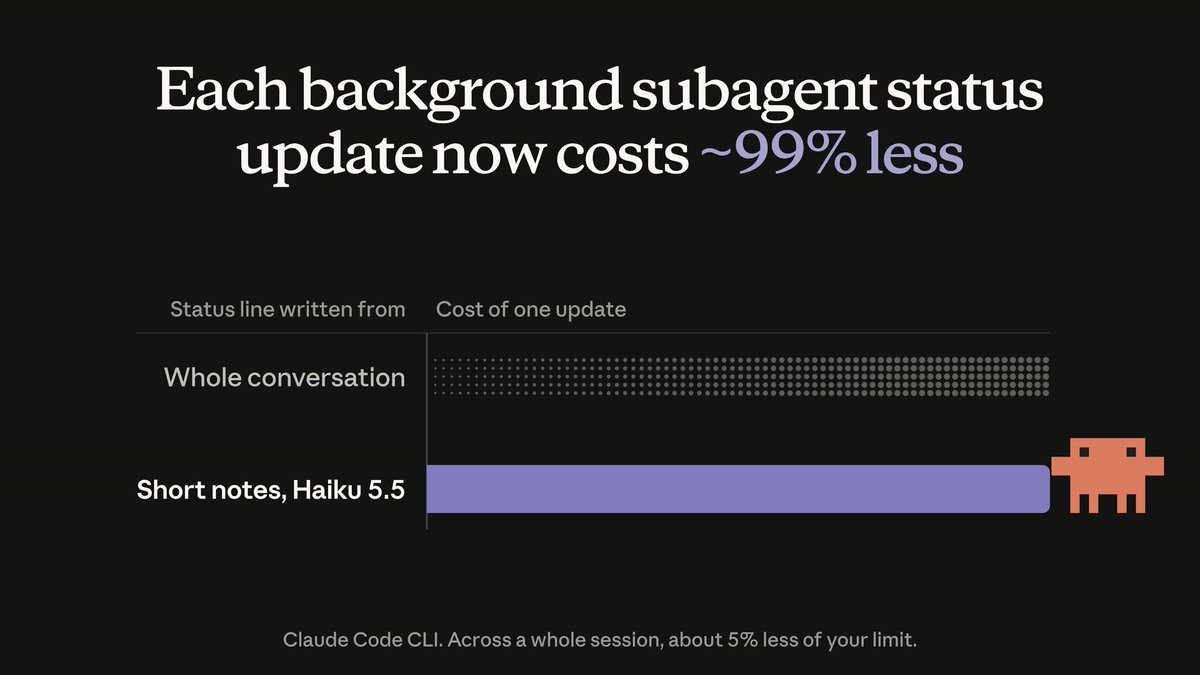
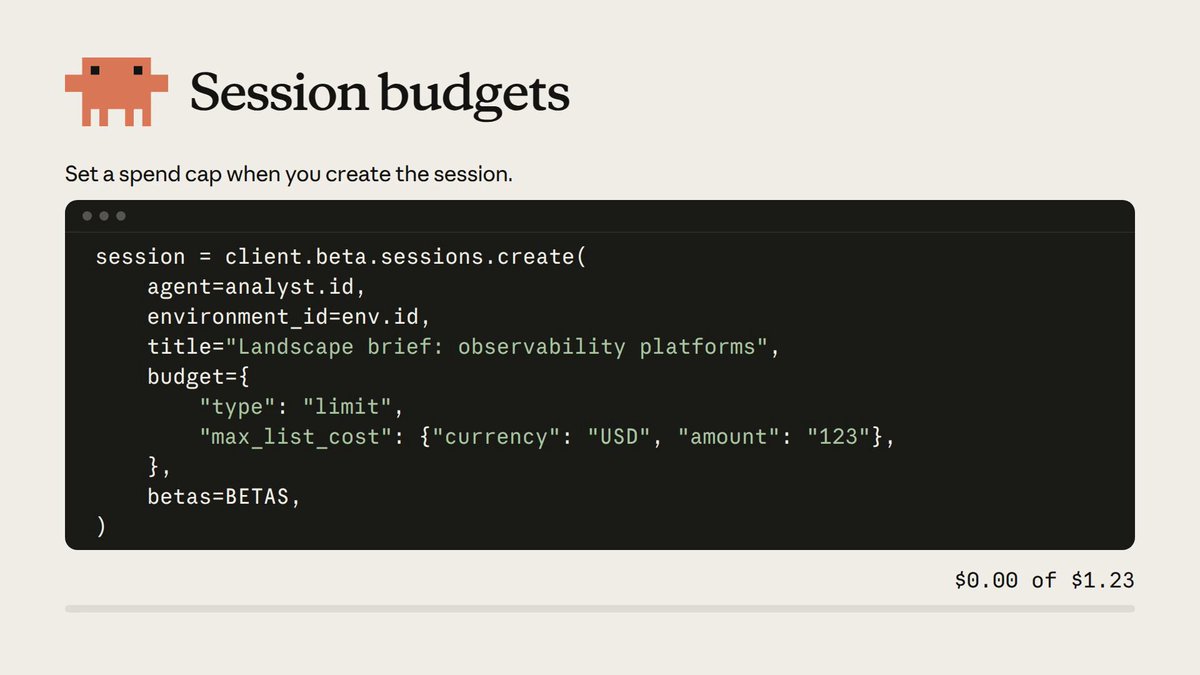
We shipped four updates to Claude Managed Agents this week. First, you can now set a budget for sessions to keep spend predictable. Sessions that hit the limit pause with a budget_reached event, you can raise the budget to resume.

Managed Agents now load skills from your attached repositories. If you already keep skills in .claude/skills/ for Claude Code, Managed Agent sessions pick them up automatically at start.
Context
Anthropic's hosted service can now take its skills from the same repository a team already uses with Claude Code. Claude Managed Agents is Anthropic's managed : Claude works inside a cloud sandbox where it can read files, run commands and use tools, and each session is one running agent working on a task. A is a folder whose SKILL.md file holds instructions for a recurring job, sometimes with scripts and reference files. ClaudeDevs announced that skills kept in .claude/skills/ for Claude Code are picked up automatically when a Managed Agents session starts. The other route, uploading a skill to the workspace and attaching it to the agent's configuration, remains available.
Anthropic's current documentation spells out how the repository route works. When a session mounts a GitHub repository, the platform scans the repository's root .claude/skills directory once, at session start. It finds only skills laid out exactly one folder deep: a folder named for the skill directly inside .claude/skills, containing SKILL.md; a .claude/skills folder inside a package subdirectory is not announced at start. The agent first receives each skill's name, description and location, and reads the full SKILL.md only when a task matches, which keeps unused skills from filling its . Skills follow the branch or commit the session checked out, so commits pushed mid-session are ignored until a new session starts. Discovery also depends on the agent's file-read tool, which is on by default.
The convenience moves control of the agent's instructions into the repository's review process. The same documentation warns that a mounted repository is part of the agent's trust boundary: anyone who can commit to it, including through a merged outside pull request or a compromised dependency, can add or change a skill, and the platform loads it at session start without a separate review step. Because sessions can run shell commands and fetch web pages, those instructions can do real work. For a team that already reviews changes to .claude/skills, reuse costs little; for a repository that accepts outside contributions, that folder now needs the same scrutiny as code that runs in production.
- AI agent — An AI system that doesn't just answer once but works toward a goal in a loop — taking actions, reading the results, and deciding what to do next.
- agent harness — The scaffolding around a model that turns it into a working agent — the loop, the tools it can call, and the rules for when to stop.
- agent skill — A reusable instruction file that teaches an agent how to do one job well — the procedure, the tools, and what counts as done.
- context window — The maximum amount of text a model can consider at once — its working memory for the current conversation or task.


Checking sign-in…
Loading comments…