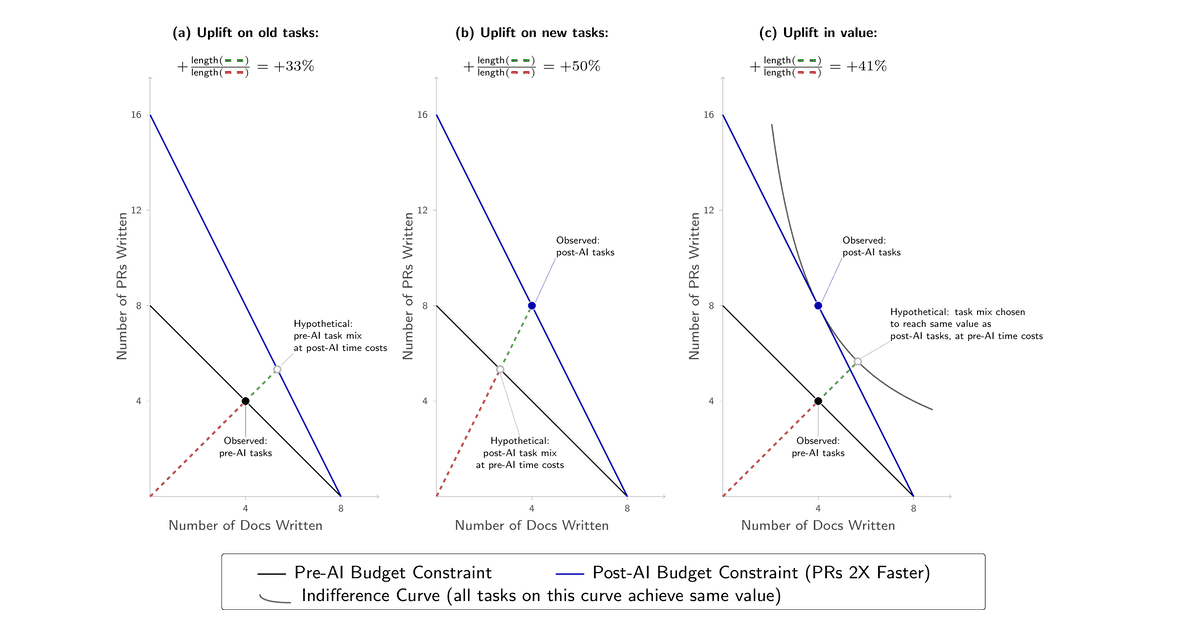
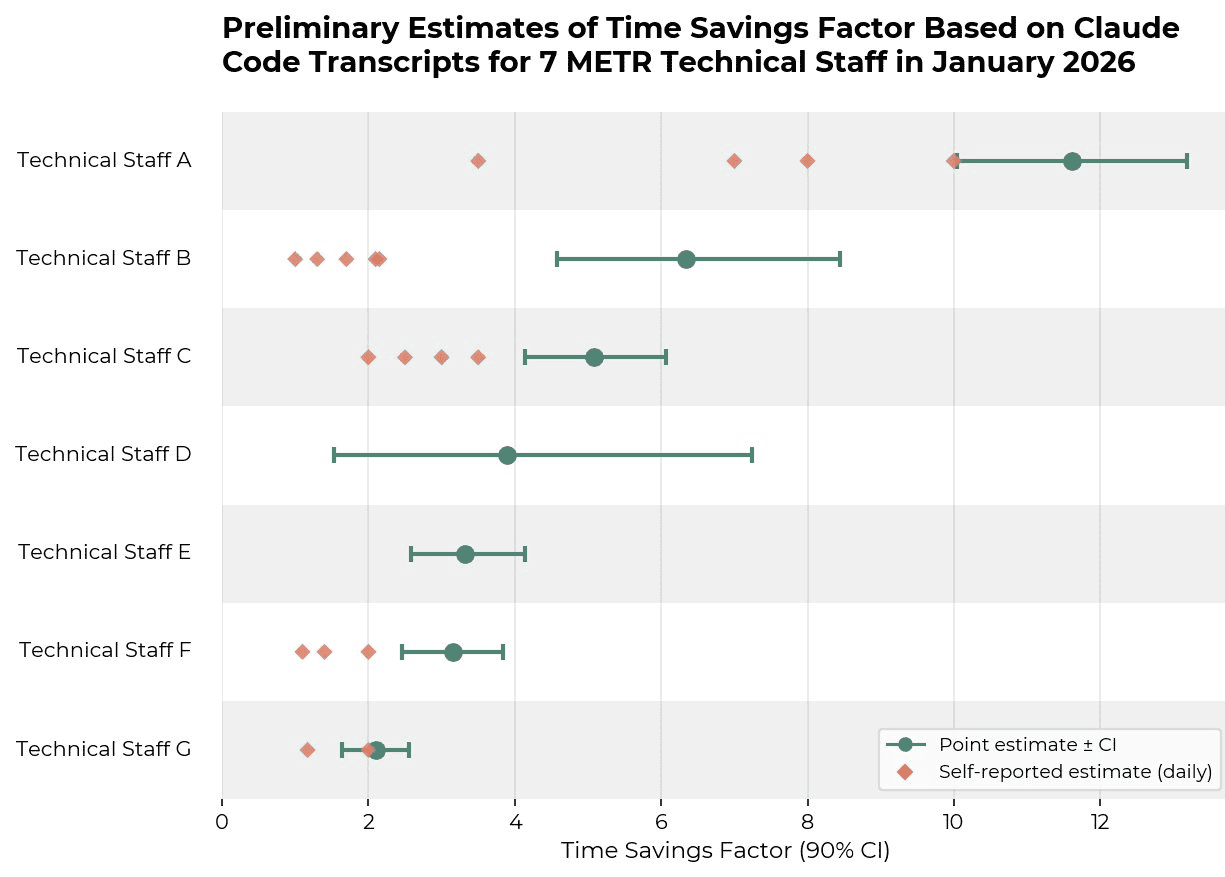
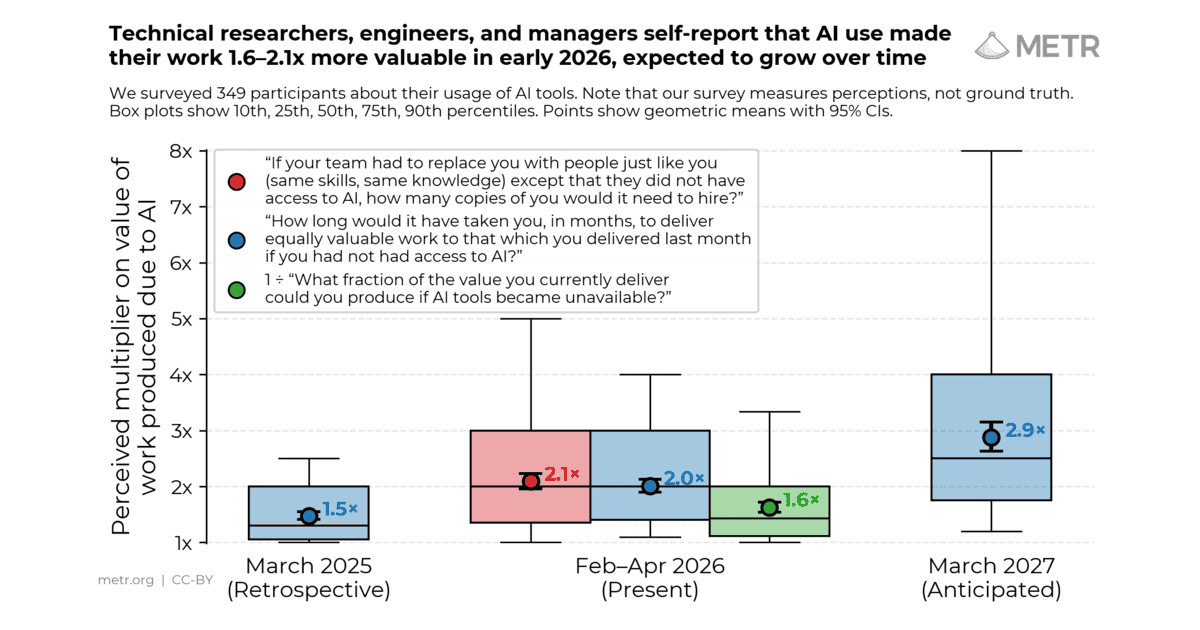
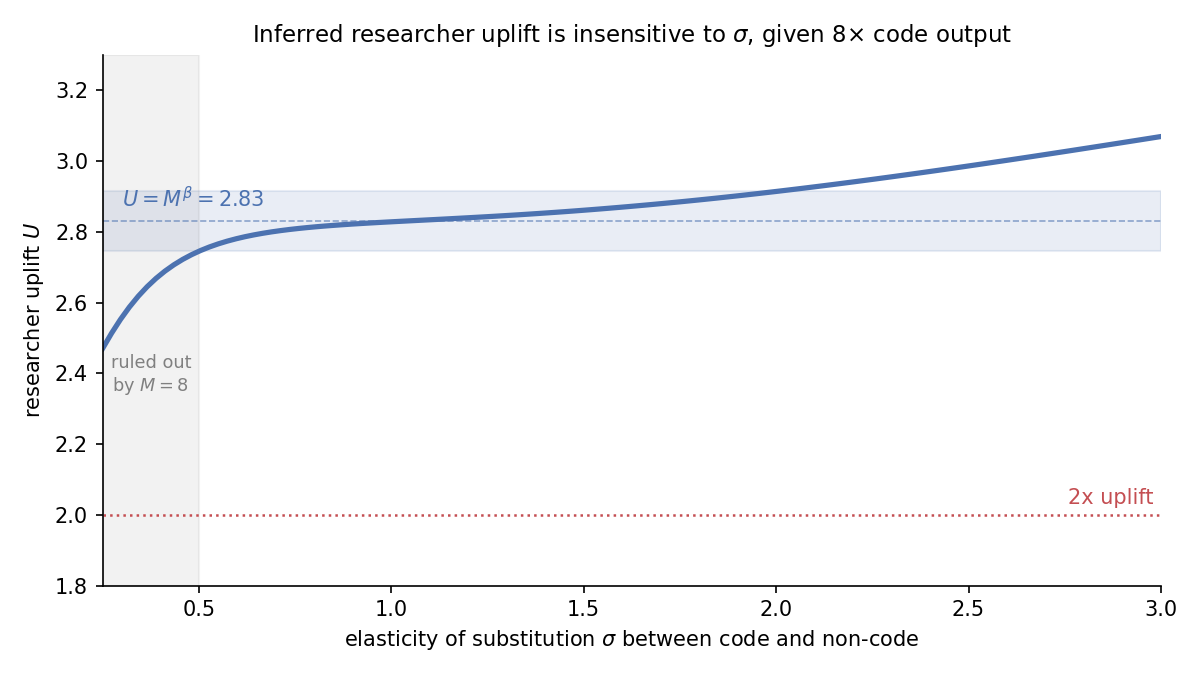
AI can change which tasks people choose to do, not just how quickly they do them. METR's task-substitution analysis distinguishes speeding up the old task list, speeding up the new task list, and increasing the value of the resulting work. These are different measures of productivity.
Work that becomes cheap with AI may enter the schedule even if it would never have justified the time required before. Comparing its estimated manual cost with its AI-assisted cost can therefore produce a large speedup without an equally large gain in value. Conversely, testing only the old task list misses the benefit of reallocating effort. The article explains this tradeoff with a ModelA computational system that uses learned patterns to produce an output from information supplied to it.Full definition → whose assumptions need checking in real workplaces.
Terms in this piece · Glossary
Model — A computational system that uses learned patterns to produce an output from information supplied to it.