Anthropic Subscriptions Offer 5x+ More Value Than OpenAI
Source
newsletter.semianalysis.com
Author
Andrew Megalaa
Date
Why it matters
Explains how subscription credits map to inferenceRunning a trained model to get answers — the phase where AI is actually used, as opposed to trained.Full definition → compute and margins. That helps predict when providers tighten or loosen limits on coding tools like Claude Code and Codex.
Key takeaways · AI-distilled
SemiAnalysis measures plan limits by sending prompts that isolate one tokenThe chunk of text a model reads and writes in — roughly three-quarters of a word — and the unit AI usage is billed in.Full definition → type (input, cache write, cache read or output) and counting the tokens needed to move the provider's usage meter one step, repeating until the rate is within plus or minus 5%.
That metering caught one of three identical subscriptions with about 20% lower limits; the provider said it was an extremely small A/B test, which SemiAnalysis takes as proof limits can change silently.
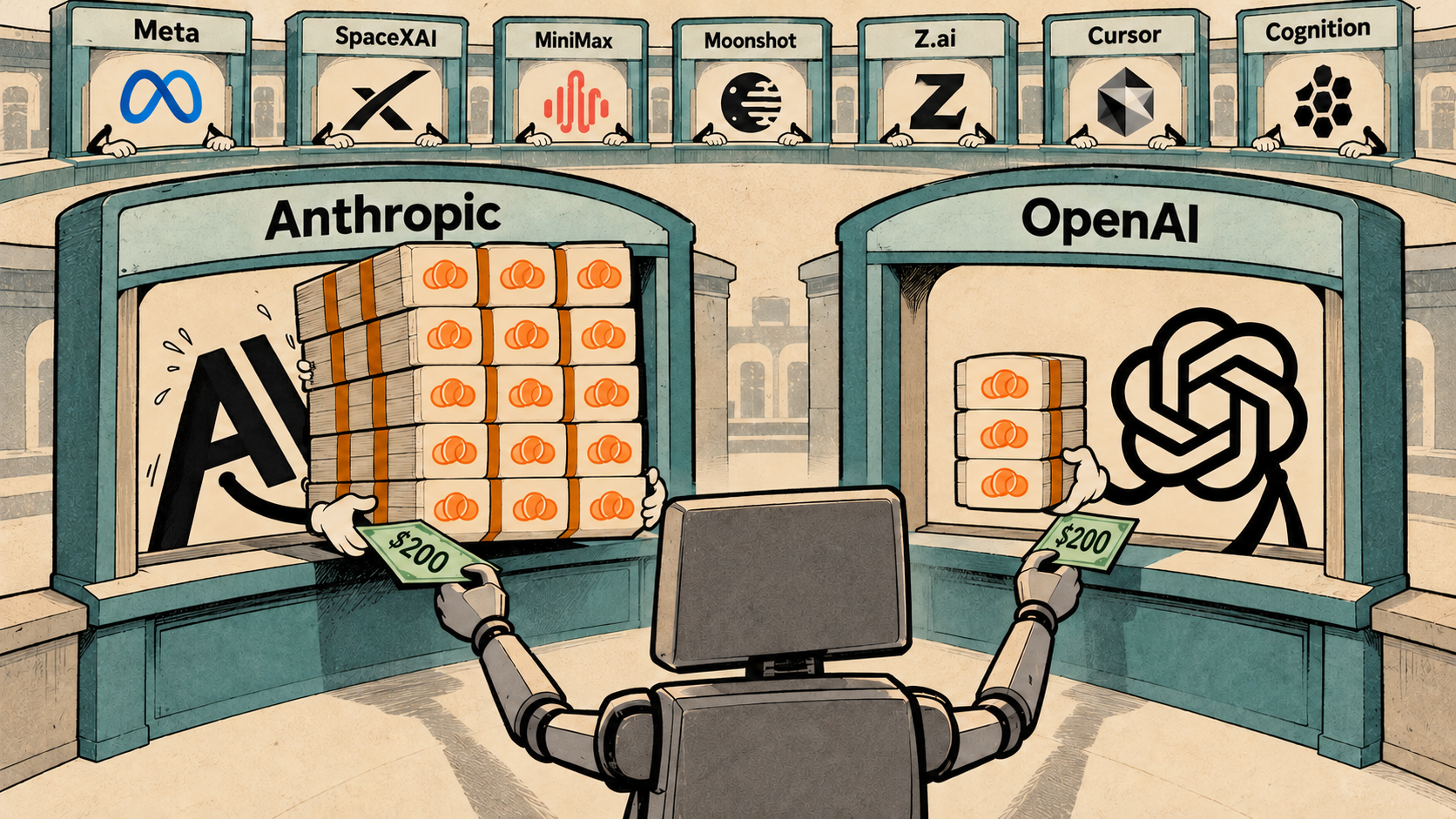
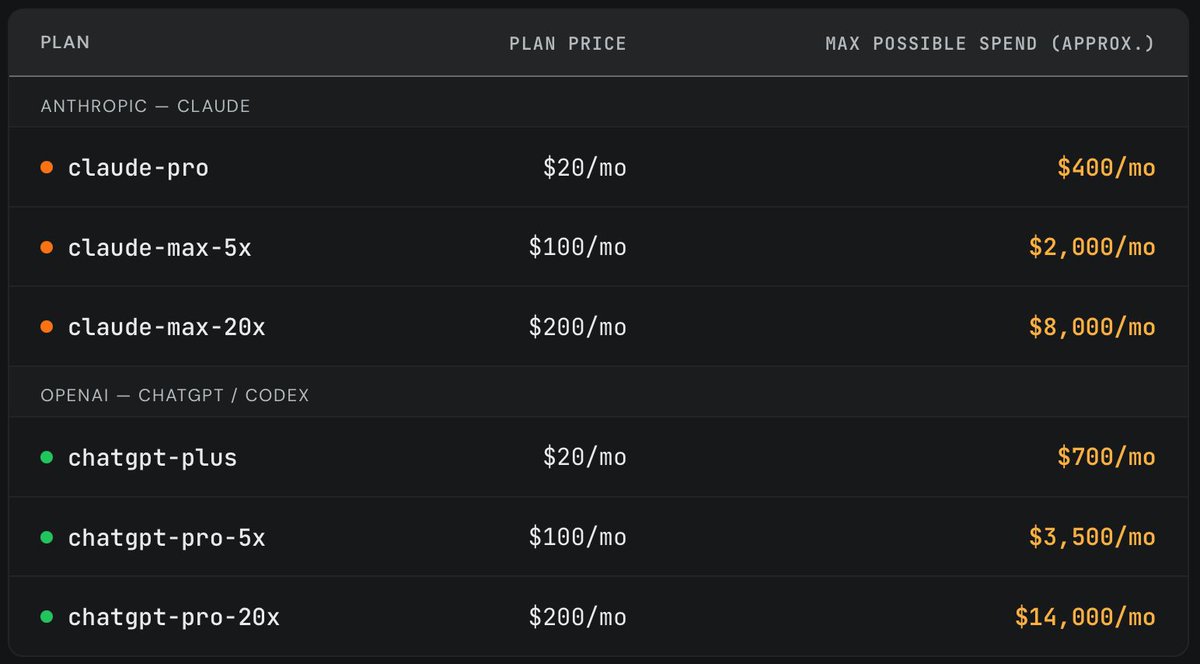
Top-tier limits are close: $2,485 of Fable 5.1 reaches Fable's cap at half of a $200 Claude plan, leaving the rest for other models, while $2,897 of GPT-6 Astra exhausts OpenAI's $200 plan.
OpenAI halved per-tier token allowances on its $200 plan, with older purchases keeping prior limits until October 29, and its new $500 plan offers only 21% more Astra than the old $200 plan, per SemiAnalysis tracking.
Anthropic trims subsidies by giving less API-equivalent value on pricier models; at 20% utilization and assumed 92% API margins, SemiAnalysis puts Claude plan gross margins near 6% on Opus 5.5 and 80% on Fable 5.1. OpenAI cut to Fable-level limits everywhere.
Terms in this piece · Glossary
token — The chunk of text a model reads and writes in — roughly three-quarters of a word — and the unit AI usage is billed in.
inference — Running a trained model to get answers — the phase where AI is actually used, as opposed to trained.