The Open Source AI Stack
- Source
- together.ai
- Date
Context
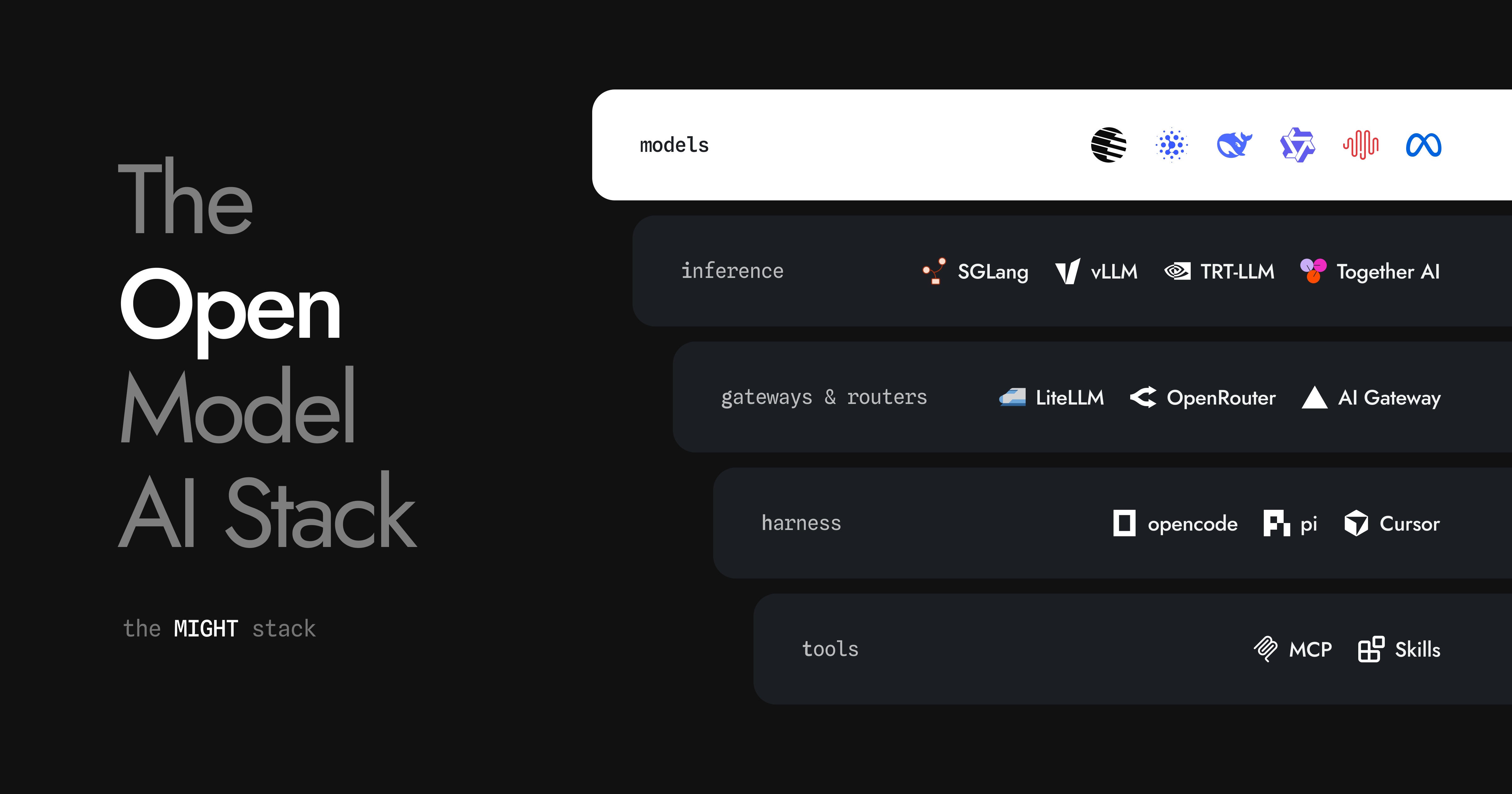
An open-model coding separates the model's decisions from the software that carries them out. In Together AI's stack explanation, the model requests actions such as searching a repository; the executes those searches and returns the results. A separate provider runs the model, while an optional gateway routes requests among providers. Keeping those responsibilities distinct lets developers try another model or hosting provider while retaining their working interface and tools, where compatibility permits. It also explains why changing the model alone does not replace the surrounding software that manages files, commands and conversation .
- AI agent — An AI system that doesn't just answer once but works toward a goal in a loop — taking actions, reading the results, and deciding what to do next.
- agent harness — The scaffolding around a model that turns it into a working agent — the loop, the tools it can call, and the rules for when to stop.
- inference — Running a trained model to get answers — the phase where AI is actually used, as opposed to trained.
- context window — The maximum amount of text a model can consider at once — its working memory for the current conversation or task.
“If you already know how to use Claude Code, you’re much closer to using open models than you probably think.”
“Rather than thinking of bigger models as being better than smaller models, it’s better to think of these models as two different types of tools in a toolbox.”
“The difference between small and large is less about quality and more about how much ambiguity they can comfortably handle.”
“Instead of choosing an AI coding product, you can build your own AI coding stack.”


Checking sign-in…
Loading comments…