OpenAI Launches Agents API, a Hosted Codex Harness, in Public Beta
- Source
- video.twimg.com
- Author
- OpenAIDevsTop Viber
- Date
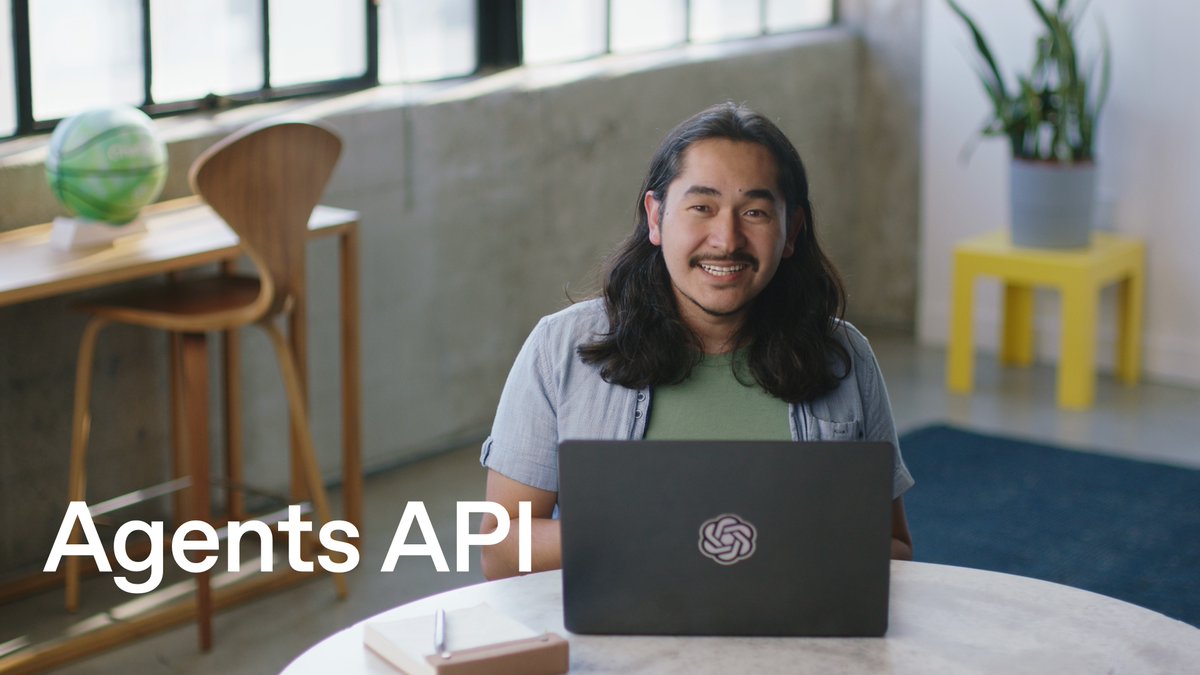
OpenAI's Agents API is now in public beta, giving outside developers the same Codex harness the company runs internally. It handles orchestration, long-running sessions and context management, work that teams currently build by hand when they deploy coding or task agents that run for hours instead of seconds. The API bundles managed sandboxes, native MCP tool support and subagent orchestration behind a single call, so a team building a long-running agent no longer needs to write its own session store, retry logic or subagent dispatcher. Because it runs on the infrastructure that already serves Codex in production, developers inherit whatever reliability and scaling work OpenAI has already put into that harness instead of rebuilding it themselves. For teams weighing build versus buy on agent infrastructure, this narrows the case for a custom orchestrator: the remaining tradeoff is mostly how much control over sandboxing and session state a team is willing to hand off.
Context
OpenAI's Agents API, opened in public beta on September 10, is meant to take over the infrastructure work around a long-running agent rather than the model itself. The announcement post describes it as a way to build and run cloud agents on the Codex harness, the agent-running layer behind OpenAI's Codex, fully managed by OpenAI. In the launch video, the company frames the problem as everything a capable model still needs in production: connected tools, progress tracking, context management, and secured, maintained infrastructure. OpenAI says it handles orchestration, sessions and context management, while the developer keeps control of the execution environment and the tools the agent can reach, including a sandbox from OpenAI, a third-party provider or the developer's own infrastructure.
The video illustrates this with a hypothetical agent for investigating production incidents. Its tools, such as observability data and recent code changes, connect through MCP, and the team's outage runbook is supplied as a . Because the logs would likely be more than the model's context window can hold, programmatic lets the agent filter them in code, so fewer tokens go to raw data. Larger jobs can be split across sub-agents, one examining recent changes and another checking telemetry, with a lead agent combining what they find, and gives the model a summary of earlier work so a single long session can keep going. The end product in the demo is one shareable report with a likely root cause, supporting evidence and suggested next steps.
These are OpenAI's descriptions of its own service, shown through a worked example rather than measured results. This explanation is based on the post and an automatic speech transcript of the launch video; anything shown only on screen was not reviewed. Separate coverage of the same launch draws on OpenAI's written announcement.
- agent skill — A reusable instruction file that teaches an agent how to do one job well — the procedure, the tools, and what counts as done.
- tool use — A model's ability to call external functions — run code, search the web, edit files — instead of only generating text.
- context compaction — Summarizing an agent's earlier conversation to free room in the context window so a long session can keep going.
- subagent — A separate agent spawned by another to do one scoped piece of work in its own context, returning only the result.
Checking sign-in…
Loading comments…