Case Study: TypeSafe's Jev Model Beats Frontier LLMs on Classification Tasks
- Source
- TypeSafe AI
- Date

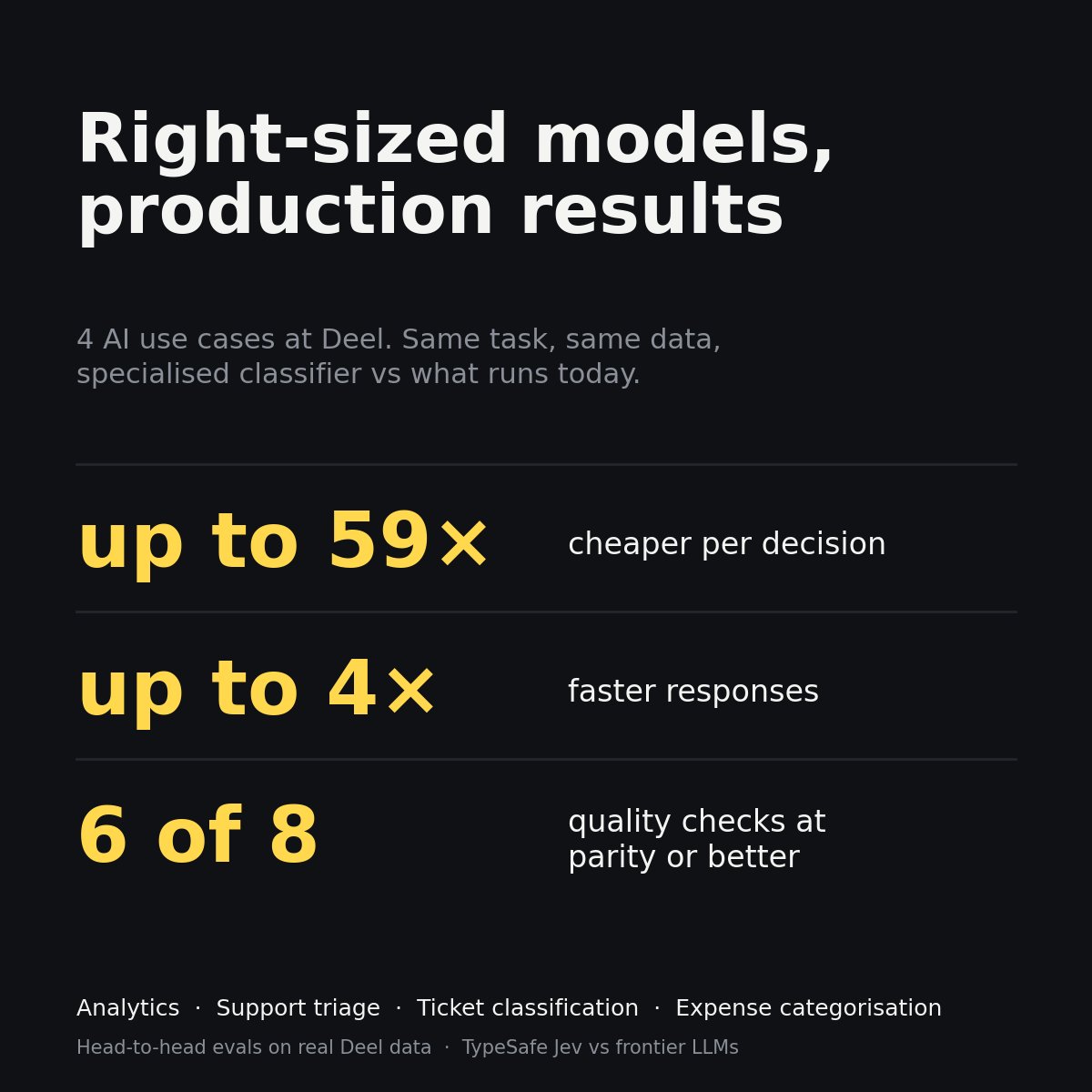
Some great use cases they measured: • Matching repeat analytics questions to approved answers • Picking 1 of 36 metrics • Blocking PII requests • Deciding when a support chat needs a human • Tagging tickets across a 3-level taxonomy • Sorting expenses into about 55 categories Every one is a pick from a known set.
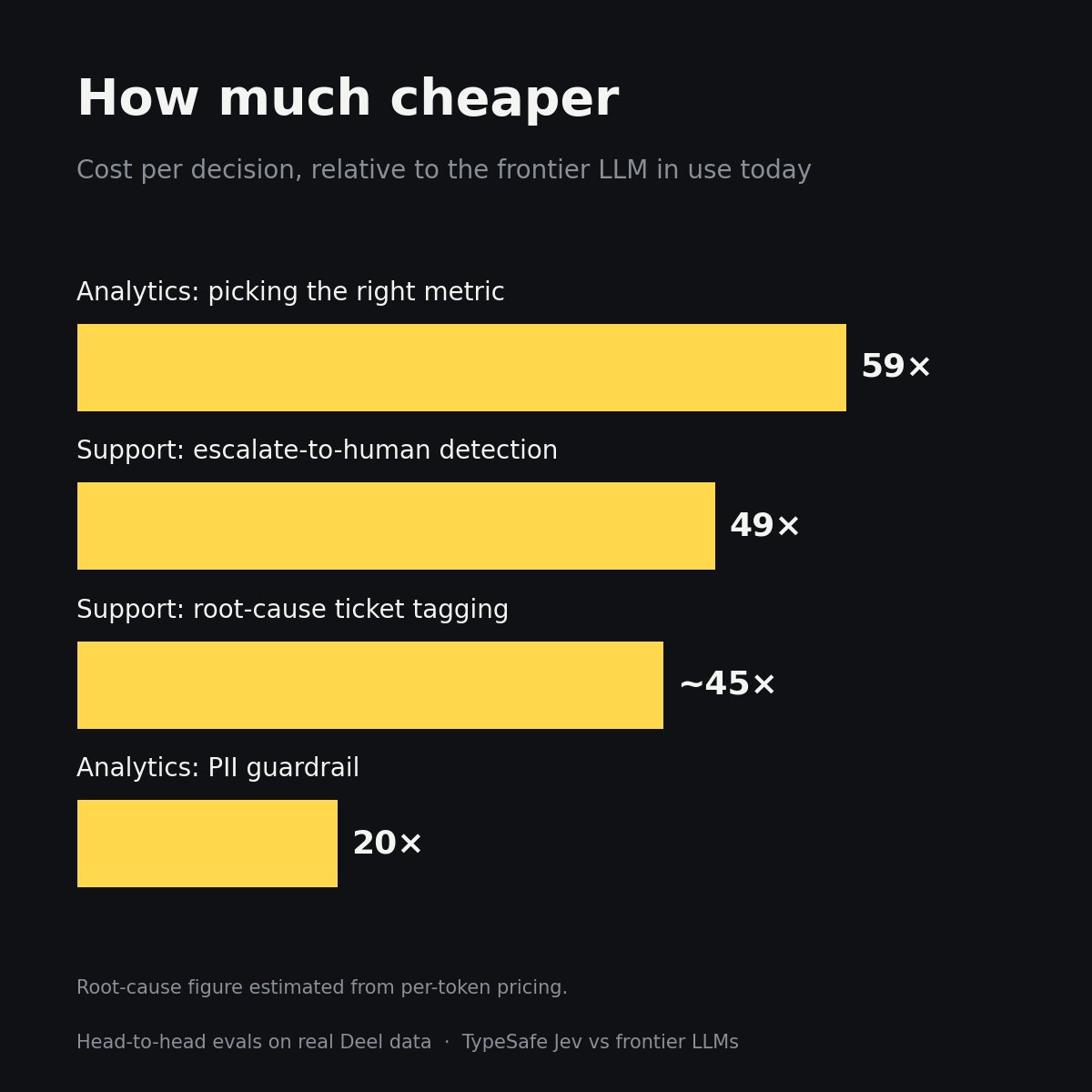
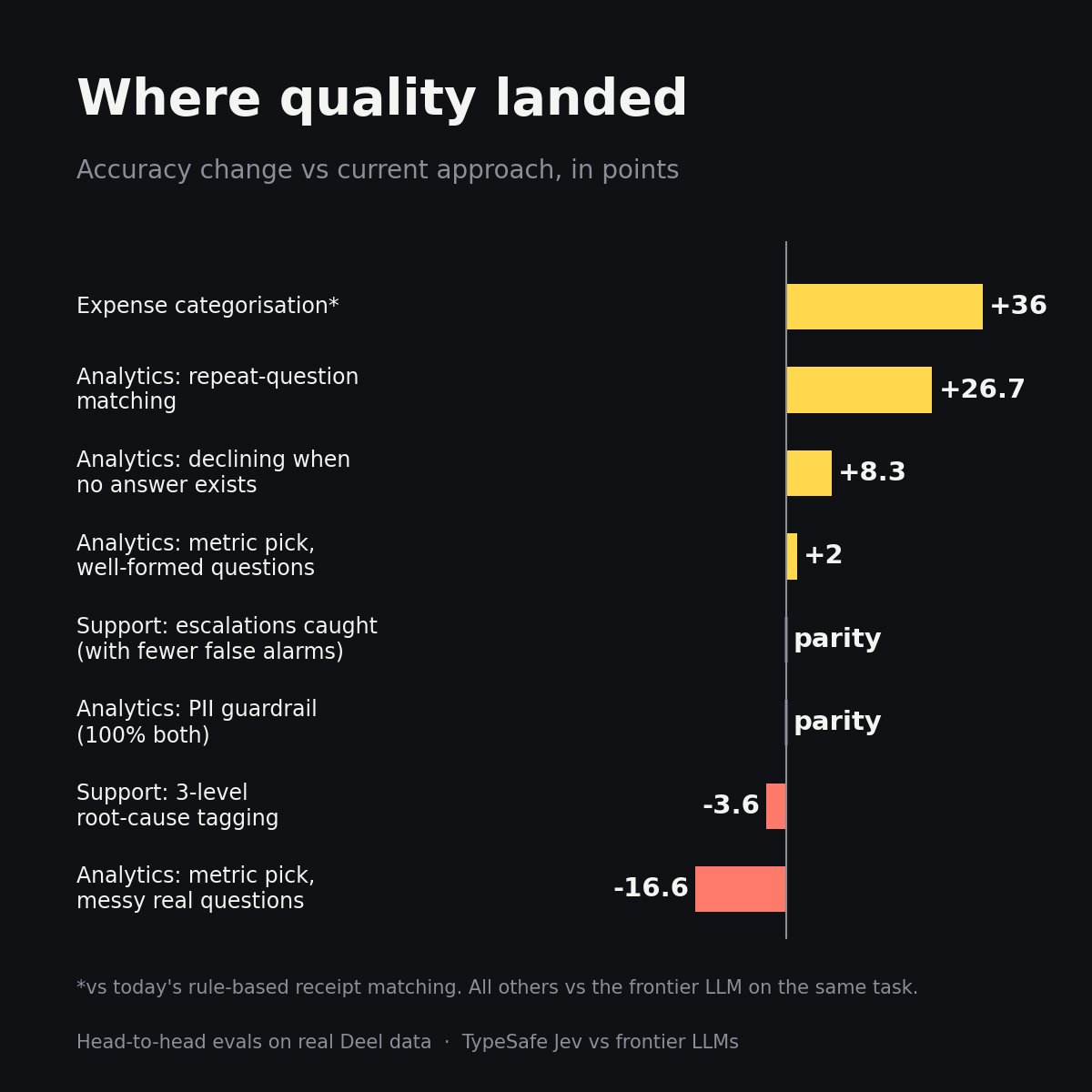
Jev generally out-performed frontier LLMs at a fraction of the price: Repeat-question matching: 70% → 97% Expense categorization: 50% → 86% (vs human reviewers) Escalation: same catches, fewer false alarms
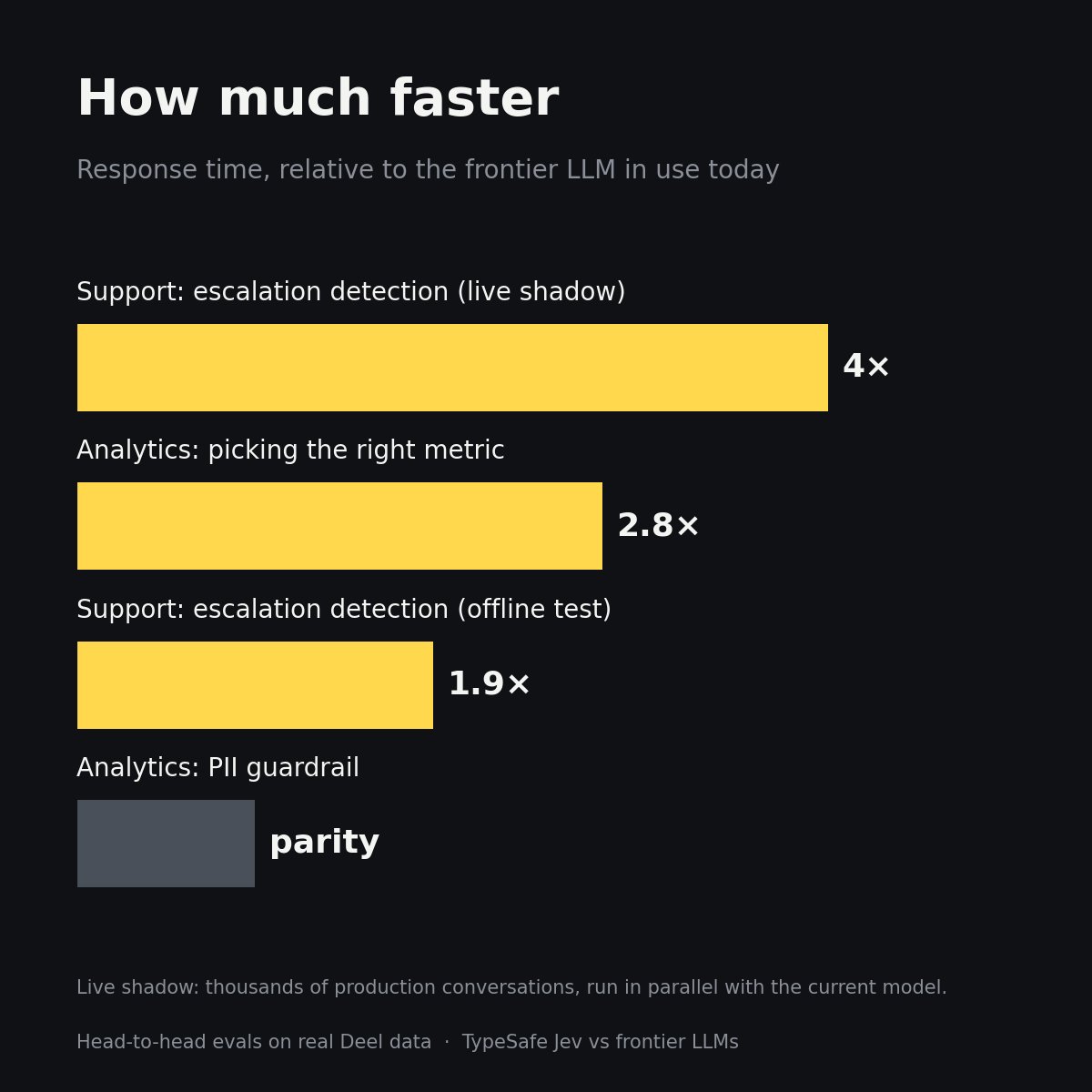
Speed was measured while shadowing live production traffic: up to 4× faster. Offline tests: 2 to 3×.
- TypeSafe says Deel tested its Jev model on pick-from-a-known-set tasks: matching repeat analytics questions to approved answers, choosing 1 of 36 metrics, blocking PII requests, escalating support chats, 3-level ticket tagging, and sorting expenses into about 55 categories.
- In TypeSafe's reported results, Jev generally outperformed frontier LLMs at a fraction of the price: repeat-question matching rose from 70% to 97%, and expense categorization from 50% to 86% measured against human reviewers.
- For escalation, TypeSafe reports the same catches with fewer false alarms, and responses up to 4x faster while shadowing live production traffic (2x to 3x in offline tests). All figures are vendor-reported.
- LLM — A large language model — the neural network behind tools like Claude and ChatGPT, trained on huge amounts of text to predict what comes next.
- AI agent — An AI system that doesn't just answer once but works toward a goal in a loop — taking actions, reading the results, and deciding what to do next.
Offers concrete accuracy and latency numbers for using a smaller specialized model instead of a frontier on closed-set classification tasks, a common and costly workload.


Checking sign-in…
Loading comments…