How Real-Time AI Video Is Changing How Creators Work
Source
youtube.com
Author
a16z
Date
Context
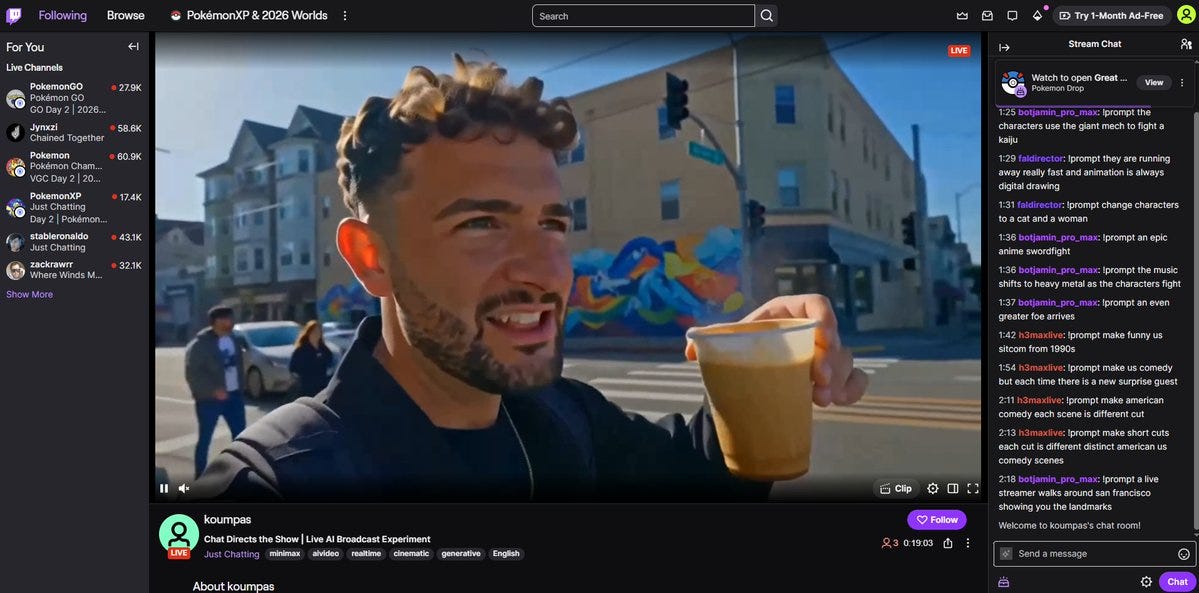
Faster video generation can turn creation into a session that a person steers while it runs. In the fal team's account, further training of MiniMax'sopen weightsA model whose trained parameters are published for anyone to download and run — unlike API-only models you can access but never possess.Full definition → video model, combined with systems and hardware optimization, enabled experiments with continuous streams. Those streams can retain earlier scene information and respond to new directions. The creative consequence is an ongoing interaction with generated video. The team identifies more predictable control over the resulting scenes as the next challenge for professional use.
Key takeaways · AI-distilled
H3 Max is fal's post-trained version of MiniMax's open-weight video model, marking fal's move from inferenceRunning a trained model to get answers — the phase where AI is actually used, as opposed to trained.Full definition → platform into post-training.
The guests say the speed enabled continuous video right after launch: streams that remember previous scenes and respond to new directions while they run.
They expect the next challenge to be control more than speed: camera movement, lighting, characters, motion and lip sync.
For professional workflows, they argue artists and studios need predictable tools rather than simply generating a video from a prompt.
Terms in this piece · Glossary
open weights — A model whose trained parameters are published for anyone to download and run — unlike API-only models you can access but never possess.
inference — Running a trained model to get answers — the phase where AI is actually used, as opposed to trained.