Clip transcript
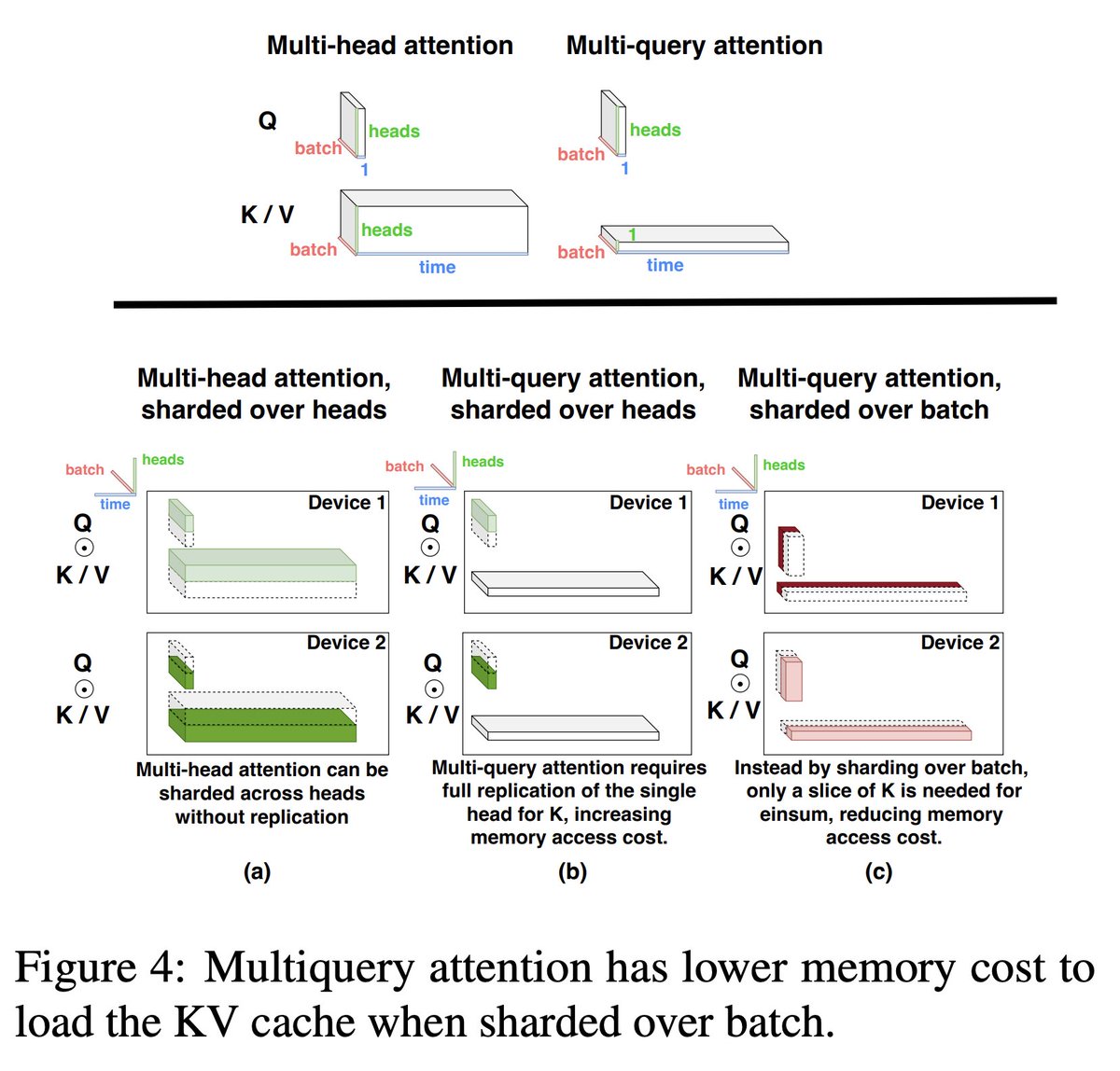
auto reggressive and diffusion together. You've already alluded to putting together GPUs with LPUs and Nvidia announced earlier in March at GTC the Vera Rubin supercomputer which is >> dedicated for inference especially for agents. Can you tell us in what ways GPUs and Grock work together at inference time? >> Okay, so I'm going to start with an analogy. Um, okay. Suppose that I ask you to build out a logistics network for the entire United States. We're going to start from scratch. I'm going to tell you you can either use 18-wheelers or delivery vans. The delivery vans, while they can go into any driveway, they can't carry a lot. So, they're much more expensive, right? So, the the best answer is both. I want both 18-wheelers and I want delivery vans. >> And in this analogy, the GPU is the 18-wheer. can handle a whole bunch of tokens all at once, but it takes a little while to load it up and to to, you know, get it somewhere. The delivery van's a little bit more like the LPU. It's not quite as efficient, but like the for the last mile, it's more efficient than having this thing do it, right? Like we talked about um mixture of experts and how you can actually get an advantage with the LPU on a portion of it. And so putting the two together is like putting 18-wheers and delivery vans together. You get a better network. And with the LLMs, there's two separate parts just like there's the, you know, the the initial delivery and then there's the last mile. Um, with the the LLMs, you have the um the the weights, the projection layers, and then you have the attention. And the way that we do this is we put the projection on the LPUs and we put the attention on the GPUs. And then we get the best of both worlds. After the Nvidia agreement, should we expect Grock chips to be sold independently as they've been so far, either as an standalone chip or via Grock Cloud, or should we expect more hybrids, LPUs plus GPUs being sold together? >> I think you're going to see hybrids. And the reason is we still recommend that you do the prefill which is the reading of the text on GPUs only because GPUs are really good at that and it's not a it's not as latency sensitive per token. It's latency sensitive to complete it but not per token. It's a very parallelizable problem. Stick that thing on the 18 wheeler GPU. Um, when it comes to the the decode, what you will probably see is for some very costsensitive applications, like if you have free users and you're trying to get them onto your platform, um, you'll probably do your decode completely on GPUs. If on the other hand, you have a more uh professional user base, they're paying for it, they expect more speed, you're probably going to see a GPU L LPU combo for the decode. Um and then for some extreme users who are doing very you know performance critical tasks you might even see LPU only on decode but you're going to see GPU and LPU in any data center prefill fully on the GPU and then um uh decode being partially done on LPU partially done on GPU. So this uh