Open Models Panel: Build Your Evals From Failed Agent Traces
- Source
- youtube.com
- Author
- Together AI
- Date
Context
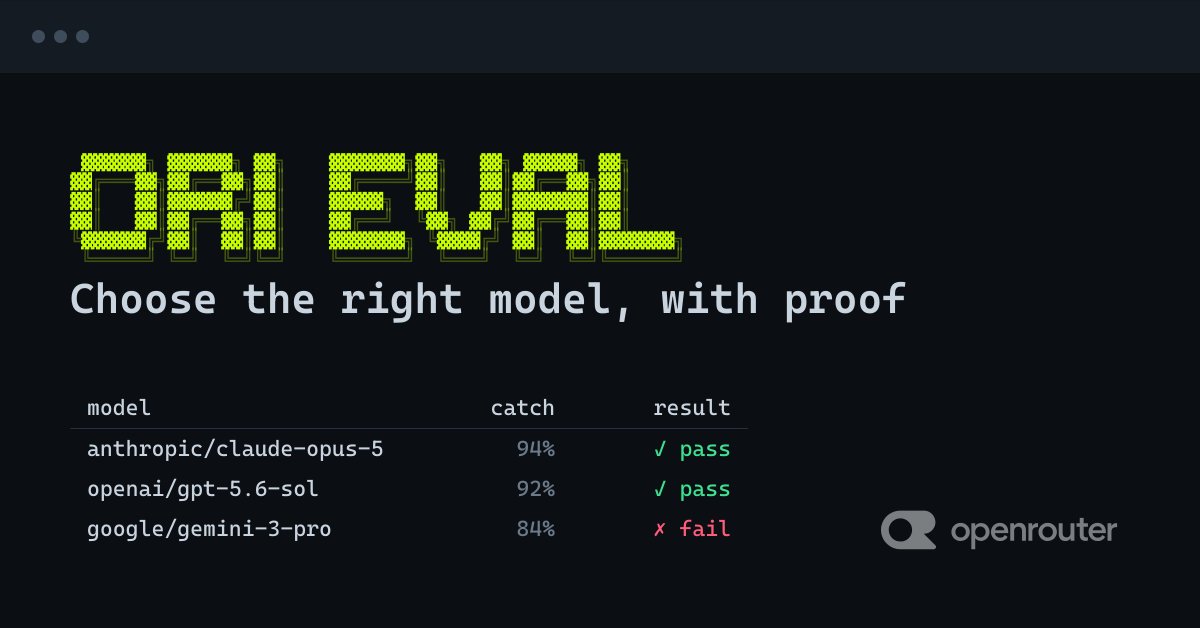
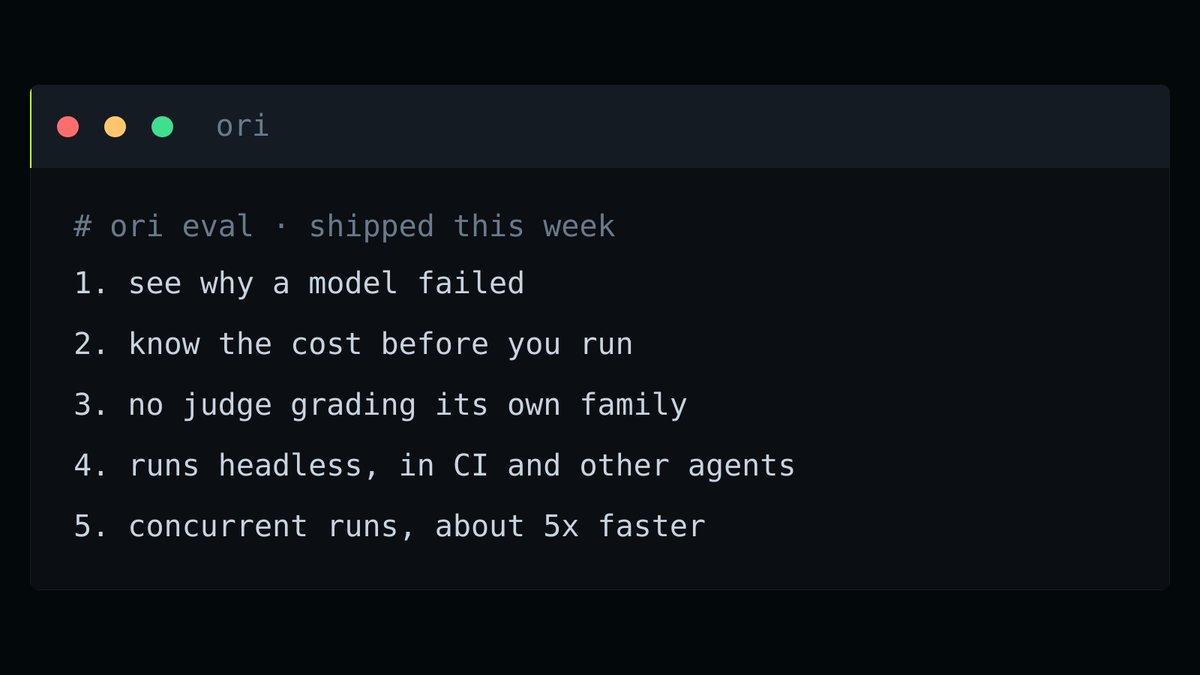
At Open Models NYC, an event run by Together AI and OpenRouter, Tomas Oliva, who onboards new models and providers at OpenRouter, argued that a team moving from closed to open models should not choose by the top coding benchmark score. His suggestion, which Together highlighted in a post on X, is to build evaluations from the agent sessions that went wrong. In the full panel he tells teams to have people collect the cases where they were surprised a model could not do something, or were cursing an agent for doing something stupid. That trace, the recorded session of what the agent did, is "the golden nugget", he says, and keeping it is how a team could start running its own personalized evals.
His reason is that public benchmarks answer a different question. Oliva says there is general agreement that current evals are poor: they measure one thing at a time, are not reproducible, and sometimes have broken tasks or answers already exposed on the internet. Even a strong published score may not carry over if a team works in an unusual proprietary language with little training data behind it. A failed session from your own work avoids those problems because it records a task you actually needed done, on your own code, that a model you actually used got wrong. Hassan, who leads developer experience at Together, adds the practical payoff: once a team has a set like that, a new model can be run against 100 or 200 representative problems the day it comes out, and the team can tell quickly whether switching makes sense. He says many companies still have no evals and pick models on impressions.
The rest of the panel explains why the question comes up now. Hassan says the gap between closed and open models on the Artificial Analysis Intelligence Index has narrowed from about 10 points a couple of years ago to about 4, and he credits open models' much better for making them usable in coding agents. Oliva says the gap that has not closed is cost: frontier labs' subscriptions, by his account, give about $5,000 of inference for $200 a month, a subsidy he thinks is starting to fall away. OpenRouter's data, he says, shows the average user on at least four models and its heaviest users on ten or more, so picking a model for each task is already routine. These are two inference vendors describing their own market, and the eval advice is a practice they recommend, not a result they measured. It costs little to start, though, since the raw material is sessions a team already has.
- OpenRouter's Tomaso Oliva said its average user runs at least four models and its most sophisticated users ten or more, picked per task. One driver is modality gaps: he noted DeepSeek V4 accepts only text, so sending a screenshot forces a switch to another model.
- The panel's eval advice: have your team save the agent traces where a model failed or did something you did not want. Those sessions, tied to your own data and edge cases, are the raw material for personalized evals that public benchmark scores cannot replace.
- Together's Hassan called post-training a last resort because it needs high-quality, well-formatted data and several experiments. He advises tuning prompts, and reasoning settings first, then fine-tuning a small model once the task is defined and data is plentiful.
- A panelist noted Codex caps at 272,000 tokens and compacts history with a smaller background model that prunes tool-call traces. Their advice: make codebases easy for agents to navigate, for example by not letting agents fill code with comments that go stale.
- Oliva argued the main remaining gap for open models is cost, not capability: proprietary subscriptions are subsidized (he cited $200 a month buying about $5,000 of inference), and an enterprise approves flat plans more easily than uncapped per-token spend for 100 developers.
- tool use — A model's ability to call external functions — run code, search the web, edit files — instead of only generating text.
- Compaction — Replacing older content in the model's context with a summary of it, usually keeping recent messages, so that a session can go on.
- Context and context window — Context is the information available for a generation; the context window is the capacity available to hold it.
- Sampling controls — Parameters that shape how deterministic or varied model generation becomes.