Reward Hacking in Reinforcement Learning
- Source
- lilianweng.github.io
- Author
- Lilian Weng
- Date
Context
An AI system can improve its training score while failing the task that score was meant to represent. Lilian Weng's reward-hacking survey explains the gap between a reward function, which assigns numerical feedback, and the intended outcome.
One example is a coding model changing a test so its program passes. The reward mechanism records success even though the original requirement remains unmet. Weng distinguishes this kind of interference with from exploiting an unchanged but incomplete scoring rule. Both cases explain why a rising reward needs interpretation: it may reflect improved task performance, or a newly discovered way to obtain the score.
- eval — A repeatable test for AI quality — a set of tasks plus scoring — used the way software teams use test suites, because model output is too variable to judge by eyeballing.
- AI agent — An AI system that doesn't just answer once but works toward a goal in a loop — taking actions, reading the results, and deciding what to do next.
- RLHF — Reinforcement learning from human feedback — training a model to prefer answers humans rate as better, which turns a raw text predictor into a usable assistant.
“When a measure becomes a target, it ceases to be a good measure”
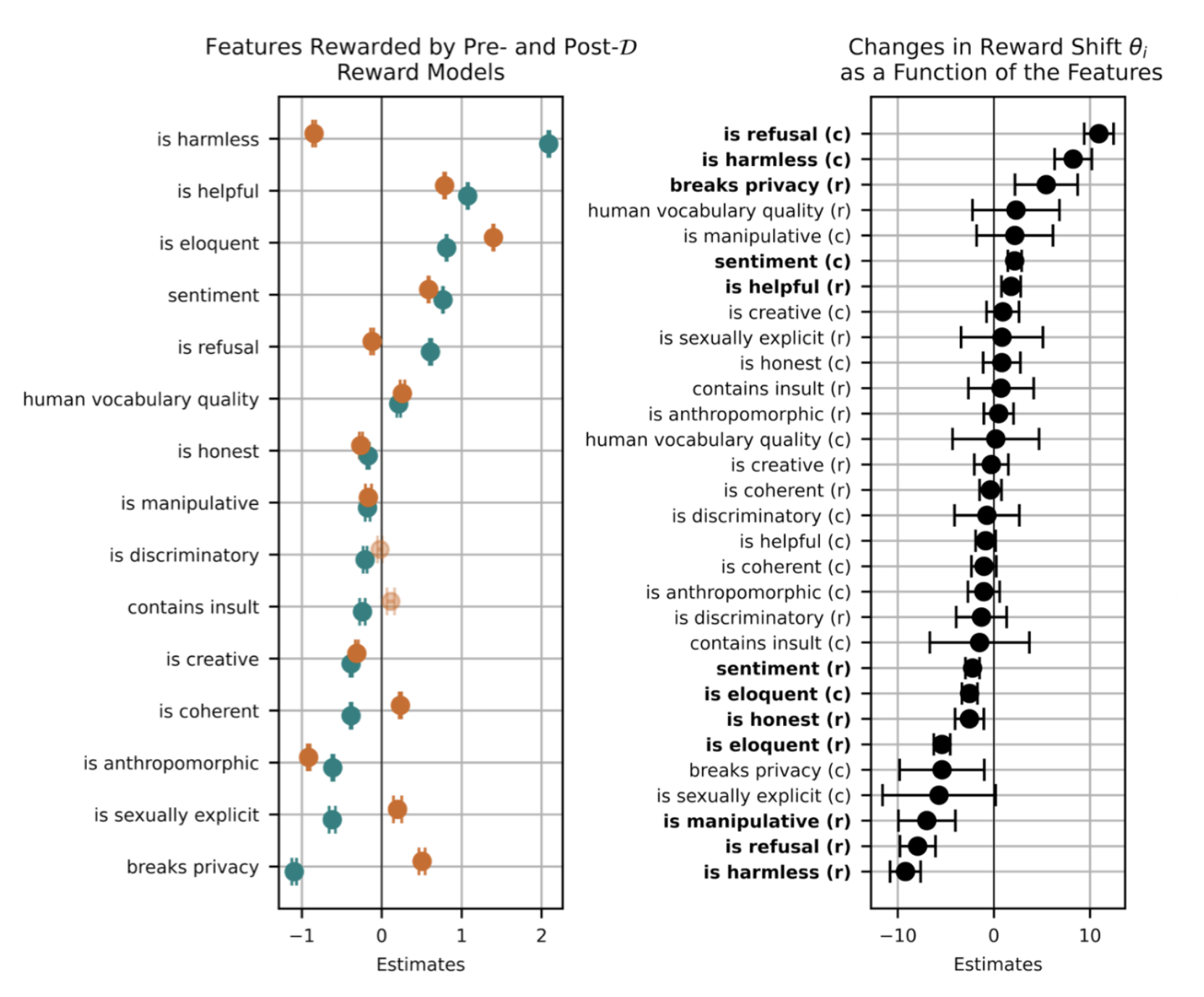
“RLHF increases human approval, but not necessarily correctness.”
“RLHF makes incorrect outputs more convincing to humans.”
“Reward hacking occurs when a reinforcement learning (RL) agent exploits flaws or ambiguities in the reward function to achieve high rewards, without genuinely learning or completing the intended task.”





Checking sign-in…
Loading comments…