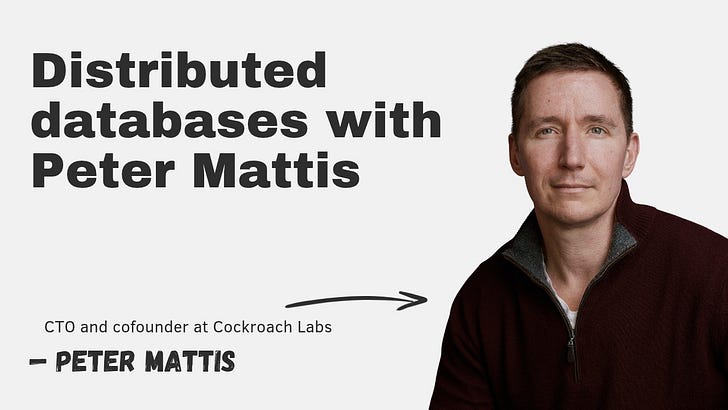
Colossus, the successor to Google File System, replaced three full replicas with Reed-Solomon erasure coding, cutting storage overhead by a third while increasing redundancy, according to Peter Mattis, who pioneered it with the team.
CockroachDB keeps three replicas by default and up to five for some system tables: with one replica a crash is unrecoverable, and with two neither side can tell whether the other received the last write. More replicas are allowed but add latency.
Because Colossus was append-only, Spanner could not use B-trees, which need in-place updates, so LSM trees fit instead. CockroachDB began on RocksDB, an LSM engine forked from LevelDB, and now runs on Pebble, which Mattis wrote and open sourced in 2019.
Mattis replaced std::map, a red-black tree with two pointers per node, with a B-tree at Google that was faster through spatial locality and smaller. He later built a Swiss Table map for Go that the Go team helped land in the standard library.
A former Google C++ readability reviewer, Mattis says he reviews less code as agents improve and predicts engineers will stop looking at code the way they stopped reading assembly. Non-engineers at Cockroach Labs built about 1,000 internal apps in a couple of months.
Why it matters
A practitioner shipping database-grade code describes how AI changed their output without hurting quality, a useful data point on AI-assisted development in high-stakes systems.