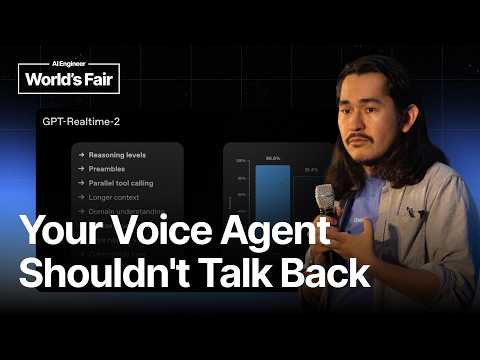
The voice stack's control problem: guardrails don't fit voice-to-voice
- Source
- x.com
- Date

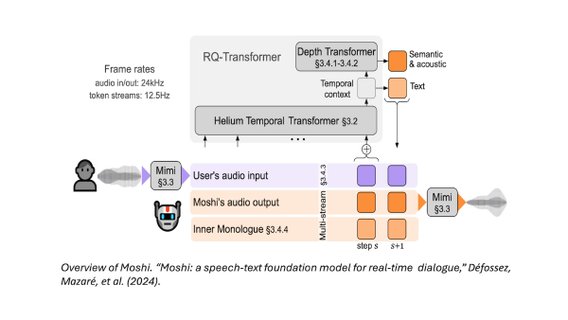
The Voice Stack is improving rapidly. Systems that interact with users via speaking and listening will drive many new applications. Over the past year, I’ve been working closely with https://t.co/zpIxRSuky4, AI Fund, and several collaborators on voice-based applications, and I will share best practices I’ve learned in this and future posts. Foundation models that are trained to directly input, and often also directly generate, audio have contributed to this growth, but they are only part of the story. OpenAI’s RealTime API makes it easy for developers to write prompts to develop systems that deliver voice-in, voice-out experiences. This is great for building quick-and-dirty prototypes, and it also works well for low-stakes conversations where making an occasional mistake is okay. I encourage you to try it! However, compared to text-based generation, it is still hard to control the output of voice-in voice-out models. In contrast to directly generating audio, when we use an LLM to generate text, we have many tools for building guardrails, and we can double-check the output before showing it to users. We can also use sophisticated agentic reasoning workflows to compute…

Context
Generating a voice response through text creates an opportunity to check what the system will say before it speaks. In his February 2025 account, Andrew Ng describes transcribing speech, running a text-based reasoning workflow, and converting the answer back to audio. His refund example shows the purpose: the application can check business policy and arrange the actual refund before promising one.
Those extra steps also take time. Ng describes generating a brief preliminary response while the longer workflow prepares its answer. The acknowledgement is intended to make the conversation feel responsive while preserving time for the substantive checks.




Checking sign-in…
Loading comments…