Fences, not sandboxes: governing agent fleets with law
- Source
- yegge.ai
- Author
- Steve Yegge
- Date

Context
Steve Yegge argues in an essay that once companies run large numbers of capable AI agents, the hard problem will be writing down the rules those agents work by, not locking them in. His evidence is his own : 50 to 60 agents building his long-running online game Wyvern, directed by 18 long-lived instances of Anthropic's Claude Fable 5, with fleets of other models handling implementation, review and monitoring. He puts the equivalent API cost at about $122,000 a month, which he pays roughly $5,000 for through 21 discounted Claude Max subscriptions, and expects this kind of setup to become cost-effective for most people in about a year.
What surprised him was what the agents built around the game. Their , Wheelhouse, grew to about 600,000 lines of code and tests, mostly bash, and when he had the agents document their recurring jargon he found a legal system: a constitution, rulings, case law, offices and registries, about 450 legal artifacts in all. It grew out of how he worked. Each time an agent asked him a clarifying question, his answer was recorded as a ruling, and daily incident reviews added more. A rule that keeps being broken tightens in stages, from custom to a warning to written law every agent must obey, and finally to a that refuses the action or raises a loud alert. Yegge's explanation is that his agents forget everything between sessions, are interchangeable, and can coordinate only through text, and law is the mature human technology for coordinating replaceable strangers through text.
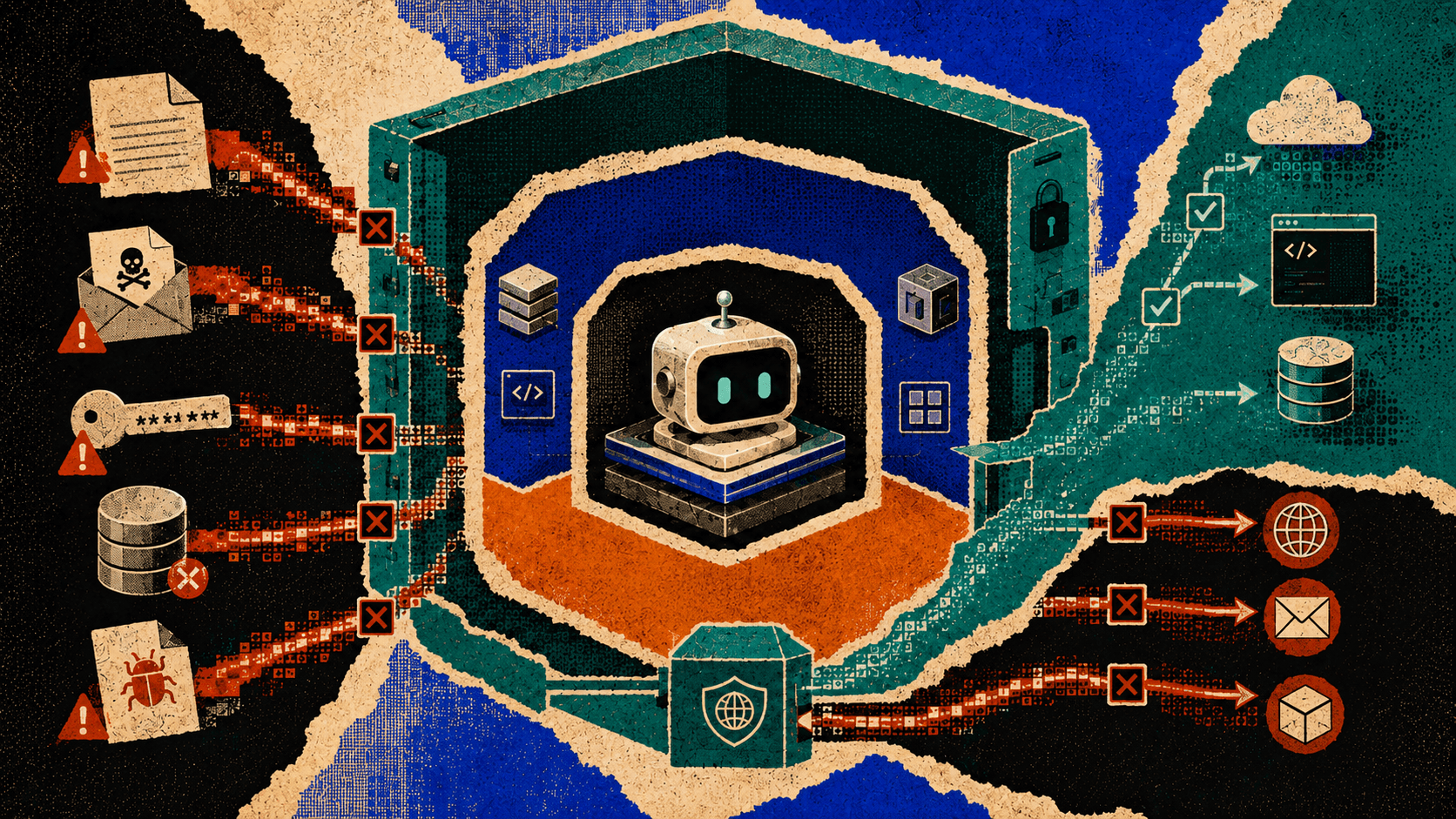
A fence, in his usage, is any mechanism that turns an agent away when it is not supposed to act. In Wheelhouse, only Fable may talk to humans, and that rule is enforced at the Slack and email connections. Yegge is explicit that a fence is not a : it is a polite refusal that a cooperative agent respects, and it offers no protection against one that chooses to ignore it. That is the essay's central bet. He describes today's best models as having roughly a sixth grader's judgment, prone to well-meant bad decisions rather than malice, so the work is capturing an organization's thousands of unwritten decisions as rules they can follow. He also found the rulebook full of obsolete rulings, since the agents grew it without pruning it. The essay reports no measurements, so it is evidence of what one heavily resourced builder saw, not a tested governance method.
- Setup — The combination of a model, a harness, its connections and the path the task's data takes, considered together for a task.
- Agentic software factory — A repeatable system connecting specifications, agents, verification, review, and delivery.
- Program — A set of instructions stored so that a computer can run it.
- Sandbox — An enforced restriction that confines a process to specified files, network destinations and other resources, applied by the operating system, a container or a virtual machine.


Checking sign-in…
Loading comments…