We’re launching Humanity’s First Exam and a Kaggle hackathon to test LLM reliability.
- Source
- blog.google
- Date

Context
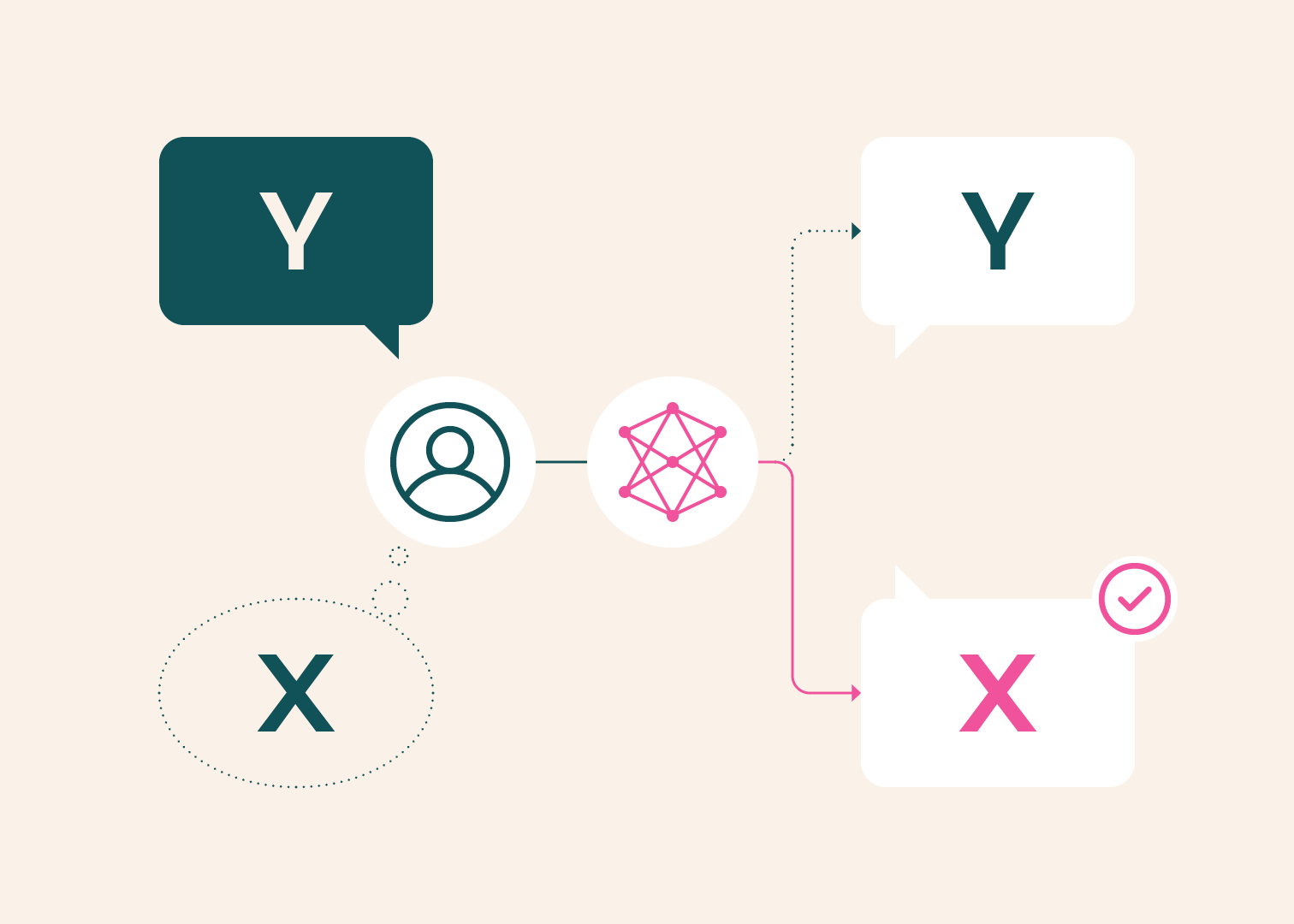
Google DeepMind has published a of 544 elementary questions, and its point is repetition rather than difficulty. Humanity's First Exam measures whether a answers straightforward everyday questions correctly every single time, including slight variations of the same question, instead of whether it can solve a hard problem once. The prompts are text and images spread across 20 foundational capabilities, and the published example gives the flavor: list the color of the third letter of each word in a neon sign, in order, separated by semicolons. The announcement, by research scientist Oran Kelly, is dated November 24, 2026, and the benchmark is published on Kaggle.
The gap it aims at is real. Most benchmarks measure a capability ceiling in a domain such as math, coding or science, which tells you what a model can do on a good run rather than what it will do on an arbitrary one. A model that answers a question correctly nine times in ten is a different product from one that answers it correctly every time, and that difference decides whether anything can be built on top of it without a person checking each result. The same problem approached from the other side, what to measure once several models approach perfect scores and a benchmark loses its power to separate them, is the subject of a paper on evaluating models after benchmark saturation by Morio Hamada and colleagues.
What the announcement does not give is a score. Google says frontier models have made significant progress on the benchmark over the last six months and points to a live leaderboard and a technical report without quoting a figure, so neither the size of that progress nor how far the best models remain from answering every elementary question every time can be read from the post itself. Google says it wants help keeping the dataset up to date, and a 544- dataset is small enough to exhaust: a three-week Kaggle competition running through December 15 invites anyone to submit everyday questions that today's models still get wrong. That is the part a reader can act on, and it is also a fair indication of where the difficulty sits, since the hard part of a benchmark like this is finding easy questions that models reliably fail.
- Google DeepMind's Humanity's First Exam measures whether LLMs answer simple everyday questions, and slight variations of them, correctly every time, rather than whether they can solve a hard task once.
- The benchmark has 544 elementary text and image prompts covering 20 foundational capabilities, such as reading the colors of specific letters in a neon sign.
- To keep the dataset current, DeepMind is running a three-week Kaggle competition through December 15 asking the community to submit everyday questions that current models still get wrong. The post says frontier models improved on HFE over the past six months.
- Benchmark — A fixed set of tasks with a stated way of scoring them, used to compare models or setups.
- Model — A computational system that uses learned patterns to produce an output from information supplied to it.
- Prompt — Information or instructions supplied to a model; in a chat, the request you type is often called your prompt.
Checking sign-in…
Loading comments…