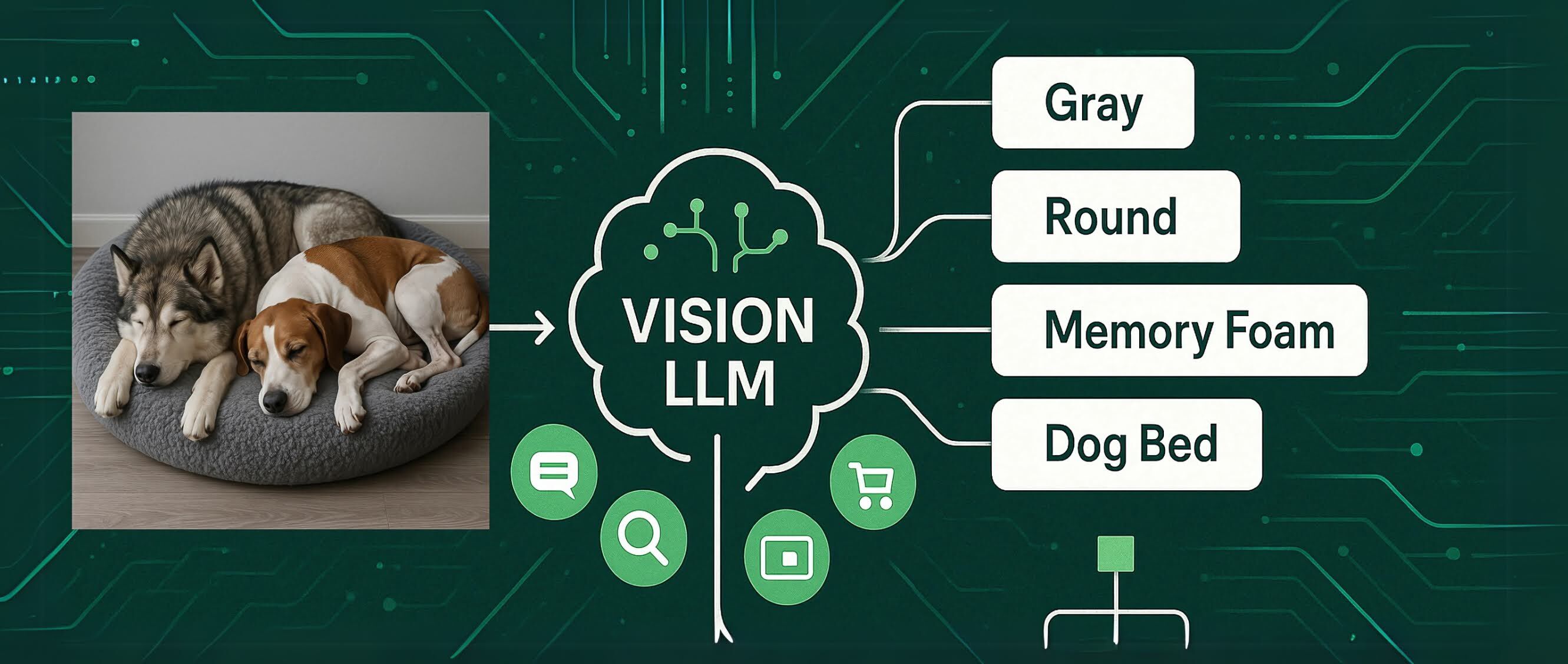
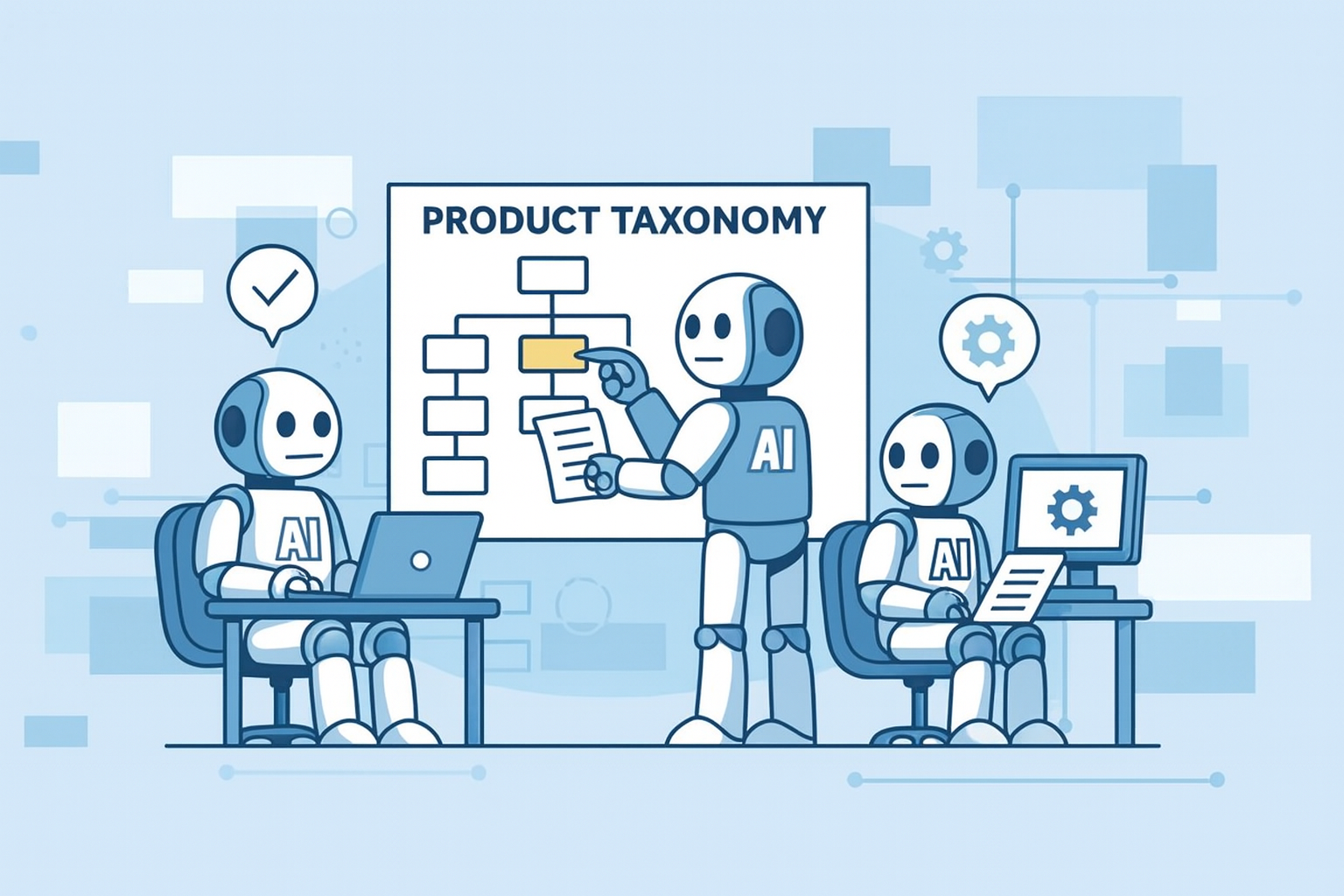
Shopify’s product-understanding system uses a product’s category to decide which details to extract from its images and description. A vision-LLMA large language model — the neural network behind tools like Claude and ChatGPT, trained on huge amounts of text to predict what comes next.Full definition → first predicts the category, then receives that category as context windowThe maximum amount of text a model can consider at once — its working memory for the current conversation or task.Full definition → for a second prediction of relevant attributes. Both outputs must succeed, and the results are checked against Shopify’s product taxonomy, its standardized category and attribute library. This connects visual interpretation to a consistent catalog structure, supporting search and product management. In its May 2025 account, Shopify reported merchant acceptance of 85% of predicted categories; that measures acceptance, rather than independently verified classification accuracy.
Terms in this piece · Glossary
LLM — A large language model — the neural network behind tools like Claude and ChatGPT, trained on huge amounts of text to predict what comes next.
context window — The maximum amount of text a model can consider at once — its working memory for the current conversation or task.
grounding — Tying a model's answers to checkable sources — retrieved documents, live data, tool results — instead of letting it answer from memory alone.