Snapkv Llm Knows What You Are Looking For Before Generation 2024 04 22
- Source
- cohere.com
- Author
- Cohere
- Date

Context
SnapKV reduces the memory a language model needs to hold a long prompt while it writes an answer. The model keeps a key-value (KV) cache, stored information about earlier input, and the abstract says this cache grows with input length, straining memory and time. SnapKV finds that each attention head (one of the model's parallel attention components) consistently focuses on particular prompt positions, a pattern visible in an observation window at the end of the prompt. It then compresses the cache by selecting clustered important positions for each head, without the model. Publisher abstract.
The authors' abstract, hosted by Cohere, reports a 3.6 times increase in generation speed and an 8.2 times improvement in memory efficiency over the baseline at 16,000 input tokens, with comparable performance across 16 long-sequence datasets. These are results under the authors' experimental conditions, supporting selective cache compression as an efficiency technique rather than establishing that every task can discard the same information safely. This explanation rests on the abstract only, not a review of the full paper. Published abstract.
- attention — The mechanism that lets a model weigh which earlier words matter for the word it's currently processing — the core operation of a transformer.
- fine-tuning — Taking a trained model and training it a bit more on your own examples so it gets better at one specific job.
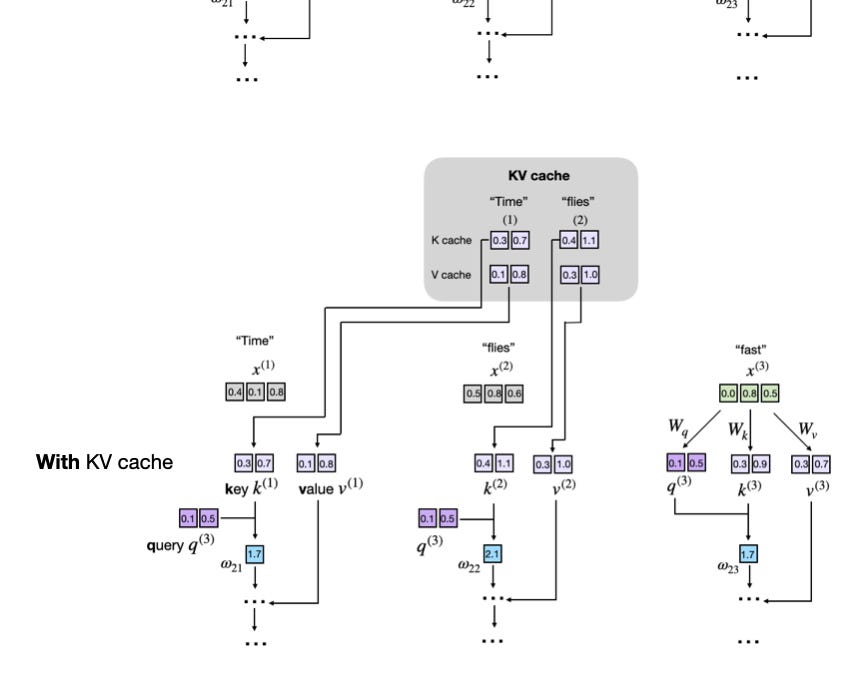
- KV cache — The memory a model keeps about text it has already read, so generating each new token doesn't require reprocessing the whole conversation.
- context window — The maximum amount of text a model can consider at once — its working memory for the current conversation or task.
 postCohere releases open-weights translation model North Small Translate
- postIntroducing the next evolution in LLM text generation: the first fully-fledged…
- postHow is AI really affecting your job? @Cohere_Labs released the Agentic Task…
 articleThe Data Provenance Initiative A Large Scale Audit Of Dataset Licensing And Attribution In Ai 2023 10 25
Checking sign-in…
Loading comments…