OpenAI Researcher Dan Roberts on What Physics Can Teach Us About AI
- Source
- youtube.com
- Author
- Sequoia Capital
- Date
Context
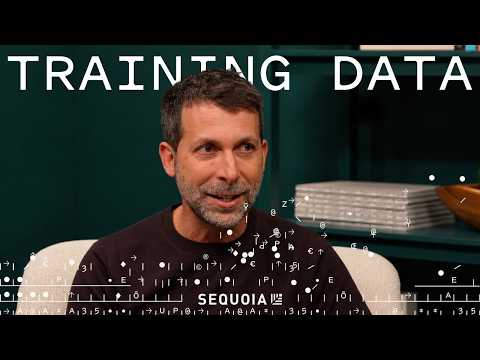
Physicist Dan Roberts argues that a large neural network can be studied the way thermodynamics studies a gas. In a Sequoia interview recorded on his second to last day at Sequoia, shortly before he started as a researcher at OpenAI, he notes that and pressure are large-scale measurements, while the underlying reality is countless molecules. Physicists can start from the statistics of the molecules and derive the gas law. For a network, he says, the molecule-level view is its weights and the simple equations that run them, and the large-scale view is what it does, such as writing a poem or solving a math problem.
Roberts says he wrote a book with co-authors applying these methods to deep learning as an initial framework. His contrarian view is that such systems can be understood, partly because very large systems often simplify through statistical averaging, though he says this need not hold exactly for language models. It is a research and a hypothesis, not a demonstrated explanation of any particular .
- Sampling controls — Parameters that shape how deterministic or varied model generation becomes.
- Program — A set of instructions stored so that a computer can run it.
- Model — A computational system that uses learned patterns to produce an output from information supplied to it.
 videoBringing Continual Learning to Every Company: Trajectory’s Ronak Malde
 videoCrusoe CEO Chase Lochmiller: Turning Stranded Energy Into Intelligence
 videoDavid Silver and Lasse Espeholt of Ineffable Intelligence: A Superlearner for the Age of Experience
 videoCracking the Code on Offensive Security With AI ft XBOW CEO and GitHub Copilot Creator Oege de Moor


Checking sign-in…
Loading comments…