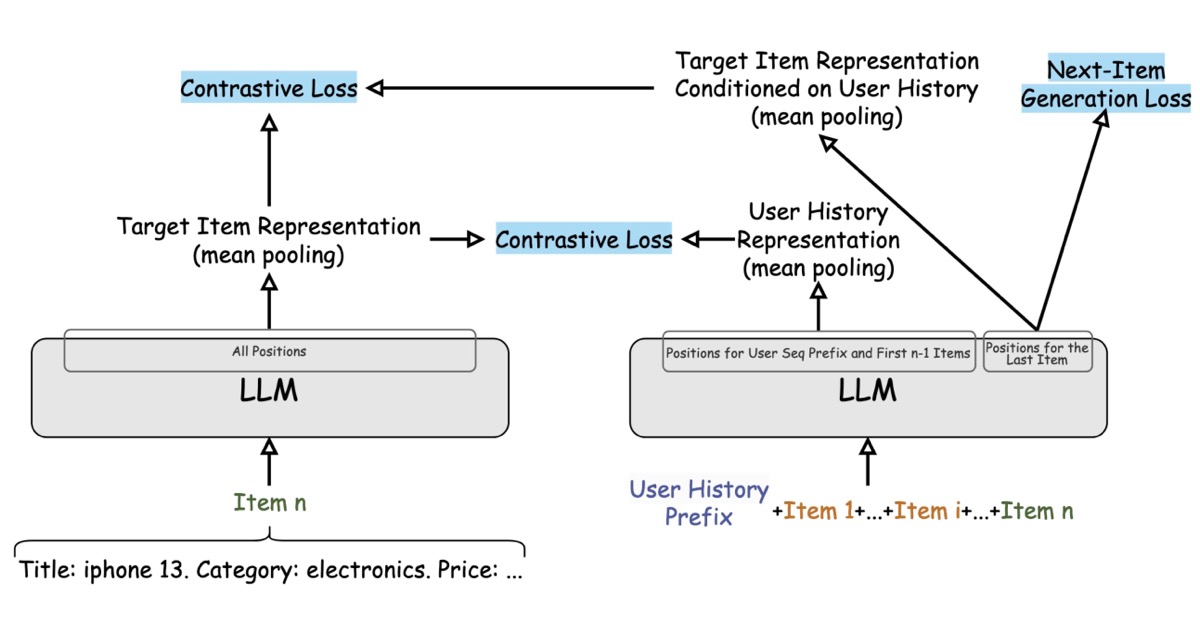
A useful role for language models in recommendations is preparing information that a smaller live system can use. Eugene Yan's review of search and recommendation research describes this pattern through generated descriptions and TrainingThe process that adjusts a model using examples and a measure of how well it performs.Full definition → labels, rather than assuming a large ModelA computational system that uses learned patterns to produce an output from information supplied to it.Full definition → must answer every recommendation request.
One example in his account uses a Large language modelA model trained on large amounts of data to process and generate language.Full definition → to label poor job matches, then trains a lightweight filter on those judgments. This moves the expensive assessment into data preparation while leaving a smaller model to screen live recommendations. The design question becomes which part of the service benefits from language understanding, and which part must remain fast enough to run for every user.
Terms in this piece · Glossary
Training — The process that adjusts a model using examples and a measure of how well it performs.
Model — A computational system that uses learned patterns to produce an output from information supplied to it.
Large language model — A model trained on large amounts of data to process and generate language.
Retrieval — Selecting evidence relevant to the current request.