GPT-Live and GPT-Realtime: Arch Trade-Offs Behind Continuous Voice AI
- Source
- agentunicorn.ai
- Author
- flashnik
- Date
Context
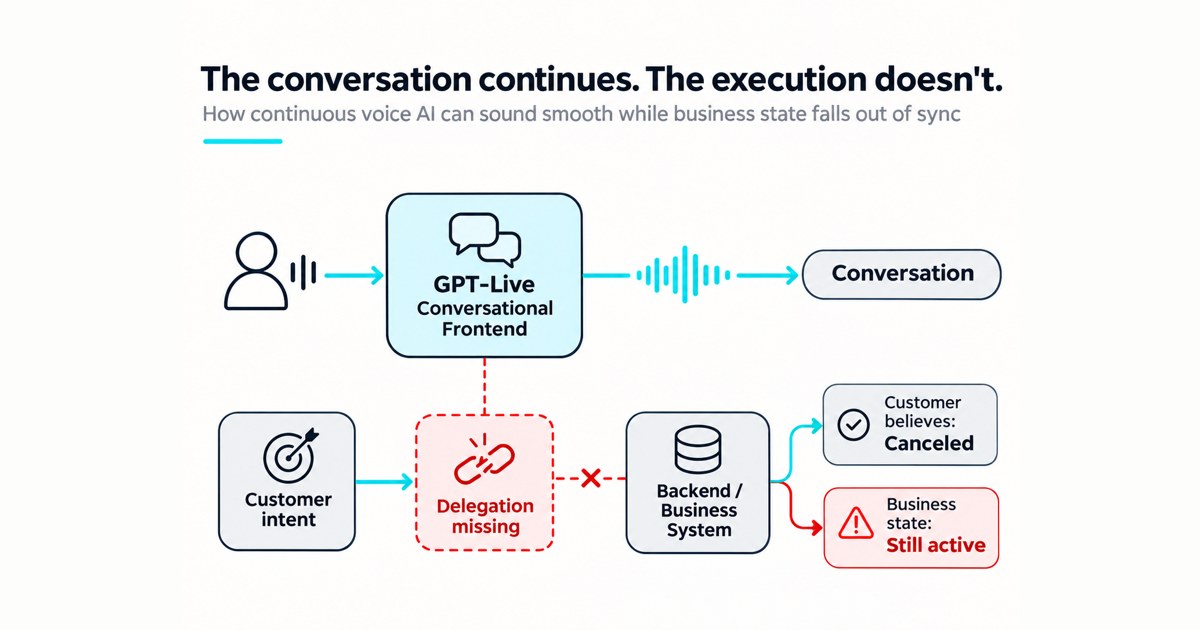
This analysis by AgentUnicorn, which publishes research on voice-AI architecture, argues that a more natural-sounding voice is not automatically a more reliable business agent, and that GPT-Live shows why (AgentUnicorn analysis). Conventional voice agents chain separate speech recognition, a and speech synthesis. OpenAI's GPT-Realtime processes audio directly but organizes reasoning and tool calls around each response within one realtime session. GPT-Live, which OpenAI has brought to its API (GPT-Live-1 API launch), runs a lighter voice model continuously, listening and speaking at the same time, and lets that model decide when to hand work to a reasoning backend such as an OpenAI model or the company's own service. The author's central point is that the less capable model therefore controls access to the more capable one.
The evidence for why that matters comes from a developer's report on LiveKit, a voice-agent framework, not from tests AgentUnicorn ran. In that setup, 14 of 75 appointment-cancellation requests were not handed to the backend within six seconds and five never were, even though the agent was told to delegate cancellations and never confirm without backend verification. Sometimes it told callers a cancellation was under way when nothing had been sent. Confirmations succeeded in 20 of 20 tests when the caller replied after the agent finished reading details back, and in 3 of 15 when the caller spoke during the readback. The author stresses these are not a platform-wide failure rate and that the exact model revision was not verified. The mechanism is the point: a backend cannot log a failure for a request it never received, and because GPT-Live-1 does not support , a company cannot retrain the voice model on the cases it misses.
The article then walks through what controls OpenAI does offer and what each one guarantees. Monitoring transcripts may catch a wrong statement only after the caller has heard it, and cannot take it back. Preventing one requires holding generated audio, checking it and releasing approved segments, which adds delay, and OpenAI documents that discarded speech stays in the model's , so it may continue as if the caller heard something they did not. OpenAI Support confirmed that an acknowledgment for an appended instruction does not prove the requested words were spoken, and OpenAI's documentation recommends verified recordings where exact wording matters, such as a required disclosure. GPT-Live-1's frontend costs $0.05 per minute, with backend reasoning and tools billed separately, and the author argues the cost of these added controls belongs in any comparison.
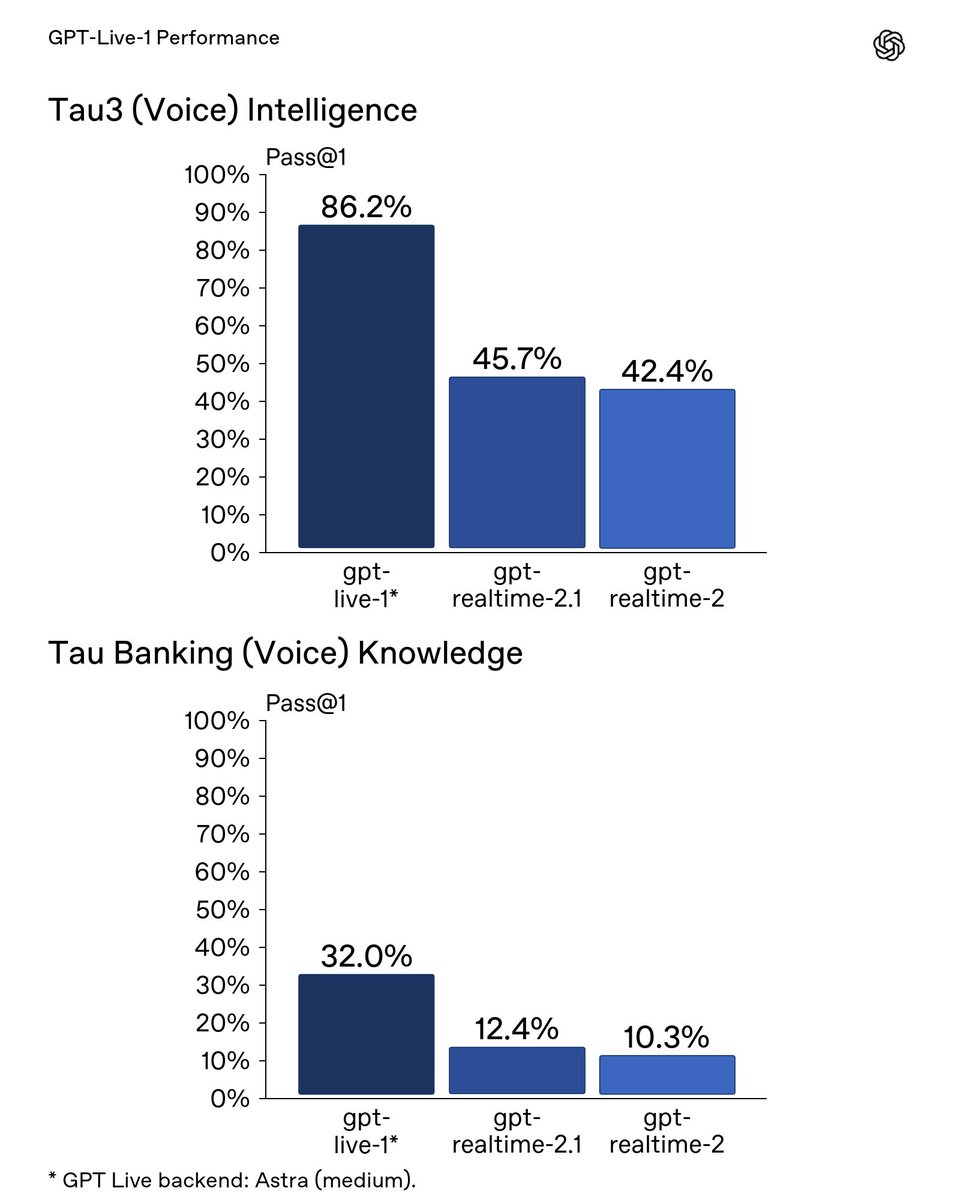
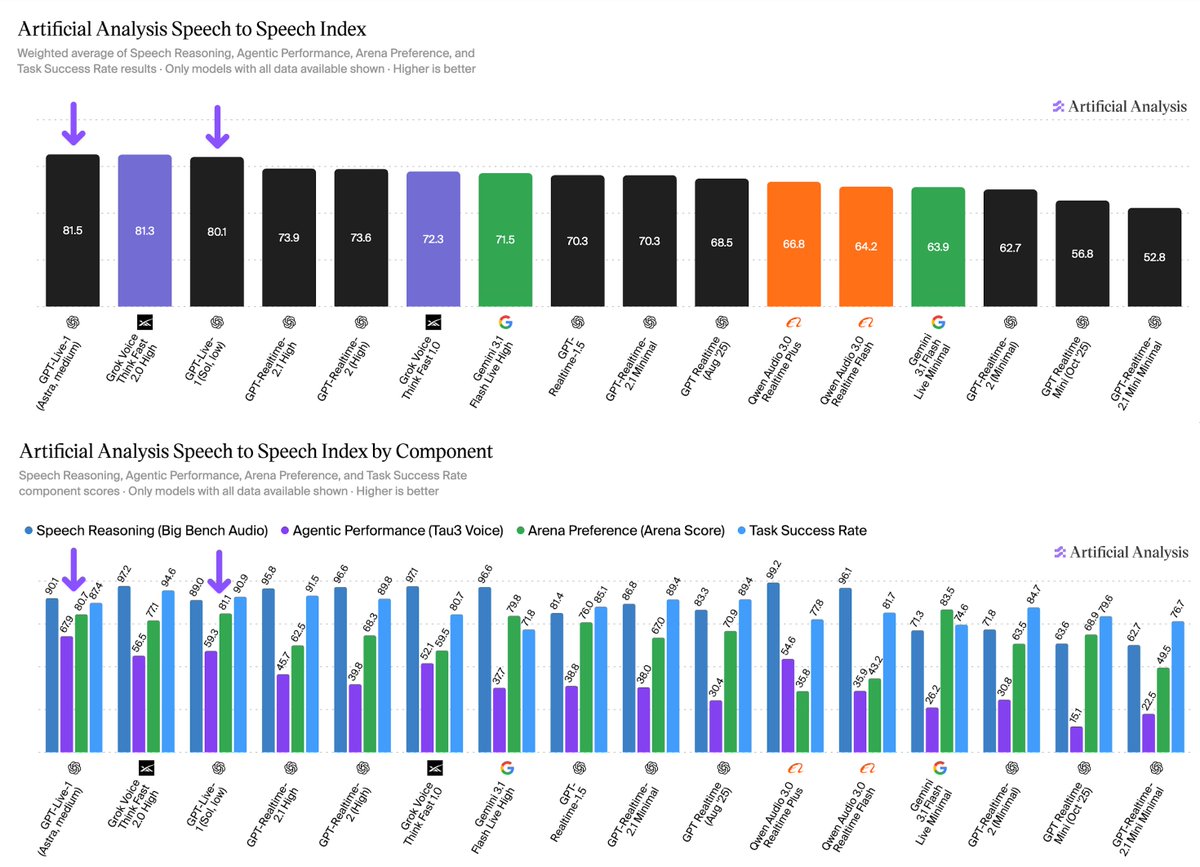
The author also questions time to first audio, the latency figure most vendors report, because speech can start before anything useful is said. They propose tracking time to first substantive information, their own descriptive term, alongside verified task completion. A separate LiveKit issue, which the author labels an adapter defect rather than a GPT-Live requirement, held tool results behind filler speech for a median 1.83 seconds across seven turns and 7.2 seconds at worst. The article's conclusion, that GPT-Live should not be the default for enterprise voice automation where wrong statements change what customers do, is a reasoned opinion built on a few public reports and OpenAI's documentation, not a benchmark. It acknowledges vendor-reported gains, such as Speak seeing nearly 80 percent fewer unwanted interruptions, and that future versions may delegate more reliably.
- AI agent — An AI system that doesn't just answer once but works toward a goal in a loop — taking actions, reading the results, and deciding what to do next.
- LLM — A large language model — the neural network behind tools like Claude and ChatGPT, trained on huge amounts of text to predict what comes next.
- fine-tuning — Taking a trained model and training it a bit more on your own examples so it gets better at one specific job.
- context window — The maximum amount of text a model can consider at once — its working memory for the current conversation or task.

Checking sign-in…
Loading comments…