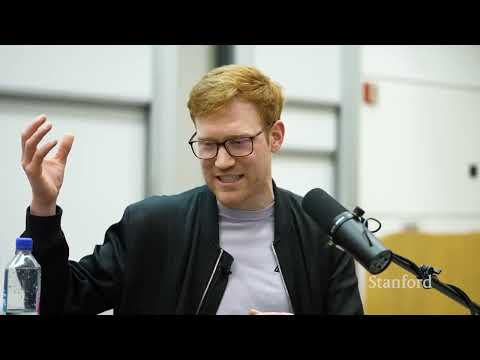
Stanford CS153 Frontier Systems | The AI Native Company: How One Founder Becomes a 1000x Engineer
- Source
- youtube.com
- Author
- Stanford Online
- Date
Context
In a Stanford CS153 lecture, Garry Tan of Y Combinator describes building blocks of gstack, an open-source toolkit. A , Tan says, is a runbook written in markdown: numbered steps an agent can follow, which can also call code. A resolver is the index telling the agent which skill or document to load for a job, so instructions live in separate files instead of one oversized CLAUDE.md, the project-instructions file that Claude Code warns about once it grows too large.
Tan's third idea is "skillify": after a one-off task works, ask the agent to turn it into a skill. Tan says writing the skill and its code is only two of about ten steps. The rest are checks, including unit tests for the code, evaluations of the skill file, an integration test and a test that the resolver actually triggers the skill. Tan frames this as working practice being learned week to week, not a settled method.
- AI agent — An AI system that doesn't just answer once but works toward a goal in a loop — taking actions, reading the results, and deciding what to do next.
- agent skill — A reusable instruction file that teaches an agent how to do one job well — the procedure, the tools, and what counts as done.
 videoStanford Webinar - Building Trustworthy AI: Navigating Security in the Agentic Era
 videoStanford CS547 HCI Seminar | Autumn 2025 | HCI Systems in the Age of AI Code Generation
 videoStanford CS25: Transformers United V6 I Advancing Science and Medicine with Collaborative AI Agents
 videoStanford CS153 Frontier Systems | Andreas Blattmann from Black Forest Labs on Visual Intelligence


Checking sign-in…
Loading comments…