From Hierarchy to Intelligence
- Source
- x.com
- Author
- jack
- Date
Context
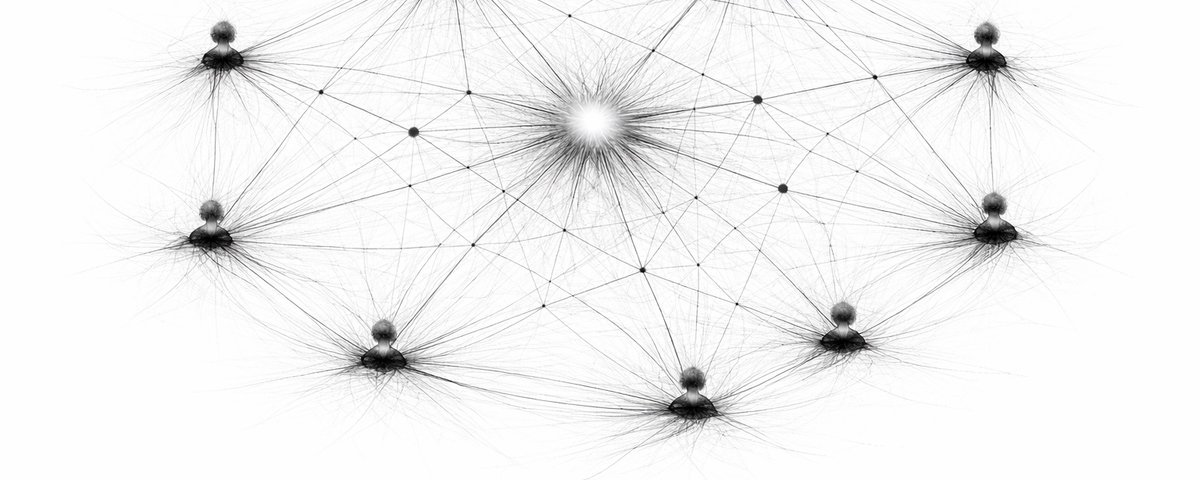
Block, the financial-technology company, proposes shifting managerial information-sharing into an AI-maintained picture of its operations. Its essay describes using recorded decisions, discussions and work products to track progress, obstacles and resource allocation. Employees would obtain that without waiting for it to pass through successive managers.
People would still own decisions and outcomes. The proposed structure assigns cross-team problems to responsible individuals and combines hands-on work with staff development in player-coach roles. Block describes the transition as early: the ambition is to replace coordination work performed by management layers while retaining human judgment, including decisions the model should not make alone.
- Middle management was invented in Prussia after Napoleon crushed its army at Jena in 1806. The reformers concluded you cannot depend on genius at the top, so they created the General Staff: trained officers who do not fight, they plan and route information.
- The line-versus-staff vocabulary corporations still use is military. Line advances the core mission, staff provides specialized support — a distinction formalized in armies long before any company adopted it.
- Hierarchy reached business through the railroads. The US Army lent West Point engineers to private lines in the 1840s and 50s, and McCallum of the New York and Erie drew the first org chart in the mid-1850s because informal management was causing fatal collisions.
- Taylor did not invent the hierarchy, he optimized inside it: split work into specialized tasks, assign them to trained experts, manage by measurement rather than intuition. That produced the functional pyramid.
- Los Alamos was the first stress test. Oppenheimer resisted the military instinct to compartmentalize and reorganized the lab around the implosion problem in 1944 — cross-functional teams that worked, but as a wartime exception under a singular figure.
- context window — The maximum amount of text a model can consider at once — its working memory for the current conversation or task.
“At Sequoia, we see that speed is the best predictor of start-up success.”
“Two thousand years before the first corporate org chart, the Roman Army solved a problem that every large organization still faces: how do you coordinate thousands of people across vast distances with limited communication?”
“Scharnhorst intended these staff officers to "support incompetent Generals, providing the talents that might otherwise be wanting among leaders and commanders."”
“We now call it "span of control," and it remains the governing constraint of every large organization on earth.”




Checking sign-in…
Loading comments…