Sonnet 5.5 cache reads drop to $0.10 per million tokens
- Source
- x.com
- Date
The change applies to the API only. Sonnet 5.5 cache reads now cost $0.10 per million tokens, while uncached input stays at $2 and output at $10. Agent loops reread the same system prompt, tool definitions and conversation history on every turn, so cached input is often the largest token category in an agentic workload. Halving the price of that category lowers the cost of long-running agent sessions more than the headline rate suggests. The gain depends on cache hit rate, so teams that reorder prompts, inject timestamps near the top, or rebuild tool lists per call will see less of it. Subscribers using Claude Code see no change, since usage limits stay the same. If you run Sonnet 5.5 through the API, check how much of your bill is cache reads before and after this week to see what the cut is worth for your traffic.

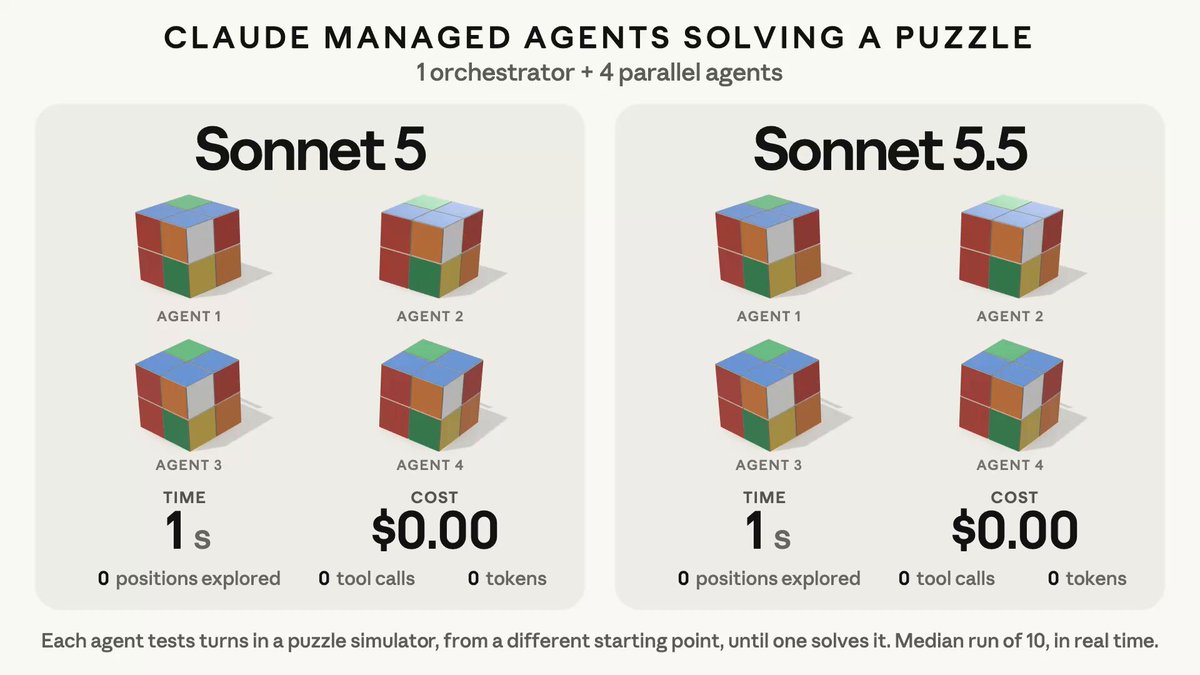
ICYMI we've cut the price of Sonnet 5.5 cache reads in half. In the Claude Platform, it's now $0.10 per million tokens (input is $2, output is $10). This means Sonnet 5.5 now runs ~20% cheaper on most agentic work. (API only, no change to Claude Code usage limits.)
Context
ClaudeDevs says Anthropic has halved the price of Sonnet 5.5 cache reads on the Claude Platform, to $0.10 per million , with input at $2 and output at $10 per million. A cache read is charged when the model reuses part of a it has already processed, such as standing instructions or the earlier turns of a conversation, instead of billing that text again as fresh input. According to the post, the cut makes Sonnet 5.5 about 20% cheaper on most agentic work.
Agents typically resend a long shared at every step, so cache reads can make up much of their token use, and that is how a cut to one price can lower the total bill noticeably. The 20% figure is Anthropic's own estimate rather than a measurement of any particular workload. The post says the change applies to the only and does not change Claude Code usage limits.
- Token — A piece of text, such as a word, part of a word or a punctuation mark, that a language model represents as numbers and handles as a unit.
- Prompt — Information or instructions supplied to a model; in a chat, the request you type is often called your prompt.
- Context and context window — Context is the information available for a generation; the context window is the capacity available to hold it.
- API — Application programming interface: the agreed set of operations, inputs and outputs through which one piece of software uses another.


Checking sign-in…
Loading comments…