Build Specialized Agents on a Stack You Control with NVIDIA NemoClaw
Source
developer.nvidia.com
Author
Nicola Sessions
Date
Why it matters
NemoClaw blueprints add a policy-enforcing runtime under existing agent harnesses. Engineers can see what a production agent needs beyond the model and harness: governed access, optimization and observability.
Key takeaways · AI-distilled
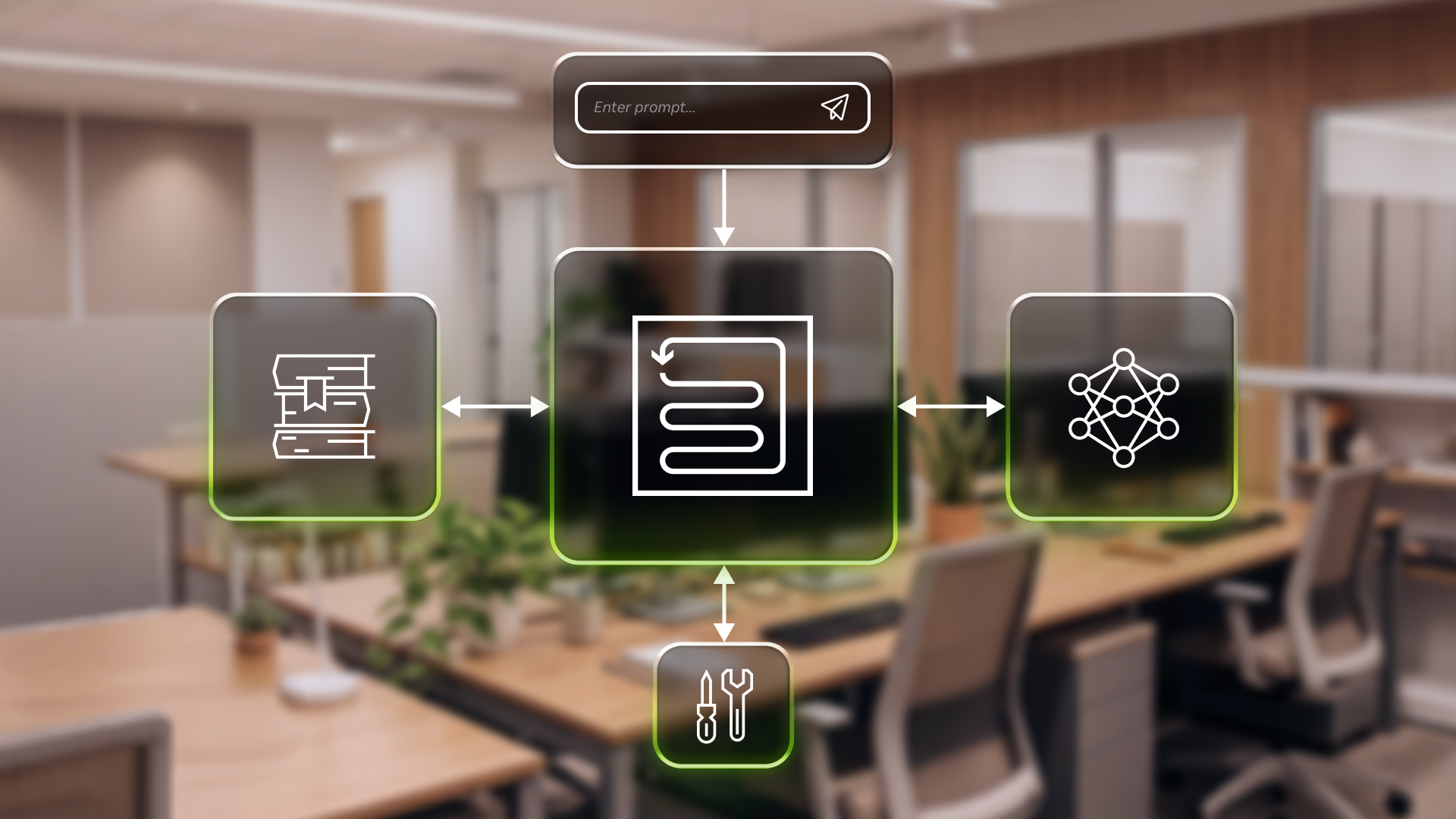
NVIDIA describes NemoClaw as neither a agent harnessThe scaffolding around a model that turns it into a working agent — the loop, the tools it can call, and the rules for when to stop.Full definition → nor a runtime but a set of open blueprints that wrap an existing harness (OpenClaw, Hermes AI agentAn AI system that doesn't just answer once but works toward a goal in a loop — taking actions, reading the results, and deciding what to do next.Full definition → or LangChain Deep Agents) with Nemotron models, NeMo optimization tools and the OpenShell runtime.
OpenShell is the governance layer: it controls an agent's file, network, process and credential access. In NVIDIA's Chief of Staff recipe it keeps inference and MCP credentials outside the sandboxAn isolated environment where AI-generated code or agent actions run without being able to touch anything real.Full definition →, so policy still holds if memory or retrieved context windowThe maximum amount of text a model can consider at once — its working memory for the current conversation or task.Full definition → steers the agent wrong.
NVIDIA cites LangChain tuning Deep Agents' prompts, tools and middleware for Nemotron 3 Ultra without retraining, reaching what it calls near-frontier performance at about 10x lower cost per run than leading closed models. The NemoClaw blueprint packages that tuning.
The post says a mismatched model and harness shows up as an agent re-asking for context, stopping early or looping. NeMo Relay closes trace spans at real session boundaries (new session, reset, expiry) and exports trajectories for audit and optimization.
Terms in this piece · Glossary
agent harness — The scaffolding around a model that turns it into a working agent — the loop, the tools it can call, and the rules for when to stop.
AI agent — An AI system that doesn't just answer once but works toward a goal in a loop — taking actions, reading the results, and deciding what to do next.
sandbox — An isolated environment where AI-generated code or agent actions run without being able to touch anything real.
context window — The maximum amount of text a model can consider at once — its working memory for the current conversation or task.