Alexander Wettig is a researcher at Cursor working on reinforcement learning for Composer models. His research examines how training data changes a language model's capabilities, and he co-authored SWE-bench and SWE-agent.[1][2][6][7]
Start with QuRating: Selecting High-Quality Data for Training Language Models →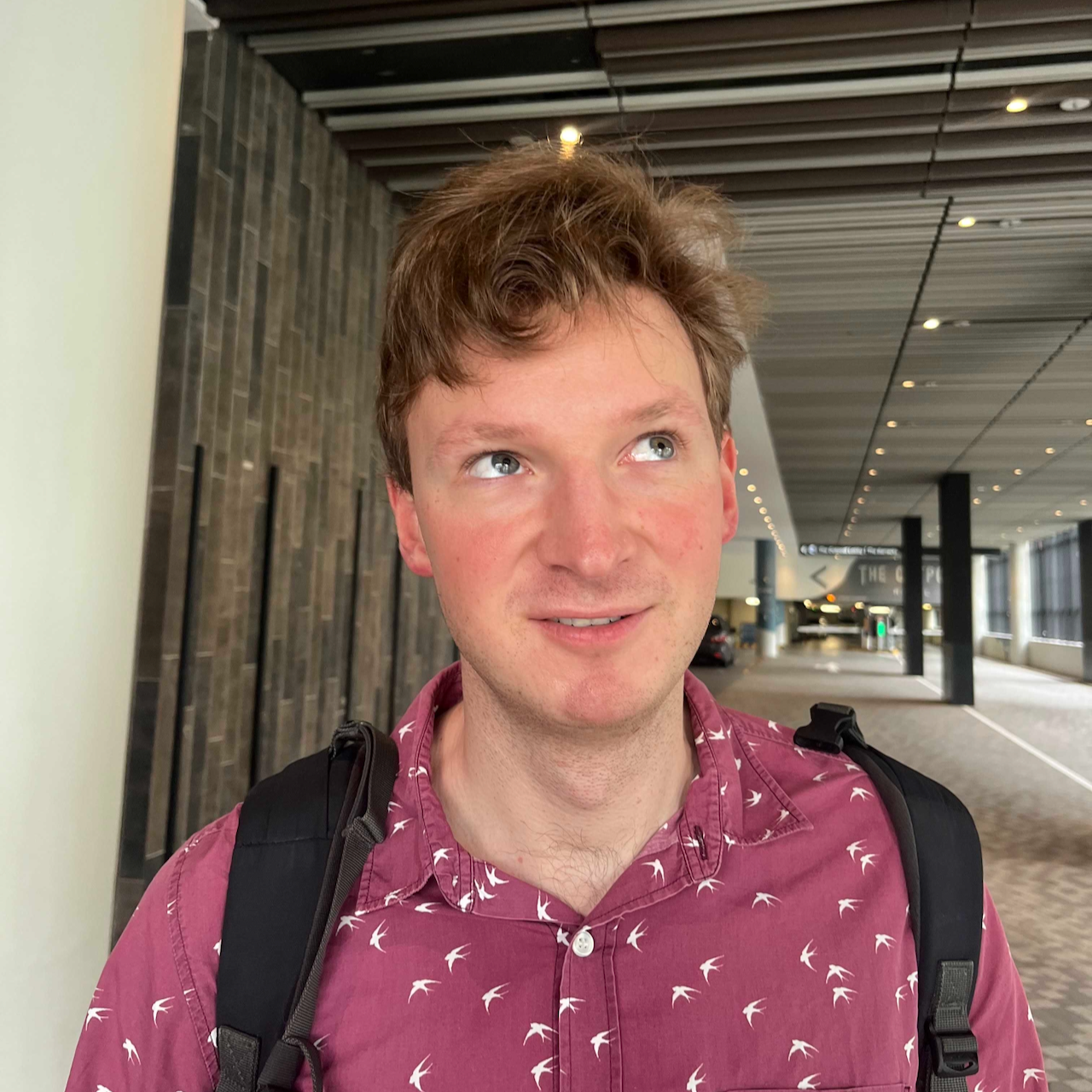
Education


Links
Website GitHub
 X LinkedIn Google Scholar
Researcher, Composer reinforcement learning · Cursor
Career
Wettig completed his computer science doctorate at Princeton in 2026, advised by Danqi Chen, after undergraduate study at Cambridge. His thesis studied how selecting and combining training text affects language models. He now describes his work at Cursor as reinforcement learning for Composer, the company's coding models. That training process uses feedback on a model's actions to improve its behavior. His university adviser also lists Cursor as his current organization.[1][2][9]
Contributions
Choosing training text with QuRating
QuRating asks how to choose useful text from a much larger collection. Wettig and his co-authors used language-model comparisons to judge qualities such as educational value, then trained a smaller rating model to score documents. Their experiments showed that selecting only the highest-rated text was less effective than balancing quality with variety. This gives model builders a concrete method to test when the obstacle is the composition of their training data rather than the model architecture.[3]
Making web data understandable
WebOrganizer groups web pages by topic and format so researchers can control what goes into a model's training mix. Instead of treating a web crawl as one undifferentiated collection, its classifiers identify meaningful categories. The team tested how changing their proportions affected downstream tasks and found that domain mixing could complement quality filtering. This makes it easier to investigate which kinds of text help a capability and which are being removed by a quality filter.[4]
Training models to use longer context
Wettig co-led the work behind ProLong, a recipe for extending how much information a language model can use at once. The researchers evaluated practical long-context tasks rather than relying only on finding a hidden phrase in a long input. They found that books and code repositories were useful sources of long examples, but combining them with good short examples remained important. The paper provides training code, data and models for others to investigate these choices.[5]
Testing and building software agents
Wettig co-authored SWE-bench, which asks a model to repair real repository issues, and SWE-agent, which gives a model tools for navigating files, editing code and running tests. The benchmark provides an executable task; the agent paper studies how the interface changes the model's ability to complete it. Together they help separate a model's ability to generate code from its ability to work through a software problem with feedback from a running environment.[6][7]
Tools, writing & talks
Writing, research & talks
Start here
A method for rating and sampling training documents while balancing useful text with diversity.
Read the introduction and data-selection experiments to see why choosing training text matters. Familiarity with language-model training helps; begin with the quality-versus-diversity comparison before the mathematical details.
Co-authored paper[3]- Organize the Webarxiv.org
WebOrganizer classifies web text by topic and format to study which training-data mixtures improve model performance.
Co-authored paper[4] The ProLong training recipe and evaluations explain how models can use longer documents and repositories.