Alexandr Wang is Meta’s chief AI officer and a co-founder of Scale AI. His work spans the data infrastructure used to develop AI, leadership of Meta’s AI effort, and writing about national-security strategy.[1][4][5]
Start with Alexandr Wang with David Senra →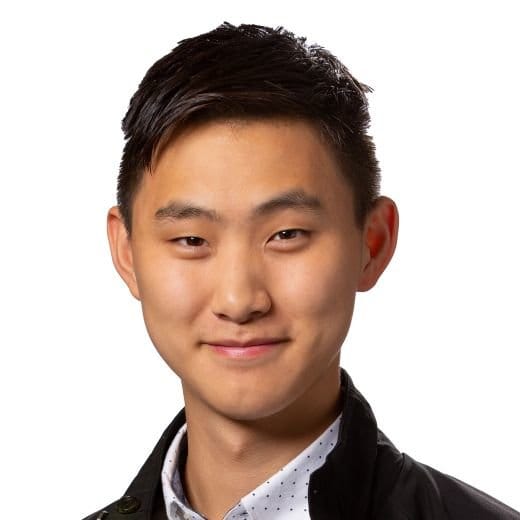

 X
Background
Career
Building the data layer
Wang co-founded Scale AI and served as its CEO from 2016 through June 2025. The company provides data and evaluation services used in AI development. His role placed him at a practical bottleneck: models depend on examples, judgments and tests that help developers improve and assess their behavior. The 2026 Expedia proxy records his founding and board role separately from the CEO job, which matters because his move to Meta did not end his relationship with Scale.[2][3][5]
Leading Meta’s AI effort
Meta’s executive directory lists Wang as chief AI officer, and his start in that position is recorded as June 2025. Scale’s June 2025 announcement says he was joining Meta while remaining on Scale’s board, with Jason Droege becoming interim CEO. In an October 2026 interview with David Senra, Wang discusses the work of Meta Superintelligence Labs and its personal-agent product direction. The interview is a first-person account of organizational decisions and development priorities, rather than evidence that he personally authored every model or product the lab released.[1][2][3][5]
Ideas
From data quality to useful applications
In his TIME interview, Wang describes data as a central constraint alongside computing resources and algorithms. He argues that systems which seem impressive in demonstrations can remain deficient in ordinary work, creating a continuing need to improve training data. This is a useful distinction for understanding Scale: its business addresses the process of building and evaluating AI, not simply selling a finished chatbot.[6]
A national-security argument about advanced AI
Wang coauthored Superintelligence Strategy with Dan Hendrycks and Eric Schmidt in 2025. The paper argues that increasingly capable AI could alter military power and make dangerous capabilities easier to acquire. It proposes a framework of deterrence, nonproliferation and competitiveness, including the concept of Mutual Assured AI Malfunction: rival states could deter attempts at unilateral AI dominance by threatening to disrupt them. This is a policy argument built around possible future capabilities and strategic responses. It should be read as the authors’ proposal, not as a consensus forecast or an empirical demonstration of how governments will behave.[4]
Tools, writing & talks
Writing, research & talks
Start here
Alexandr Wang with David Senradavidsenra.comAn October 2026 conversation about Meta’s AI organization, personal agents and product development. Wang explains his current responsibilities and the move from Scale to Meta.
A current first-person account of the organization he leads and the products it is trying to build.
Interview subject[5]Meta announces Muse Wonder, the successor to April's Muse Spark, citing scaled pretraining and RL and a frontier-level result on the Artificial Analysis index.
Catalog workOriginal sourceA coauthored policy paper on deterrence, proliferation and international competition around advanced AI. It makes Wang’s national-security position concrete and gives readers a proposal they can examine and challenge.
Coauthor[4]- AI’s potential and deficienciestime.com
A 2025 interview on data quality, leadership and the gap between impressive models and dependable workplace applications. Useful background for the infrastructure business Wang built at Scale.
Interview subject[6]