Andreas Blattmann is a co-founder and managing director of Black Forest Labs. His research spans controllable image-to-video generation, Latent Diffusion Models and Stable Video Diffusion.[1][2][3][4]
Start with iPOKE →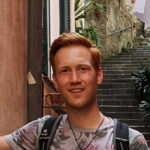
Links
 GitHub
 Professional X account
Co-founder · Black Forest Labs
Managing Director · Black Forest Labs
Career
Contributions
Control motion while preserving multiple possible futures
In iPOKE, Blattmann and colleagues ask how an image might move after a local poke. A model conditions on the first frame and an intended displacement, while sampling other plausible motion through an invertible representation of object kinematics. This allows local control without fixing every detail of a future video, and transfers learned movement to new object instances.[5]
Reduce the cost of visual generation
Blattmann and Robin Rombach share first authorship on Latent Diffusion Models. The method denoises a compressed representation, reducing computation while retaining visual detail. Conditioning supports text, spatial inputs and image editing.[3]
A training sequence for video models
Stable Video Diffusion studies image pretraining, video pretraining and subsequent finetuning on higher-quality video data. Its curation process includes captioning and filtering. Blattmann, Tim Dockhorn and Sumith Kulal share equal contribution. The work also explores adapting the motion representation to camera movement and multi-view generation.[4]
Tools, writing & talks
Writing, research & talks
Start here
iPOKEarxiv.orgA method for controlling local motion in a still image while sampling plausible video outcomes.
Look at the visual examples of a local poke before reading the method. The paper’s technical details assume familiarity with generative models and invertible networks, but its task is easy to understand from the figures.
First-listed co-author[5]- Latent Diffusion Modelsarxiv.org
Research on flexible image synthesis through diffusion in a compressed representation.
Equal-contribution co-author with Robin Rombach[3] - Stable Video Diffusionarxiv.org
A study of data curation and staged training for latent video generation.
Equal-contribution co-author with Tim Dockhorn and Sumith Kulal[4] A discussion of BFL’s research background, open models and the move toward a company.
Participant[6]
